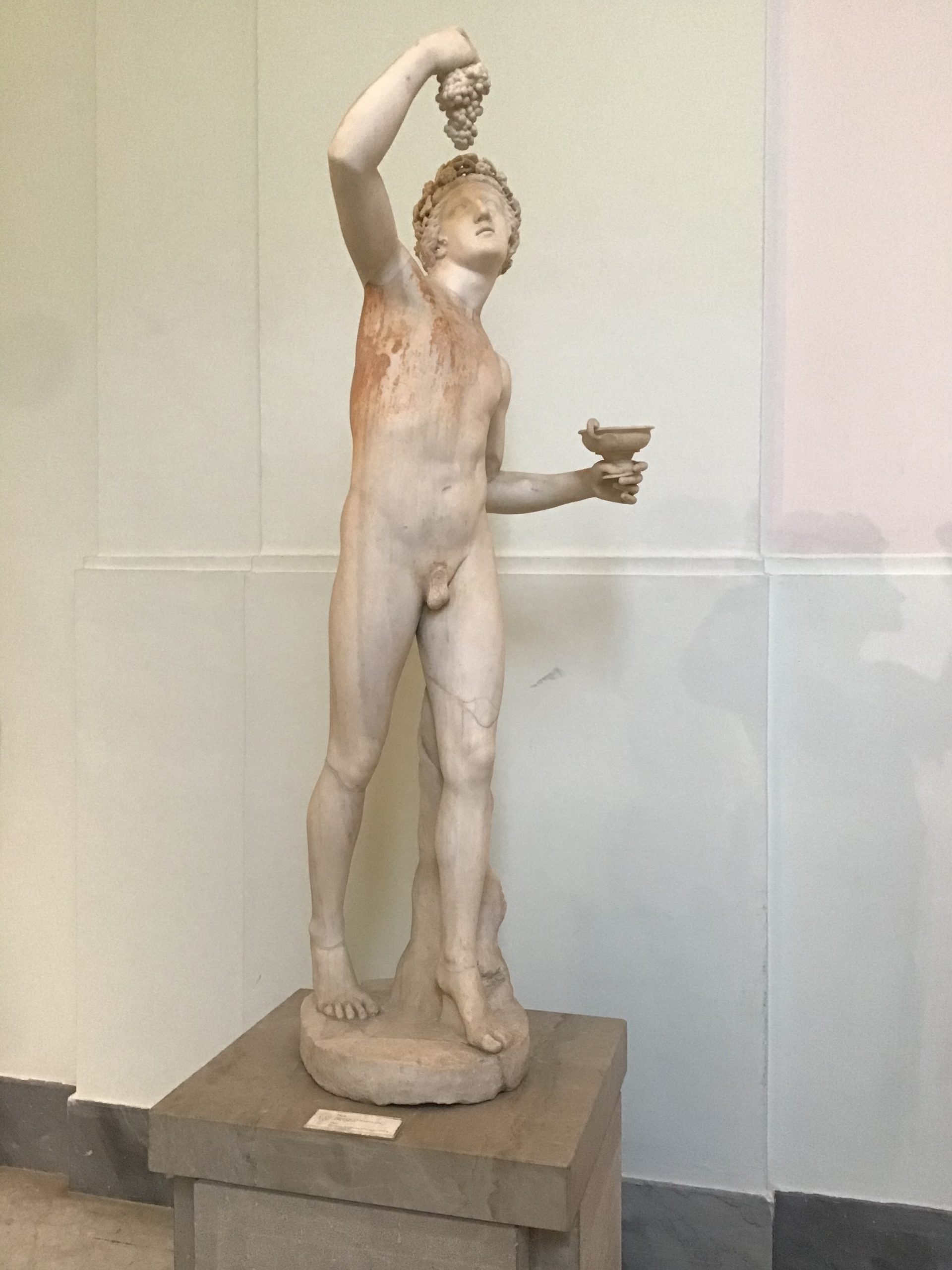
Faun
The faun (Latin: faunus, Ancient Greek: φαῦνος, phaunos, pronounced [pʰaunos]) is a mythological half human–half goat creature appearing in Ancient Rome.
The goat man, more commonly affiliated with the Satyrs of Greek mythology or Fauns of Roman, is a bipedal creature with the legs and tail of a goat and the head, arms and torso of a man and is often depicted with goat’s horns and pointed ears. These creatures in turn borrowed their appearance from the god Pan of the Greek pantheon. They were a symbol of fertility, and their chieftain was Silenus, a minor deity of Greek mythology.
Romans believed fauns inspired fear in men traveling in lonely, remote or wild places. They were also capable of guiding humans in need, as in the fable of The Satyr and the Traveller, in the title of which Latin authors substituted the word Faunus. Fauns and satyrs were originally quite different creatures: whereas fauns are half-man and half-goat, satyrs originally were depicted as stocky, hairy, ugly dwarves or woodwoses with the ears and tails of horses or asses. Satyrs also were more woman-loving than fauns, and fauns were rather foolish where satyrs had more knowledge.
Ancient Roman mythological belief also included a god named Faunus often associated with enchanted woods and the Greek god Pan[2][3] and a goddess named Fauna who were goat people.
The Barberini Faun (located in the Glyptothek in Munich, Germany) is a Hellenistic marble statue from about 200 BCE, found in the Mausoleum of the Emperor Hadrian (the Castel Sant’Angelo) and installed at Palazzo Barberini by Cardinal Maffeo Barberini (later Pope Urban VIII). Gian Lorenzo Bernini restored and refinished the statue.[4]
The House of the Faun in Pompei, dating from the 2nd century BCE, was so named because of the dancing faun statue that was the centerpiece of the large garden. The original now resides in the National Museum in Naples and a copy stands in its place. (Wikipedia)