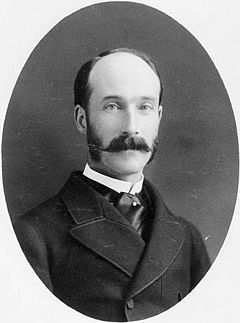
Lord Lansdowne. British Foreign Secretary 1900-1905.
“The Russo-Japanese War had a profound effect on Anglo-Russian relations. Russia’s defeat brought to an end a decade of Anglo-Russian quarrels in China and the Far East. The defeat of the Russian Navy [Tsushima 27-28 May 1905] had eliminated one of the components of the two-power standard. And Russia’s military setbacks meant that threats to India, while they were still likely to occur, had less force. Although Kitchener continued to trumpet the Russian threat, all agreed that this was now a threat for the future and most accepted as a fact that at present the ‘defence of India lies mainly with the [Foreign Office]…’. Indeed the Foreign Office had already aided in the defence of India via the provisions of the renewed Anglo-Japanese alliance. Further, all this had been achieved without Britain’s becoming completely estranged from Russia, offering the possibility of a postwar improvement in relations between the two countries. It was also a vindication of Lansdowne’s diplomacy. Both the Anglo-Japanese Alliance and the Anglo-French entente had demonstrated that they could survive a major international crisis. … The Anglo-French entente had not stood in the way of the Franco-Russian Dual Alliance, and Britain’s support for the French over Morocco must have seemed doubly valuable to Paris in the light of Russia’s weakened condition and frequent flirtations with Germany. … In the autumn of 1905, the British position was dramatically improved from that of two years before.”(K. Neilson, The British and the last Tsar. British policy and Russia, 1894-1917 [New York 1995], p. 264)