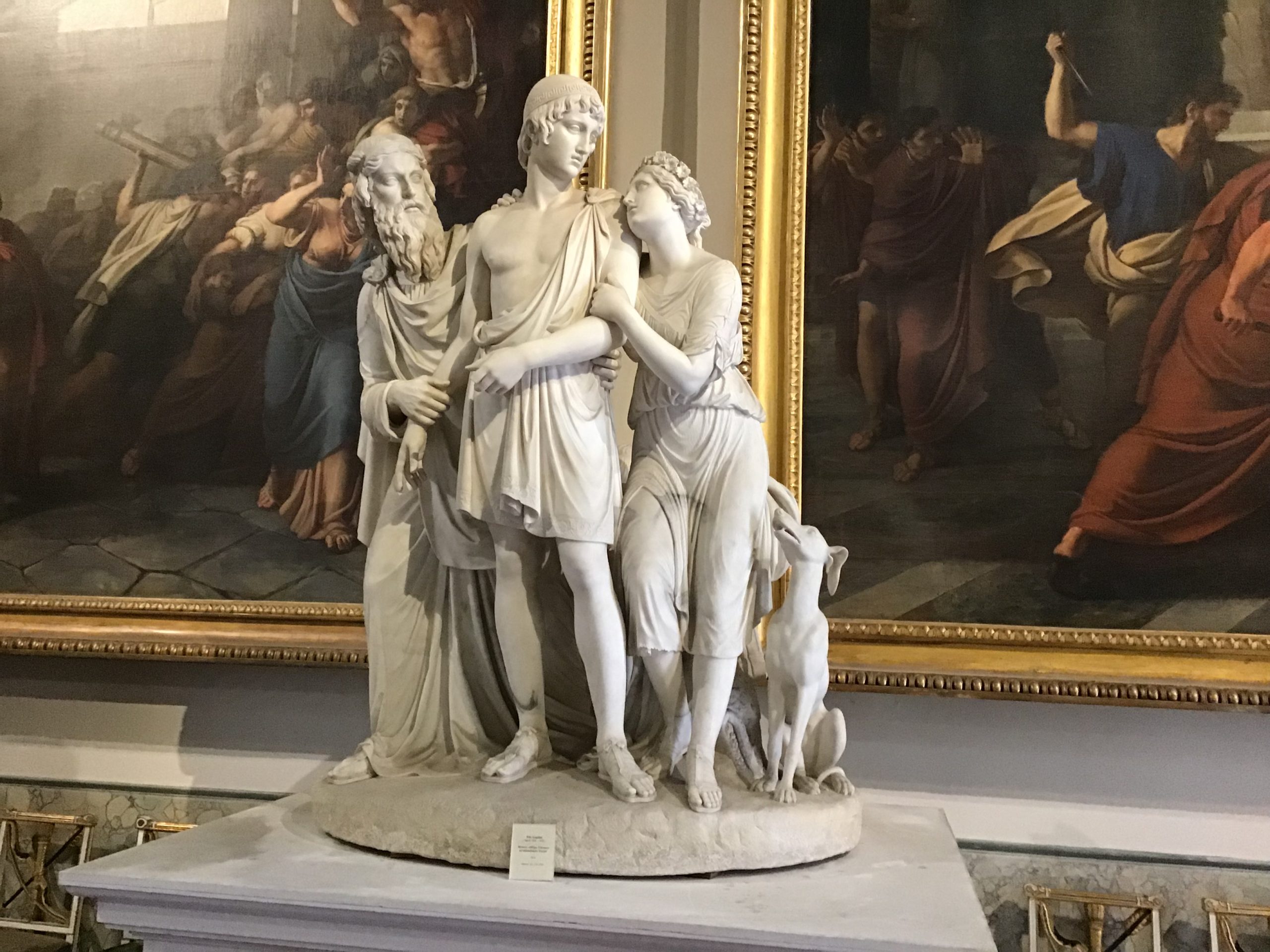
Mentor, Telemachus en Eucharis
In the 1699 French novel Les Aventures de Télémaque, loosely based on characters from the Eucharis, who does not appear in Greek mythology, was one of the nymph Calypso’s attendants in Fénelon’s novel Les Aventures de Télémaque (1699). In Fénelon’s modern prose epic, an improvisation upon Homeric themes, Telemachus while searching for his father, Odysseus, has been shipwrecked on Calypso’s island, and there has fallen in love with Eucharis but must leave her, dutifully to pursue his quest.
Fénelon, in charge of the education of the heir to the French throne, admonished his readers to see the work “not as a frivolous novel, that is offered here, reader, for your idleness, but a learned parable”. Its theme of the conflict between duty and love is a persistent one, central in French 17th-century classical theater, but peripheral to the Odyssey in spite of its erotic episodes. A sub-theme in Les Aventures de Télémaque, of spiritual education, is summed up by Mentor who says, “He who has not felt his weakness and the violence of his passions is not yet wise; for he does not yet understand himself and does not know how to distrust himself.” Mentor was a friend of Odysseus who placed Mentor in charge of his son Telemachus, when Odysseus left for the Trojan War. … the author Fénelon describes how Telemachus, the son of Odysseus, fell passionately in love with the beautiful nymph Eucharis. His duty as a son, however, required that he end their romance and depart in search of his missing father. (Wikipedia)