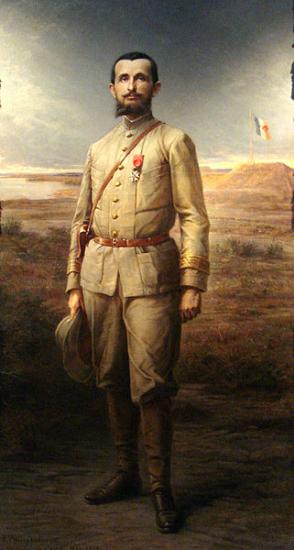
Marchand in Fashoda (1898). ” ‘The problem is’, Delcassé [the French minister of Foreign Affairs] wrote in his diary, how to ocmbine the demands of national honour with the necessity of avoiding a naval war, which we are absolutely incapable of carrying through, even with Russian help.’ It seems unlikely on the evidence now available, that the French government ever seriously considered the possibility of using force to resolve the situation at Fashoda, and there is no doubt that in 1898 the French navy would have been no match for the British … Delcassé judged that in a conflict with the British it would be at the bottom of the sea in a forthnight. … On 5 November, having telegraphed his instructions to Cairo, Delcassé instructed de Courcel in London to inform the British government that ‘in view of the precarious situation and state of health of Marchand and his companions [in Fashoda] the government had decided to leave Fashoda.'” (D. Bates, The Fashoda Incident of 1898. Encounter on the Nile. [Oxford 1984], p. 158)