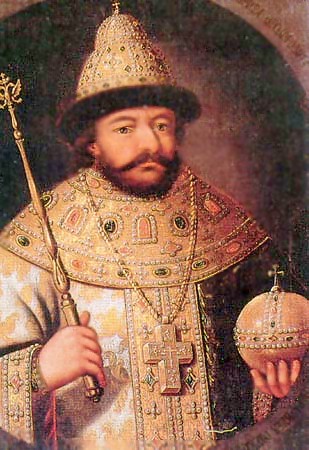
Boris Godoenov, tsaar van Rusland 1598-1605: “In the spring of 1601 heavy rains began to fall and continued for ten weeks. The grain could not ripen and grew tall and green like grass. Then in mid-August the contry was gripped by severe frosts which killed the crops in the fields. Grain stocks were soon exhausted and by the winter of 1601-1602 the people were starving. They ate grass and hay like cattle. Driven to desperation they became cannibals. … In the period of two years and four months during which the famine raged, 500,000 people were said to have died in Moscow alone and the death rate was far higher outside the city. … Famine had given rise to large-scale brigandage. Starving peasants, evicted bondsmen [slaves or bondsmen evicted by landowners from their estates to avoid the obligation of feeding them], and malcontents formed robber bands which marauded at will and threatened a complete breakdown of order, espacially in the regions south of Moscow. … Boris sent a force of regular troops under the command of … Ivan Basmanov to disperse the brigands. They fought a savage battle near Moscow. Basmanov was killed, but the brigands were defeated, many escaping south to the Ukraine. … Famine and brigandage presented challenges against which Boris could take positive action. But the subversive activities of ennemies, who conspired and spread evil rumours, surrounded him with nebulous threats against which action was difficult. Rumours attributed to Boris all manner of crimes and increasingly denounced him for the murder [in 1591 at Uglich] of Tsarevich Dimitri [younger son of Ivan the Terrible].” (Ian Grey, Boris Godunov. The Tragic Tsar [Londen 973], p. 156-158)