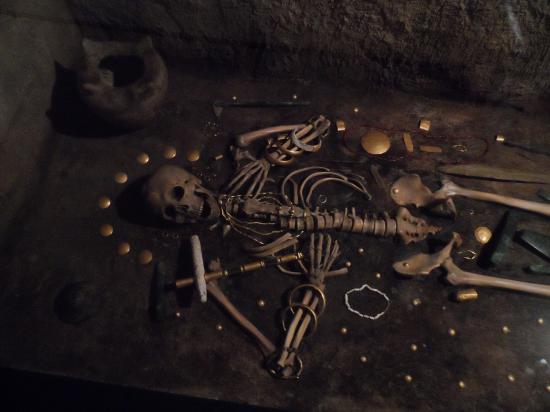
The findings showed that the Varna culture had trade relations with distant lands (possibly including the lower Volga and the Cyclades), perhaps exporting metal goods and salt from the Provadiya rock salt mine. The copper ore used in the artifacts originated from a Sredna Gora mine near Stara Zagora, and Mediterranean Spondylus shells found in the graves may have served as primitive currency.
The culture had sophisticated religious beliefs about afterlife and had developed hierarchical status differences. The site offers the oldest known burial evidence of an elite male [4600-4200 BC](Marija Gimbutas claims that the end of the fifth millennium BC is the time that the transition to male dominance began in Europe). The high status male buried with the most remarkable amount of gold held a war adze or mace and wore a gold penis sheath. Bull-shaped gold platelets might also have venerated virility, instinctual force, and warfare. Gimbutas holds that the artifacts were made largely by local craftspeople. (Wikipedia)