
Het Hof is op grond van het voorgaande van oordeel dat de beklaagde [voormalig keizer van Duitsland Wilhelm II] zowel formeel als feitelijk de mogelijkheid had om de schending van de Belgische neutraliteit te voorkomen. Hij heeft willens en wetens nagelaten om deze mogelijkheid te benutten. Uit de omstandigheid dat hij het opperbevel voerde over de legereenheden die de aanval op België uitvoerden, moet integendeel worden afgeleid dat de schending van de Belgische neutraliteit onder zijn leiding plaatsvond. Dat de beklaagde het niet alleen voor het zeggen had, zoals door de verdediging is betoogd, doet hieraan niets af.” (H. Andriessen e.a., Het proces tegen Wilhelm II. Een vonnis over de schuld van de Duitse keizer aan WO I [Tielt 2016], p. 409)

Stadhouder-koning Willem III (1650-1702) “De Leidse historicus Roorda heeft Willem een ‘raadselachtige man’ genoemd. Dat is een juiste karakterisering aangezien Willem een uiterst gesloten, weinig spontane en terughoudende persoon was, die zijn ware gevoelens slechts aan een heel kleine kring van intimi openbaarde. … Dit gevoelloos ogende en weinig toegankelijke karakter maakte hem in de ogen van buitenstaanders tot een koude kikker. Het tegendeel was echter waar. De prins was in wezen een gevoelig, emotioneel mens, die er echter alles aan deed zijn gevoelens verborgen te houden. … Over de vraag of Willem III homoseksueel was, is al veel geschreven. Noordam, die in zijn studie over de geschiedenis van de homoseksualiteit in Nederland een apart hoofdstuk aan Willem III heeft gewijd, wijst erop, dat de term homoseksualiteit pas in de negentiende eeuw is ontstaan. Hij reserveert deze term voor mensen die zich bewust zijn van hun homoseksualiteit of uit wier gedrag blijkt dat ze een homoseksuele identiteit bezitten. Noordam gebruikt de term sodomiet om aan te geven dat iemand homoseksuele handelingen verricht. … In het leven van Willem onderscheidt Noordam drie levensfasen waarin de prins steeds verder opschoof in de richting van een homoseksueel in de twintigste-eeuwse betekenis, al moet hij toegeven, dat het absolute bewijs ontbreekt. Aanvankelijk was ik niet overtuigd van het feit, dat Willem III homoseksuele betrekkingen heeft onderhouden. Ik deelde het standpunt van Baxter, die beweert, dat Willem III het zo druk had met andere werkzaamheden dat hij geen tijd had voor seksuele relaties. Toch had ik al in 1988 bij de uitgave van een verslag over de tocht van Willem III naar Engeland van 1670-1671 … een citaat daaruit gebruikt om Willems geringe belangstelling voor vrouwen aan de orde te stellen. Iedereen was te spreken over de prins behalve ‘de Engelsche Dames omdat hij niet wercks genoegh van haer en maeckte.’ Deze mening werd meer dan 25 jaar later nog eens bevestigd door Liselotte van de Palts, een achternicht van Willem III. In een brief van 26 aug. 1696 schreef ze, dat Willem III nauwelijks aandacht aan vrouwen besteedde en bijzonder weinig met hen op had. Volgens Noordam is het opvallend dat Willem III en Mary Stuart II geen kinderen kregen en dat Willem III, voor zover bekend, ook geen bastaarden verwekte. … Pas in 1689 kwamen de geruchten over sodomie op gang in Engeland. Daarvoor, in 1682, werd Willem III zo vaak bezocht door een zekere ritmeester van Dorp, dat Huygens jr., de secretaris van Willem III, twee keer bij Baarsenburg, de kamerdienaar, informeerde naar het doel van deze bezoeken. Baarsenburg had zich op de vlakte gehouden, maar wel gezegd, dat de bezoeken al enige tijd onregelmatig plaatsvonden en soms een half uur duurden. De verdenking dat de koning sodomie pleegde, groeide in de jaren ’90. Mij lijkt het inmiddels waarschijnlijk, dat Willem III homoseksuele relaties had, maar dat hij die activiteit goed verborgen wist te houden. Dat is niet zo vreemd bij een man die de karaktertrek ‘fort dissimulé’ bezat.” (Wout Troost, Stadhouder-koning Willem III, een politieke biografie [Hilversum 2001], p. 35-37) [Opvallend is tevens het tamelijk grote aantal ‘sodomieten’ in Willems directe familie: Henry Darnley, zijn betovergrootvader, Jacobus I van Engeland en Schotland, zijn overgrootvader, Karel I van Engeland en Schotland, zijn grootvader en Philips van Orléans, zijn moeders neef. (ABdH)]

“Äccording to almost all written sources, the main income of the Crimean Khanate came from raids upon the territories of adjacent countries and from the trade in slaves captured during these military campaigns. The first major Tatar raid for captives took place in 1468 and was directed into Galicia. According to some estimates, in the first half of the seventeenth century the number of the captives taken to the Crimea was around 150,000-200,000 persons. About 100,000 of them were captured in the period between 1607 and 1617. The Crimean Tatars invaded Slavic lands 38 times from 1654 to 1657; 52,000 people were seized by the Tatars in the spring of 1655 in the course of a raid into the territory of Ukraine and Southern Russia. The number of Tatar raids seems to have diminished in the eighteenth century due to the growth of Russian strength in the southern regions and a few Russo-Turkish wars, which partially took place in the Crimean territory. Nevertheless, in 1758 there were around 40,000 slaves captured during a raid on Moldavia and in 1769, during one of the very last Tatar incursions into Russian and Polish territory, the amount of “live booty” was about 20,000 souls.
The demographic importance of the slave trade in the Early Modern Crimea and Ottoman Empire also should not be underestimated. Thousands and thousands of Christian female slaves and children were converted to Islam annually. Soon these neophytes forgot about their non-Turkic origins and their offspring often would not even be aware of their Christian past.”
noot 11: “When this article was already in print, I received a copy of a study by Dariusz Kolodziejczyk, where the author very convincingly suggested that the whole number of slaves taken from Russia and Poland-Lithuania between 1500 and 1700 might roughly be estimated at two million (Dariusz Kolodziejczyk, “Slave Hunting and Slave Redemption as a Business Enterprise: the Northern Black Sea Region in the Sixteenth to Seventeenth Centuries,”
Oriente Moderno n.s. 25:1 (2006): 149-59, esp. 151).”
(SLAVE TRADE IN THE EARLY MODERN CRIMEA FROM THE PERSPECTIVE OF CHRISTIAN,MUSLIM, AND JEWISH SOURCES.
MIKHAIL KIZILOV
Oxford University)

Henk Feldmeijer, voorman van de Nederlandse SS (1910-1945) “Op een dag in maart 1944 riep Feldmeijer vijftien a twintig SS’ers bijeen op het bureau van de 4e Afdeling van de Germaanse SS … in Den Haag. … De door Feldmeijer opgeroepen mannen waren over het algemeen arm en nauwelijks opgeleid. Hun gemiddelde leeftijd was laag. … Maar het gezelschap telde ook enkele oudgedienden van de SS, met wie Feldmeijer al langer samenwerkte. … Samen vormden zij een nieuwe, geheime formatie: het Sonderkommando-Feldmeijer. … Het … werd berucht als het nieuwe doodseskader ten behoeve van de Silbertanne-acties, dat alle eerdere moordcommando’s verving. … In totaal rukte het Sonderkommando-Feldmeijer minstens elf keer uit. De acties vonden overal in Nederland plaats, van Breda tot Grootegast en van Beemster tot Velp. Het commando vermoordde 21 burgers. Meestal werden de slachtoffers, net als in de eerste fase van de Aktion Silbertanne, geselecteerd door de Sicherheitsdienst. Maar het was Feldmeijer die vervolgens het Sonderkommando opbelde met het bevel dat een aantal leden zich moest vervoegen bij de betreffende SD-Aussenstellenleiter, die hen verder zou instrueren. Ten minste twee keer heeft Feldmeijer eigenhandig ook het slachtoffer aangewezen. [Anje Lok, uit het Friese Ravenswoud, op 19/20 mei 1944, als vergelding voor de dood van de Landwachter Kees Hartenhof, en pastoor F.J. Schoemaker van de Groningse St. Franciscuskerk, motief onbekend, aanslag mislukte, i.p.v. de pastoor werd kapelaan J.G. Böcker doodgeschoten.(25 sept. 1944).] Het Sonderkommando-Feldmeijer moest een groep professionele en koelbloedige killers worden, maar kon de verwachtingen niet waarmaken. … Een van de Silbertanne-akties waarbij commandoleden steken lieten vallen, vond op 15 aug. 1944 plaats in Noord-Limburg. [De burgemeesters van Asten en Someren werden gedood, maar een derde persoon, Frans Eijsbouts, ontsnapte. Het pistool van schutter Sander Borgers werd door Eijsbouts uit zijn handen geslagen. Het werd later door de politie gevonden. De liquidaties werden daarna steeds vaker door Duitse SD-agenten uitgevoerd, zonder gebruikmaking van het Sonderkommando-Feldmeijer.] Eind augustus kwam er een einde aan de Silbertanne-acties. Hitler had op 30 juli 1944 het [Niedermachungsbefehl] …uitgevaardigd. Volgens dit bevel moesten gearresteerde verzetslieden ter plekke zonder vorm van proces worden doodgeschoten. De afschikkende werking van deze maatregel maakte de omslachtige en risicovolle sluipmoorden overbodig.” [B. Kromhout, De Voorman, Henk Feldmeijer en de Nederlandse SS (Amsterdam/Antwerpen 2012), p. 400 e.v.]

In de oostmuur van de kapel van Guy van Avesnes [in de Domkerk van Utrecht] bevindt zich een spitsboognis, waarin een schildering is aangebracht, die de Kruisiging voorstelt De schildering kwam in 1919 tevoorschijn na de verwijdering van een uit kloostermoppen gemetselde omuur) die haar eeuwenlang beschermd had, zodat zij op twee vierkante gaten van 10 cm zijde na, vrijwel gaaf gebleven is. Blijkens de twee toen gevonden draaipunten in het linkerprofiel van de boog en een afgewerkte aanslag in het overeenkomstig profiel aan de rechterkant was er oorspronkelijk een draaibaar luik voor de schildering bevestigd, zoals er ook nu weer een aanwezig is. De hoogte van de boognis is 1,60 m, de breedte 1,65 m. Onder de nis stond eens een altaar, gewijd aan Sint Margriet, dat het eerst in 1438 vermeld wordt. Op de schildering ziet men in het midden Christus aan het kruis, links Maria, die, ineenzijgend, door Johannes ondersteund wordt, rechts de H. Margaretha met haar attribuut, de draak. De achtergrond is dofrood, de Calvarieberg bruin, het gewaad van Maria, die een witte hoofddoek draagt, blauw met een vaalgroene voering, de mantel van Johannes violet, terwijl Margaretha gehuld is in een roomwitte tunica en een donkere mantel, het monster is vaalgroen van kleur. Uit het hele tafereel en de sterk expressieve gezichten en handen spreekt, ondanks de ingetogen gebaren en houdingen, een fel dramatische aandoening. Ook de dagkanten van de boog zijn beschilderd: men onderscheidt nog vaag de kazuifels en mijters van twee bisschoppen en men ziet St. Barbara, herkenbaar aan de toren, die zij in haar hand draagt. De voorstelling van de Kruisiging is aangebracht op een bruinachtige grondkleur, waaronder op beschadigde plekken geel en rose tevoorschijn komen en waarop men sporen van overschilderingen ziet, bij de Christusfiguur de brede omtrek van een andere figuur, links van Margriet resten van een ander, meer naar links gebogen hoofd. De schildering is niet in temperaverven, maar volgens een voor die tijd nieuw procédé vervaardigd, namelijk met een ongewoon bindmiddel, dat uit caseïne of ei, olie en was bestaat en dat, in afwisselende hoeveelheden gebruikt, tot gevolg heeft gehad, dat er malse dikke partijen en heel dunne lagen naast en door elkaar voorkomen en het koloriet ongewoon vol en fors is. Bijvanck acht het waarschijnlijk, dat de schildering van de hand van de ‘meester van bisschop Zweder van Culemborg’ is, werkzaam ca. 1425 toen hij ook de miniaturen van het missale van Zweder (Bissch. Seminarie te Brixen) vervaardigde. Hoogewerff ziet meer stijlverwantschap met miniaturen uit omstreeks 1430-’40, vooral met die van de ‘meester A.’, onder wiens leiding ca. 1430 te Utrecht twee grote bijbels (respectievelijk in de Koninklijke Bibliotheken van Den Haag en Brussel) verlucht werden en die een Nederlands getijdenboek Stockholm, Kungliga Bibliotek) illustreerde. Positief aan de schilder van de Kruisiging in de Avesneskapel schrijft hij een anoniem paneel toe met een Pietà (collectie Gruter van Linden, Antwerpen) in olieverf. + litteratuur. c.h. de jonge, De ontdekkingen in de Domkerk te Utrecht. Utr. Dagbl, 2 oct. 1919; d.f. slothouwer en c.h. de jonge, Enige vondsten in de Utrechtse Domkerk. bull. oudhk. b. 1929, blz. 150-153; j. por, Drie kruisingstaferelen uit de xve eeuw; oudholland 1937, blz. 26-37; g.j. hoogewerff, De Noordnederlandse schilderkunst (‘s-Gravenhage 1936 vlg) 1, blz. 349-358; a.w. bijvanck, De middeleeuwse boekillustratie in de noordelijke Nederlanden (Antwerpen 1943), blz. 29 en 33.

Rogier van der Weyden, portret van Philippe de Croy, ca. 1460 (gezien Mauritshuis sept. 2017) Philip I de Croÿ (1435–1511) was Seigneur de Croÿ and Count of Porcéan. Philip I was a legitimate heir to the powerful House of Croÿ. He was the eldest surviving son of Antoine de Croy, Comte de Porcéan and Margaret of Lorraine-Vaudémont. Philip was raised with Charles the Bold, who arranged Philip’s marriage to Jacqueline of Luxembourg in 1455. The bride’s father, Louis de Luxembourg, Count of Saint-Pol, was extremely against the alliance and attempted to win his daughter back by force, but the Count of Porcéan closed the borders of Luxembourg and announced that the marriage had been consummated. He was also Governor of Luxembourg and Ligny. Philip had determination and a strong force of personality, and was both respected as an administrator and accomplished in battle. The year after his father died he was titled Knight of the Golden Fleece, and later became Governor of Hainault. He is recorded as a participant in most of the battles of Philip the Good and Charles the Bold, during which his fortunes ranged from being knighted for valour to being held hostage.[1] In 1471 he defected to the King of France with 600 knights but returned to Burgundy to fight for Charles during the Battle of Nancy. It was during the battle that he was taken prisoner. Following Charles’s death, Philip helped arrange the betrothal of his heiress Marie with Emperor Maximilian I. Towards the end of his life, he was employed by the Emperor as Governor of Valenciennes, Lieutenant General of Liege, and Captain General of Hainaut. Philippe commissioned a remarkable church in Château-Porcien, in which he was buried upon his death in 1511. (Wikipedia)

Taped conversation between LBJ and Senate Majority leader Mike Mansfield, June 8, 1965: “LBJ: I don’t exactly see the medium for pulling out [of Vietnam]. … [But] I want to talk to you. … Rusk doesn’t know that I’m thinking this. McNamara doesn’t know I’m thinking this. Bundy doesn’t. I haven’t talked to a human. I’m over here in bed. I just tried to take a nap and get going with my second day, and I couldn’t. I just decided I’d call you. But I think I’ll say to Congress that General Eisenhower thought we ought to go in there and do here what we … did in Greece and Turkey, and … and President Kennedy thought we ought to do this. … But all of my military people tell me … that we cannot do this [with] the commitment [of American forces] we have now. It’s got to be materially increased. And the outcome is not really predictable at the moment. … I would say … that … our seventy-five thousand men are going to be in great danger unless they have seventy-five thousand more … I’m no military man at all. But … if they get a hundred and fifty [thousand Americans], they’ll have to have another hundred and fifty. So, the big question then is: What does Congress want to do about it ? … I think I know what the country wants to do now. But I’m not sure that they want to do that six months from now. … We have … some very bad news on the government [of General Nguyen Cao Ky in Saigon] … Westmoreland says that the offensive that he has anticipated, that he’s been fearful of, is now on. And he wants people as quickly as he can get them. … We seem to have tried everything that we know to do. I stayed here for over a year when they were urging us to bomb before I’d go beyond the line. I have stayed away from [bombing] their industrial targets and their civilian population, although they [the Joint Chiefs] urge you to do it.” (M. Beschloss, Reaching for Glory [New York 2001], p. 345-347)

Wilhelm II, tsaar Nicolaas II, tsarina Alexandra en koningin Victoria. [In the spring of 1914 Nicholas II said to the British Ambassador Sir George Buchanan]: “It was commonly supposed that there was nothing to keep Germany and Russia apart. This was, however, not the case. There was the question of the Dardanelles. Twice in the last two years the Straits had been closed for a short period, with the result that the Russian grain industry had suffered very serious loss. From information which had reached him from a secret source through Vienna he had reason to believe that Germany was aiming at acquiring such a position at Constantinople as would enable her to shut in Russia altogether in the Black Sea. Should she attempt to carry out this policy he would have to resist it with all his power, even should war be the only alternative … though the Emperor said that [he] … wished to live on good terms with Germany … at present the vital necessity was for Russia, France an Britain to unite more closely in order to make it absolutely clear to Berlin that all three entente powers would fight side by side against German aggression.” (D. Lieven, Nicholas II, Emperor of All the Russias [Londen 1993, p. 197)

“Even if, in terms of human loss, the Cultural Revolution was far less murderous than many earlier campaigns, in particular the catastrophe unleashed during Mao’s Great Famine, it left a trail of broken lives and cultural devastation. By all accounts, during the ten years spanning the Cultural Revolution, between 1.5 and 2 million people were killed, but many more lives were ruined through endless denunciations.” (Frank Dikötter, The Cultural Revolution. A people’s history 1962-1976. Londen 2017, p. XVIII)

“The Kimovsk was nearly eight hundred miles away from the Essex [24 okt. 1962] The Yuri Gagarin was more than five hundred miles away. The “high-interest ships” had both turned back the previous day, shortly after receiving an urgent message from Moscow. The mistaken notion that the Soviet ships turned around at the last moment in a tense battle of wills between Khruschev and Kennedy has lingered for decades. [CIA director]McCone erroneously believed that the Kimovsk “turned around when confronted by a Navy vessel” during an “attempted” intercept at 10:35 a.m. Later on, when intelligence analysts established what really happened, the White House failed to correct the historical record. The records of the nonconfrontation are now at the National Archives and the John F. Kennedy Library. The myth of the “eyeball to eyeball” moment persisted because historians of the missile crisis failed to use these records to plot the actual positions of Soviet ships on the morning of Wednesday, October 24.” (M. Dobbs, One Minute To Midnight [2009])

De Maliebaan 35 in de Nederlandse stad Utrecht vormde tijdens de bezetting het hoofdkwartier van de Nationaal-Socialistische Beweging (NSB). De Duitse bezetter en daaraan verbonden Nederlandse organisaties namen tijdens de Tweede Wereldoorlog in meerdere panden aan de Maliebaan hun intrek, waaronder de Duitse Sicherheitsdienst, Luftwaffe, Grüne Polizei, Abwehr en de Nederlandsche SS. Van de NSB nam hun afdeling Propaganda haar intrek op nummer 31, Volkscultuur en Sibbekunde op 33, de Weerbaarheidsafdeling kwam op 76 en de Nederlandse Volksdienst vestigde zich op nummer 90. Maliebaan 35 werd door de NSB gebruikt als hoofdkwartier. Hun leider Anton Mussert had er zijn werkkamer op de eerste verdieping. Het balkon aan de voorzijde van het pand gebruikte hij voor het afnemen van parades op de Maliebaan en voor toespraken. Reichsführer-SS Heinrich Himmler kwam in 1942 naar Nederland en bracht een bezoek aan de Maliebaan 35. (Wikipedia) “de Nationaal-Socialistische Beweging van Anton Mussert had [in 1937] het pand Maliebaan gekocht en als hoofdkwartier in gebruik genomen. … [een statig] pand, met een bescheiden balkon op de eerste verdieping en een enorme tuin aan de achterkant… Aan het eind van 1944 is de Maliebaan niet meer dat machtscentrum van twee, drie jaar eerder. Anton Mussert komt nog maar zelden op zijn oude kantoor. Hij leidt in de laatste oorlogsmaanden een zwervend bestaan.” (A. van Liempt, Aan de Maliebaan [Amsterdam 2015], p. p. 12)
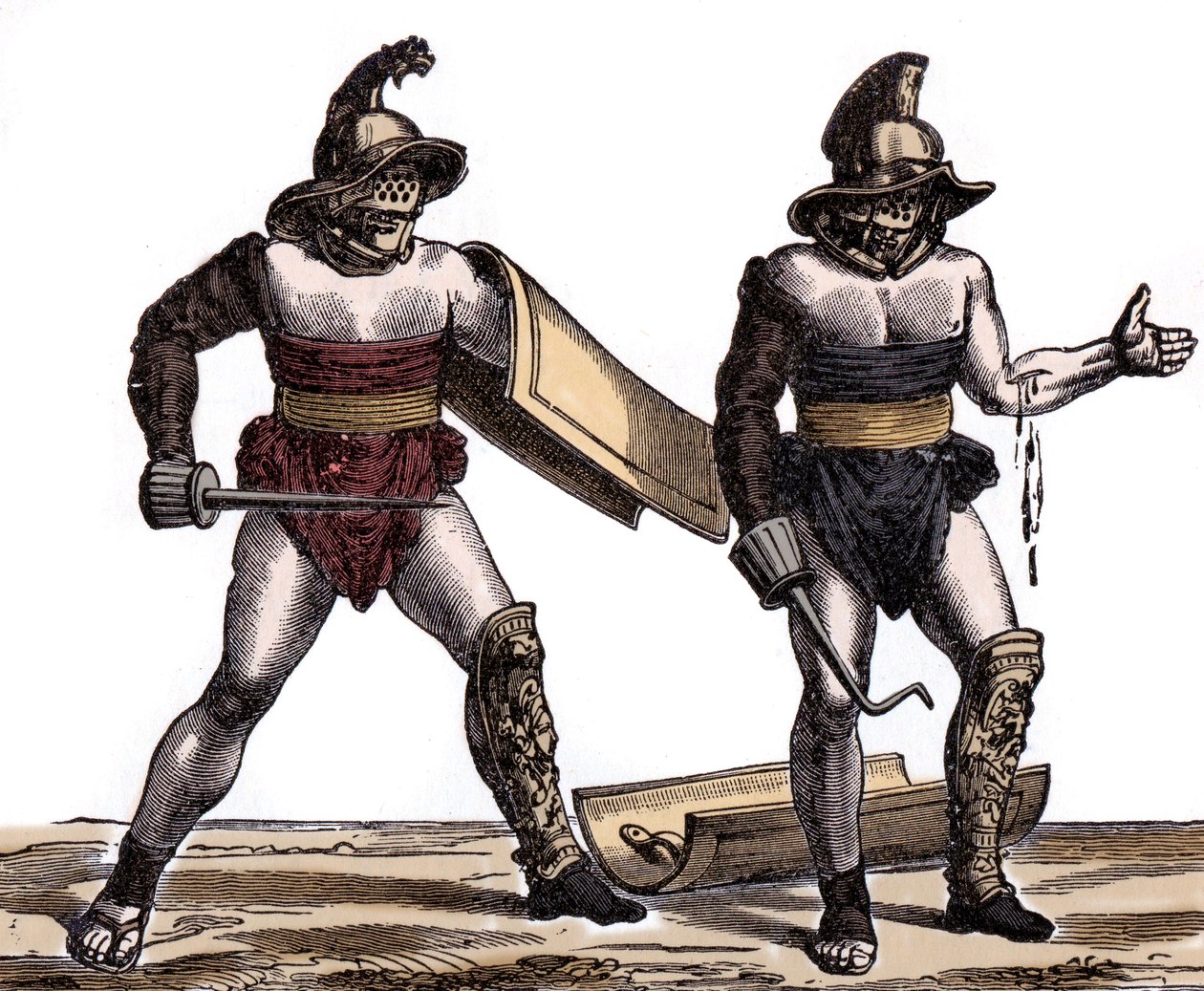
“The insurrection of the gladiators and the devastation of Italy, commonly called the war of Spartacus, began upon this occasion. One Lentulus Batiates trained up a great many gladiators in Capua, most of them Gauls and Thracians, who, not for any fault by them committed, but simply through the cruelty of their master, were kept in confinement for this object of fighting one with another. Two hundred of these formed a plan to escape, but being discovered, those of them who became aware of it in time to anticipate their master, being seventy-eight, got out of a cook’s shop chopping-knives and spits, and made their way through the city, and lighting by the way on several wagons that were carrying gladiators’ arms to another city, they seized upon them and armed themselves. And seizing upon a defensible place, they chose three captains, of whom Spartacus was chief, a Thracian of one of the nomad tribes, and a man not only of high spirit and valiant, but in understanding, also, and in gentleness superior to his condition, and more of a Grecian than the people of his country usually are. When he first came to be sold at Rome, they say a snake coiled itself upon his face as he lay asleep, and his wife, who at this latter time also accompanied him in his flight, his countrywoman, a kind of prophetess, and one of those possessed with the bacchanal frenzy, declared that it was a sign portending great and formidable power to him with no happy event. First, then, routing those that came out of Capua against them, and thus procuring a quantity of proper soldiers’ arms, they gladly threw away their own as barbarous and dishonourable. Afterwards Clodius, the praetor, took the command against them with a body of three thousand men from Rome, and besieged them within a mountain, accessible only by one narrow and difficult passage, which Clodius kept guarded, encompassed on all other sides with steep and slippery precipices. Upon the top, however, grew a great many wild vines, and cutting down as many of their boughs as they had need of, they twisted them into strong ladders long enough to reach from thence to the bottom, by which, without any danger, they got down all but one, who stayed there to throw them down their arms, and after this succeeded in saving himself. The Romans were ignorant of all this, and, therefore, coming upon them in the rear, they assaulted them unawares and took their camp. Several, also, of the shepherds and herdsmen that were there, stout and nimble fellows, revolted over to them, to some of whom they gave complete arms, and made use of others as scouts and light-armed soldiers. Publius Varinus, the praetor, was now sent against them, whose lieutenant, Furius, with two thousand men, they fought and routed. Then Cossinius was sent with considerable forces, to give his assistance and advice, and him Spartacus missed but very little of capturing in person, as he was bathing at Salinae; for he with great difficulty made his escape, while Spartacus possessed himself of his baggage, and following the chase with a great slaughter, stormed his camp and took it, where Cossinius himself was slain. After many successful skirmishes with the praetor himself, in one of which he took his lictors and his own horse, he began to be great and terrible; but wisely considering that he was not to expect to match the force of the empire, he marched his army towards the Alps, intending, when he had passed them, that every man should go to his own home, some to Thrace, some to Gaul. But they, grown confident in their numbers, and puffed up with their success, would give no obedience to him, but went about and ravaged Italy; so that now the senate was not only moved at the indignity and baseness, both of the enemy and of the insurrection, but, looking upon it as a matter of alarm and of dangerous consequence, sent out both the consuls to it, as to a great and difficult enterprise. The consul Gellius, falling suddenly upon a party of Germans, who through contempt, and confidence had straggled from Spartacus, cut them all to pieces. But when Lentulus with a large army besieged Spartacus, he sallied out upon him, and, joining battle, defeated his chief officers, and captured all his baggage. As he made toward the Alps, Cassius, who was praetor of that part of Gaul that lies about the Po, met him with ten thousand men, but being overcome in the battle, he had much ado to escape himself, with the loss of a great many of his men. When the senate understood this, they were displeased at the consuls, and ordering them to meddle no further, they appointed Crassus general of the war, and a great many of the nobility went volunteers with him, partly out of friendship, and partly to get honour. He stayed himself on the borders of Picenum, expecting Spartacus would come that way, and sent his lieutenant, Mummius, with two legions, to wheel about and observe the enemy’s motions, but upon no account to engage or skirmish. But he, upon the first opportunity, joined battle, and was routed, having a great many of his men slain, and a great many only saving their lives with the loss of their arms. Crassus rebuked Mummius severely, and arming the soldiers again, he made them find sureties for their arms, that they would part with them no more, and five hundred that were the beginners of the flight he divided into fifty tens, and one of each was to die by lot, thus reviving the ancient Roman punishment of decimation, where ignominy is added to the penalty of death, with a variety of appalling and terrible circumstances, presented before the eyes of the whole army, assembled as spectators. When he had thus reclaimed his men, he led them against the enemy; but Spartacus retreated through Lucania toward the sea, and in the straits meeting with some Cilician pirate ships, he had thoughts of attempting Sicily, where, by landing two thousand men, he hoped to new kindle the war of the slaves, which was but lately extinguished, and seemed to need but little fuel to set it burning again. But after the pirates had struck a bargain with him, and received his earnest they deceived him and sailed away. He thereupon retired again from the sea, and established his army in the peninsula of Rhegium; there Crassus came upon him, and considering the nature of the place, which of itself suggested the undertaking, he set to work to build a wall across the isthmus; thus keeping his soldiers at once from idleness and his foes from forage. This great and difficult work he perfected in a space of time short beyond all expectation, making a ditch from one sea to the other, over the neck of land, three hundred furlongs long, fifteen feet broad, and as much in depth, and above it built a wonderfully high and strong wall. All which Spartacus at first slighted and despised, but when provisions began to fail, and on his proposing to pass further, he found he was walled in, and no more was to be had in the peninsula, taking the opportunity of a snowy, stormy night, he filled up part of the ditch with earth and boughs of trees, and so passed the third part of his army over. Crassus was afraid lest he should march directly to Rome, but was soon eased of that fear when he saw many of his men break out in a mutiny and quit him, and encamped by themselves upon the Lucanian lake. This lake they say changes at intervals of time, and is sometimes sweet, and sometimes so salt that it cannot be drunk. Crassus falling upon these beat them from the lake, but he could not pursue the slaughter, because of Spartacus suddenly coming up and checking the flight. Now he began to repent that he had previously written to the senate to call Lucullus out of Thrace, and Pompey out of Spain; so that he did all he could to finish the war before they came, knowing that the honour of the action would redound to him that came to his assistance. Resolving, therefore, first to set upon those that had mutinied and encamped apart, whom Caius Cannicius and Castus commanded, he sent six thousand men before to secure a little eminence, and to do it as privately as possible, which that they might do they covered their helmets, but being discovered by two women that were sacrificing for the enemy, they had been in great hazard, had not Crassus immediately appeared, and engaged in a battle which proved a most bloody one. Of twelve thousand three hundred whom he killed, two only were found wounded in their backs, the rest all having died standing in their ranks and fighting bravely. Spartacus, after this discomfiture, retired to the mountains of Petelia, but Quintius, one of Crassus’s officers, and Scrofa, the quaestor, pursued and overtook him. But when Spartacus rallied and faced them, they were utterly routed and fled, and had much ado to carry off their quaestor, who was wounded. This success, however, ruined Spartacus, because it encouraged the slaves, who now disdained any longer to avoid fighting, or to obey their officers, but as they were upon the march, they came to them with their swords in their hands, and compelled them to lead them back again through Lucania, against the Romans, the very thing which Crassus was eager for. For news was already brought that Pompey was at hand; and people began to talk openly that the honour of this war was reserved to him, who would come and at once oblige the enemy to fight and put an end to the war. Crassus, therefore, eager to fight a decisive battle, encamped very near the enemy, and began to make lines of circumvallation; but the slaves made a sally and attacked the pioneers. As fresh supplies came in on either side, Spartacus, seeing there was no avoiding it, set all his army in array, and when his horse was brought him, he drew out his sword and killed him, saying, if he got the day he should have a great many better horses of the enemies’, and if he lost it he should have no need of this. And so making directly towards Crassus himself, through the midst of arms and wounds, he missed him, but slew two centurions that fell upon him together. At last being deserted by those that were about him, he himself stood his ground, and, surrounded by the enemy, bravely defending himself, was cut in pieces.” (Plutarchus, Leven van Crassus)

24 June 1859: Battle of Solferino (south of Lake Garda in Lombardy, Italy) “For fifteen hours on 24 June, 107,000 French and 44,000 Piedmontese troops fought a battle against 151,000 Austrians along a twelve mile front … After fierce fighting and heavy losses, the French finally stormed the key point, the Cypress Hill. By 2 p.m. a French regiment had captured the heights of Solferino … [Emperor Napoleon III of France] then turned his attention to the last Austrian stronghold at Cavriana … At 3 p.m. the Austrian centre broke, and [the Austrian emperor] Franz Joseph ordered a general retreat. As he rode off to Goito the hot weather … ended in a tremendous thunderstorm with heavy rain, which put a stop to all operations in the battlefield, as it was to dark for the troops to see anything. When the sky cleared an houtr later, the French found that the Austrians had gone. The losses on both sides were very heavy [French killed, wounded and missing: abt. 12.000, Piedmontese: 5500, Austrians: abt. 22.000] … The Austrians had withdrawn into the ‘Quadrilateral’ – the formidabel defensive works based on Mantua, Peschiera, Verona and Legnano … As the Piedmontese army began to invest Peschiera, the world waited for a third and even bloodier battle than Magenta and Solferino. Then. to the surprise of his generals, soldiers, allies and enemies, … [Napoleon III] offered the Austrians an armistice till 15 August, and proposed that he and Franz Joseph should meet to discuss peace terms. The Austrians agreed … There was much speculation at the time – and it has continued ever since – about the reason which induced Napoleon III to make peace with Austria after Solferino. He seems to have been influenced by four factors [: 1. he realized that the French would suffer even greater losses than at Solferino when they tried to storm the defences of the Quadrilateral, 2. he resented the attitude of the Piedmontese and he felt that [Prime Minister of the Kingdom of Piedmont-Sardinia ]Cavour’s plan was for the French to do most of the fighting and for Piedmont-Sardinia to reap most of the advantages, 3. he was worried that a prolongation of the war would eventually lead to a general European war (there was as yet no sign of Britain or Russia abandoning there neutrality, but there was a possibility that the German Diet would agree to sending an army corps to the Upper Rhine), 4. he was alarmed at the spread of revolution in Italy (Tuscany, Parma, Modena, Lucca, and the Papal province of the Romagna), and conscious of the difficulties in which this (especially of course a revolution in the Papal States) would involve him with the clergy in France. Also disturbing was the arrival of Hungarian revolutionary Kossuth in Genoa, who was obviously trying to incite a revolution in Hungary. A few months later Napoleon wrote to the Austrian Ambassador: “I was disgusted to have the Revolution following my heels, and Kossuth and [Hungarian general] Klapka as allies; I would be seen as the leader of all the scum of Europe”.] (J. Ridley, Napoleon III and Eugenie [London 1979], p. 450-454)

“The images painted and drawn on the walls [at Peche Merle, France] and at other Upper Palaeolithic sites in Europe show clear evidence of conceptual, abstract thought – the earliest such evidence in the world. The extraordinarily detailed artwork at Chauvet cave has been dated to around 32,000 years ago, the oldest in France. Recently discovered drawings at Fumane cave, near Verona in northern Italy, may date from as early as 35,000 years ago, which would make them them the oldest examples of cave art anywhere in the world. … The inhabitants of these European caves were clearly talented artists, and their culture marks a distinct departure from that of the Neanderthals that preceded them. It marks the beginning of the Upper Palaeolithic in Europe, and broadcasts the arrival of fully modern humans on the scene. … We saw earlier that the most obvious location from which to enter Europe, the Middle East, appears to have contributed little to the gene pool of Europeans. The Y-chromosome lineage defined solely by [the M89 marker], which would have characterized the earliest Middle Eastern populations around 45,000 years ago, is simply not very common in western Europe. It is such a tiny hop across the Bosporus from the Middle East to Europe that we might ask why it took so long – perhaps 10,000 years – for modern humans to make a significant foray into western Europe. … [The M173 marker] is found at high frequency throughout western Europe. Intriguingly, the highest frequencies are found in the far west, in Spain and Ireland, where M173 is present in over 90 per cent of men. It is, then, the dominant marker in western Europe, since most men belong to the lineage that it defines. … the most likely date for the origin of M173 is around 30,000 years ago. This date means that the man who gave rise to the vast majority of western Europeans lived around 30,000 years ago – consistent with a recent African diaspora, and again showing that Neanderthals could not have been direct ancestors of modern Europeans. Significantly, it is around this time that the Upper Palaeolithic becomes firmly established in Europe – and the Neanderthals disappear. … By 25,000 years ago they had disappeared entirely. [How and why this happened is still not definitely established. It is very unlikely however, that the Cro Magnons exterminated the Neanderthals physically. There is simply, as of now, no archelogical proof for that.] … Whatever the causes of their demise, Neanderthals had given up the ghost within a few thousand years of the arrival of modern humans. After 30,000 years, the only remains found in Europe are those of fully modern humans – often called Cro-Magnons … These early Europeans were much more gracile, and significantly taller, than their Neanderthal neighbours [often 180 cm, to Neanderthals around 165 cm], … with long limbs.” (Spencer Wells, The Journey of Man, Princeton/Oxford 2002, p. 126 et seq.)

What was the Temple of Solomon? According to the Bible, it was the Israelites’ first permanent ‘house’ of God, built specifically to house the Ark of the Covenant. The Ark, a gold covered wooden chest containing the Ten Commandments, had originally been carried by the chosen people and Moses through the desert. When they arrived at the promised land of Canaan, they kept the Ark at the heart of the tabernacle, a tent-like structure regarded as God’s dwelling place on Earth. After King Saul unified the Israelites, they settled in Jerusalem under his successor David. It was David’s son Solomon who built the luxurious temple, now known as the Temple of Solomon. Eventually it would become the Israelites’ only legitimate place of worship. In Jewish history this time is known as the First Temple period, and begins at around 1,000BC. What evidence is there that the Temple of Solomon existed? The only evidence is the Bible. There are no other records describing it, and to date there has been no archaeological evidence of the Temple at all. What’s more, other archaeological sites associated with King Solomon – palaces, fortresses and walled cities that seemed to match places and cities from the Bible – are also now in doubt. There is a growing sense among scholars that most of these archaeological sites are actually later than previously believed. Some now believe there may be little or no archaeological evidence of King Solomon’s time at all, and doubt that he ruled the vast empire which is described in the Bible. Why did the appearance of the stone tablet, the Jehoash inscription, cause such a sensation? Inscriptions from the First Temple Period are extremely rare. In fact only one other royal inscription from this period has been found in Israel. The ‘House of David’ Victory Stele, now in the Israel Museum, contains the only reference to Solomon’s father David which exists outside the Bible. The Jehoash inscription appeared to be of even greater importance, offering the only known archaeological evidence for Solomon’s most celebrated building. It also seemed to corroborate some verses in the Bible which mentioned the Temple. The description of repairs to the Temple carried out by King Jehoash corresponds closely to Kings 2 Chapter 12. This gave the Inscription potentially enormous significance. Why did the authorities set up an inquiry? Although the Geological Survey of Israel concluded that the Jehoash Inscription was genuine, there were a number of issues that worried archaeologists, philologists and the police. The lack of any authenticated provenance was a major problem. No one could demonstrate where the inscription had been found, and for reputable museums that raised significant doubts. Moreover, some scholars were raising questions about the language of the inscription. Was it consistent with the Hebrew of the First Temple Period? For the police it was a matter of law. Under Israeli law any ancient artefact discovered after 1978 belongs to the state. So if this stone was genuine and had been recently unearthed, then its sale was illegal. And if it was after all a fake, then the police wanted to find out how and where it had been produced. Also causing concern was the discovery of a link between the inscription and another Biblical antiquity which had surfaced in Israel and enjoyed similar acclaim. This artefact was hailed as the ossuary – or bone box – of Jesus’ brother. Its ancient Aramaic inscription read, ‘James, Son of Joseph, Brother of Jesus’, and caused a similar worldwide sensation. It was displayed for the general public in Canada, in the Royal Ontario Museum and the exhibit received almost half a million visitors. Intriguingly, its owner was the same man who was handling the Jehoash Inscription. This coincidence prompted the Israel Antiquities Authority to set up an inquiry to examine both artefacts. How did the discovery of marine fossils in the patina finally prove that the stone and the ossuary were fakes? The patina is a layer on ancient stone which builds up over time as the stone reacts chemically with the soil, air or water it touches. An object which has been buried, as the Jehoash Inscription was said to be, will form a patina with the chemical signature of the soil around it. In the Judean hills around Jerusalem, the limestone in the rocks will produce a patina composed mainly of calcite (calcium carbonate). Although chemically the patina on the Jehoash inscription and the ossuary corresponded very closely to a natural patina from Jerusalem, investigators were astonished to discover that in both cases it contained microfossils of marine organisms called foraminifera. These occur naturally in chalk, a calcium carbonate rock which is produced at the bottom of the sea, but these fossils do not dissolve in water and so cannot occur in a calcium carbonate patina. It was clear to investigators that the patina must be an artificial chemical mix in which chalk had been ground up to produce the required calcium carbonate. The marine fossils were a clear indication of the technique the forgers had used. Why did investigators conclude that the stone probably came from a crusader castle? Royal monumental inscriptions were sometimes written on black, rectangular-shaped, basalt stone. The forgers clearly knew this and chose a stone which was black. But mineralogical tests showed they had made a mistake. The tablet was not basalt but the unusual stone greywacke. This type of stone is not native to Israel, and would certainly not have been found in Judah (modern Jerusalem) during the reign of King Jehoash. In fact, the closest source for the low grade metamorphic greywacke used for the tablet is western Cyprus. Assuming the forgers would not have gone so far afield to obtain a stone tablet, investigators concluded that this Cypriot stone must have been found locally. But why would a stone from Cyprus have been found in Israel? There seemed one obvious possibility. During the Crusades stones were used as ballast on ships. They were frequently collected from one Crusader port, including Cyprus, and used by them for construction elsewhere. The Fortress of Apollonia, only 15 kilometres up the coast from Tel Aviv, was built by the Crusaders and part of it still stands today. It contains all sorts of exotic rectangular stones – including greywacke. It seems very probable that the forgers took one of these stones, or one from another Crusader building, knowing it to be old and weathered, and already cut to a rectangular shape. It was also the right colour, and they may never have realised their error: that the stone they had chosen would not have been found in Israel in Biblical times. What effect has the discovery of this elaborate fake had on the world of archaeology? Police now suspect that artefacts produced by the same team of forgers may have reached collections and museums all over the world. The same investigators have found many other objects to be fakes. Some Israeli archaeologists are concerned that the whole archaeological record has been seriously contaminated and distorted by the forgers’ activities. They are now suggesting that everything which came on to the antiquities market in Israel in the last 20 years without a clear and unambiguous provenance should be considered a fake unless proven otherwise. (www.bbc.co)

Count Karl Ferdinand von Buol, Austrian Minister of Foreign Affairs 1852-1859: In Febr. 1853 Tsar Nicholas I demanded a Russian protectorate over all 12 million Orthodox Christians in the Ottoman Empire, with control of the Orthodox Church’s hierarchy. The Sultan accepted some, but rejected the more sweeping demands. Russia reacted with an invasion across the Pruth River into the Ottoman-controlled Danubian Principalities of Moldavia and Wallachia. ” … the immediate problem to be solved was the Russian military presence in the principalities. Nicholas had ordered the move to put pressure on Turkey to agree to the terms dictated by Menshikov, but the invasion had also disrupted the regional strategic balance. The Austrians were displeased by the deployment because any conflict in the area would disrupt trade along the Danube, the main conduit into Europe. In theory Austria was Russia’s ally and Nicholas took Vienna’s support for granted, but the Austrians were now suspicious of Russian territorial intentions in the Balkans. Even so, they were in a difficult position. If they threw in their lot with Britain and France their proximity to Russia would force their army to bear the brunt of the fighting. Yet, full-blooded support for Nicholas would only make them more dependent on Russia. There was also the question of national pride. Four years earlier the Austrians had been forced to ask for Russian help in quelling an uprising by Magyar nationalists and there was a lingering sense of shame and resentment. Nicholas had forgotten the old dictum that personal indebtedness can often spoil the closest of friendships. And so it proved. When Britain and France put pressure on the Austrians to involve themselves in the crisis they were happy to make hasty arrangements for a governmental meeting in Vienna. Convened by … Count Buol-Schauenstein … the meeting had the twin aims of ending the Russian occupation of the principalities and of settling the dispute over the protection of the Orthodox Christian communities within the Ottoman Empire.” (T. Royle, Crimea. The Great Crimean War 1854-1856, p. 65 et seq.)

Het totaal aantal joodse sovjetburgers dat in de eerste vijf maanden van de veldtocht [in de Sovjet-Unie, juli-nov. 1941] slachtoffer werd van Einsatzgruppen, oversteeg een half miljoen.” Reichsführer SS Himmler had op 31 juli 1941 bevolen: “alle joden moeten worden doodgeschoten. Vrouwen moet men in het moeras drijven.” Vanaf half augustus verlegden de Einsatzgruppen hun grenzen. Wat was begonnen als het executeren van joodse mannen in de weerbare leeftijd en later ook van vrouwen, werd een politiek van zonder onderscheid elimineren van de joodse bevolking in de bezette gebieden, inclusief kinderen. (G. Knopp, Hitlers Holocaust [2000], p. 71-72)

september 1939 gearresteerd of gevangengenomen werden en in drie verschillende kampen werden vastgehouden. Een ervan was in het bos van Katyn. … Koelik, de bevelhebber van het Poolse front, stelde voor om alle Polen vrij te laten. Vorosjilov was het hier mee eens, maar Mechlis dacht dat er zich vijanden onder hen bevonden. Stalin hield de vrijlating tegen, maar Koelik bleef volhouden. Stalin stelde een compromis voor. De Polen werden vrijgelaten – behalve 26.000 officieren over wie het Politbureau uiteindelijk op 5 maart 1940 zou beslissen. … [Beria rapporteerde] plichtsgetrouw … dat 14.700 officieren, landeigenaren en politiemannen en 11.000 ‘contra-revolutionaire’ landeigenaren, ‘spionnen en saboteurs … vijanden van de sovjet-macht’ berecht zouden moeten worden. … Stalin krabbelde er als eerste zijn handtekening onder … Het bloedbad was een flinke hoeveelheid ‘besmet werk’ voor de NKVD, die gewend was aan de doodstraf van enkele slachtoffers per keer, maar er was een man die deze taak aankon. [De tsjekist] Blochin reisde naar het kamp Ostatsjkov, waar hij en twee andere tsjekisten een barak in orde maakten, voorzagen van geluidsdichte muren en besloten om 250 executies per nacht uit te voeren. Hij bracht een slagersschort en -pet mee die hij opzette, terwijl hij begon aan een van de grootste massamoorden die ooit door een enkel individu gepleegd is: in precies 28 dagen doodde hij 7000 mensen, waarbij hij een Duits Waltherpistool gebruikte om toekomstige ontmaskering te voorkomen. De lijken werden op verschillende plekken begraven – maar de 4500 uit het kamp bij Kozelsk werden in het bos van Katyn begraven.” (S. Sebag Montefiore, Stalin. Het hof van de rode tsaar [Utrecht 2004], p. 316-317)

Budionny’s Konarmia. “[By late June/early July 1920] Budionny’s spectacular advance had begun to run out of steam. His greatest assets – speed and mystique – had been eroded by the need to slow down and fight. After the initial reactions of panic and desertion, the Polish troops facing him had steadied and become battle-hardened. … This was not what Budionny and his men had anticipated when they began their invasion of Poland. They had been told that they were being sent to liberate the Ukrainian and Polish workers from the ‘Polish Lords’, and had expected to be received as heroes. They had also been led to believe that they would be marching through a land rich in the luxuries of ‘bourgeois’ life. In the event, they found themselves having to fight every inch of the way against determined troops who were self-evidently not all ‘Polish Lords’. Their march took them through poverty-stricken countryside ravaged by years of war, dotted with villages made up squalid hovels and ramshackle towns populated mainly by Jews. While some of the younger peasants and Jews welcomed and even joined them, most viewed them with puzzled apprehension. … As well as killing obvious ‘enemies of the people’, such as priests and landowners, [the Red soldiers] also raped and murdered civilians at random. Their officers insisted that they treat the Jews with forbearance, but once night fell, there was no stopping the rapine. They also massacred prisoners of war, often just for their boots or their uniforms. They were depressed and morale was not good, and they were also sick. Many suffered from dysentery and, according to the writer Isaac Babel … every single one of them had syphilis.” (A. Zamoyski, Warsaw 1920, Lenin’s failed conquest of Europe [2008] p. 59-60)

Generaal Maxime Weygand. “[After the fall of Wilno on 12 July 1920, a] new [Polish] Government of National Defence was formed under the Peasant leader Wincenty Witos … The new government also issued an appeal for help to the Entente. Neither Britain nor France wished to get involved, but they felt they had to do something, so they took two steps, neither of which was to have any influence on the course of events. The first was a telegram to Moscow despatched by the British Foreign Secretary Lord Curzon, suggesting a ceasefire along a ‘minimum Polish frontier’sketched by himself and a peace conference in London [the Curzon Line]. The Russian response was predictable. Chicherin questioned the right of Entente, which was still waging war on Soviet Russia through the agency of the Whites, to mediate a peace. … At the same time, the Franco-British response demonstrated that the Entente was unwilling to come to Poland’s aid directly. Lenin calculated that it was therefore safe to continue the offensive, while agreeing to direct talks with Poland. … The other measure taken by the Entente was to send an Inter-Allied Mission to Warsaw … Much of their energy was directed at trying to place [French general Maxime] Weygand in command of the Polish army.” (Zamoyski, Warsaw 1920, Lenin’s failed conquest of Europe [2008] p. 57-58)

M.I. Tukhachevsky, “the Red Napoleon”, Red Army KomZapFront, or commander of the Western (Polish) front 1920-1921 (sitting, far left). Behind him S.M. Budionny, commander of the 1st Cavalry Army (Konarmia I) and to his right (sitting in the middle) K.E. Voroshilov, Budionny’s political commissar, a close associate of Stalin, who was commissar to the South-Western front. By the spring of 1920 the Konarmia consisted of 4 divisions of horse, a brigade of infantry, 52 field guns and countless tachankas (tachanka: a heavy machine-gun mounted on the back of a horse-drawn open buggy, with one man driving the horses and two manning the gun). It also had 5 armoured trains and 8 armoured cars (and also a squadron of 15 planes, most of which were captured however by a Polish raid). (Zamoyski, Warsaw 1920, Lenin’s failed conquest of Europe [2008] p. 42 et seq.)

Jozef Pilsudski. “He was born in 1867 into the minor nobility and brought up in the cult of Polish patriotism. In his youth he embraced socialism, seeing in it the only force that could challenge the Tsarist regime and promote the cause of Polish independence. [… he had, at the age of nineteen, supplied Lenin’s elder brother with the explosives for the bomb which he had hurled at Tsar Alexander III.]His early life reads like a novel, with time in Russian and German gaols punctuating his activities as polemicist, publisher of clandestine newspapers, political agitator, bank-robber, terrorist and urban guerilla leader. In 1904 Pilsudski put aside political agitation in favour of para-military organization. He organized his followers into fighting cells that could take on small units of Russian troops or police. A couple of years later, in anticipation of the coming war, he set up a number of supposedly sporting associations in the Austrian partition of Poland which soon grew into an embryonic army. On the eve of the Great War Austro-Hungary recognized this as a Polish Legion, with the status of irregular auxiliaries fighting under their own flag, and in August 1914 Pilsudski was able to march into Russian-occupied territory and symbolically reclaim it in the name of Poland. He fought alongside the Austrians against Russia for the next couple of years, taking care to underline that he was fighting for Poland, not for the Central Powers. In 1916 the Germans attempted to enlist the support of the Poles by creating a kingdom of Poland out of some of the Polish lands, promising to extend it and give it full independence after the war. They persuaded the Austrians to transfer the Legion’s effectives, which had grown to some 20,000 men, into a new Polish army under German command … Pilsudski, who had been seeking an opportunity to disassociate himself from the Austor-German camp in order to have his hands free when the war ended, refused to swear the required oath of brotherhood with the German army, and was promptly interned in the fortress of Magdeburg. His legion was disbanded, with only a handful joining the [Polish army under German command] and the rest going into hiding. … Pilsudski was set free at the outbreak of revolution in Germany and arrived in Warsaw 11 November 1918, the day the armistice was signed in the west. … Piludski felt that thirty years spent in the service of his enslaved motherland gave him an indisputable right to leadership. His immense popularity in Poland seemed to endorse this. But that was not the view of the victorious Allies in the west, nor of the Polish National Committee, waiting in Paris to assume power in Poland. After some negotiation a deal was struck, whereby the … pianist Ignacy Jan Paderewski … who … was trusted by the leaders of [Britian, France and the USA], came from Paris to take over as Prime Minister, with Pilsudski remaining titular head of state and commander-in-chief. … While the Poles were being publicly urged by Lloyd George and Clemenceau to make peace [with the Bolsheviks], they were receiving conflicting messages from other members of the British government and from the French general staff … This suited Pilsudski, who continued to consilidate his own military position. On 3 January [1920] he captured the city of Dunaburg (Daugavpils) from the Russians and handed it over to the Latvians … thereby cutting Lithuania off from Russia. … Lenin was not interested in peace either. He mistrusted the Entente, which he believed to be dedicated to the destruction of the Bolshevik regime in Russia. He saw Pilsudski as their tool, and was determined to ‘do him in’ sooner or later. He feared a Polish advance into Ukraine, where nationalist forces threatened Bolshevik rule, and was convinced the Poles were contemplating a march on Moscow. Russia was isolated and the Bolsheviks’grip on power fragile. At the same time, the best way of mobilizing support was war, which might also allow Russia to break out of isolation and could yield some political dividends. … In the final months of 1919 Lenin increased the number of divisions facing Poland from five to twenty, and in January 1920 the Red Army staff’s chief of operations … produced his plan for an attack on Poland, scheduled provisionally for April. This was accepted by the Politburo on 27 January, although … Trotsky and … Chicherin warned against launching an unprovoked offensive. … Two weeks later, on 14 February, Lenin took the final decision to attack Poland, and five days after that the Western front command was created. … Operations, originally scheduled to begin in April, were delayed [however] by the need to disengage units from the fight against the remnants of Denikin’s [White] forces in the Caucasus and transfer them to the Polish theatre. This gave the Poles a chance. … On 25 April [1920] one Ukrainian and nine Polish divisions under the direct command of Pilsudski launched an offensive against the Russian South-Western Front in Ukraine … In just under two weeks [the Poles] had defeated two Soviet army groups, taken over 30,000 prisoners, captured huge quantities of materiel, moved the front forward by some two hundred kilometres and occupied [Kiev] the strategically and politically important capital of Ukraine. … But Pilsudski admitted to feeling uneasy. The operation had failed in its purpose. He had damaged the two Russian armies, but they had saved themselves by flight, and could be operational once more as soon as their losses had been made up. … [But this was nothing compared] to the blunder he had committed in diplomatic terms … [To the outside world the Polish offensive appeared as an unprovoked invasion of Russia. In early May 1920 a communist ‘Hands off Russia’committee in England] called for a boycott, the consequence of which was that dockers in the port of London refused to load a shipment of arms bound for Danzig … Large sections of world opinion swung against [Poland], and the Entente distanced itself. … Lloyd George was incensed, and even anti-Bolsheviks such as Churchill were annoyed that [Pilsudski] had struck now and not in the previous year, when he could have saved Denikin.” ” (A. Zamoyski, Warsaw 1920, Lenin’s failed conquest of Europe [2008], p. 4-38)

Sir Edward Grey. British Foreign Secretary 1905-1916. “The repercussions of the assassination at Sarajevo intruded into Anglo-Russian relations only slowly. During the July crisis [1914], Grey had followed the policy of close collaboration with Germany that had worked so successfully during the first Balkan crisis. It was not until 24 July, when Buchanan informed Grey of Russia’s hope that Britain would ‘express strong reprobration’ at Austria-Hungary’s ultimatum to Serbia, that much thought seems to have been given to Russia outside of the negotiations about Persia. … the foreign secretary remained largely aloof from his advisers at the Foreign Office and the issue of war or peace was decided in the Cabinet. There was some reflection of them, however, when Grey made his dramatic speech in the House of Commons on 3 August [1914], at which time the foreign secretary briefly alluded to the fact that if Britain remained neutral in the war the ententes with France and Russia would be at an end, regardless of the outcome of hostilities. The impact of Russia in that venue and on the British decision to go to war is a contentious point. On the one hand, Keith Wilson [The Policy of the Entente (Cambridge, 1985)] argues that Britain went to war to protect her interests in Asia from the consequences of standing aloof from the war – in short that the maintenance of good Anglo-Russian relations was the determining factor in Grey’s advocacy of war. On the other hand Zara Steiner [Britain and the origins of the First World War (London, 1977)] believes that Grey attempted to pursue an even-handed policy, but in the final analysis was pushed by German actions into siding with the entente. Looked at from the perspective of Anglo-Russian relations in the period from 1894 to 1914, there can be no doubt that Steiner’s argument is correct. … Grey’s willingness to renegotiate the Anglo-Russian Convention [of 1907] in 1914 was not a sign that the foreign secretary was aiming at some sort of Anglo-Russian alliance. Rather, it was an admission that the patch placed in 1907 on the long-standing running sore of Anglo-Russian enmity was only temporary.” (K. Neilson, The British and the last Tsar. British policy and Russia, 1894-1917 [New York 1995], p. 339-340)

Lord Lansdowne. British Foreign Secretary 1900-1905. “The Russo-Japanese War had a profound effect on Anglo-Russian relations. Russia’s defeat brought to an end a decade of Anglo-Russian quarrels in China and the Far East. The defeat of the Russian Navy [Tsushima 27-28 May 1905] had eliminated one of the components of the two-power standard. And Russia’s military setbacks meant that threats to India, while they were still likely to occur, had less force. Although Kitchener continued to trumpet the Russian threat, all agreed that this was now a threat for the future and most accepted as a fact that at present the ‘defence of India lies mainly with the [Foreign Office]…’. Indeed the Foreign Office had already aided in the defence of India via the provisions of the renewed Anglo-Japanese alliance. Further, all this had been achieved without Britain’s becoming completely estranged from Russia, offering the possibility of a postwar improvement in relations between the two countries. It was also a vindication of Lansdowne’s diplomacy. Both the Anglo-Japanese Alliance and the Anglo-French entente had demonstrated that they could survive a major international crisis. … The Anglo-French entente had not stood in the way of the Franco-Russian Dual Alliance, and Britain’s support for the French over Morocco must have seemed doubly valuable to Paris in the light of Russia’s weakened condition and frequent flirtations with Germany. … In the autumn of 1905, the British position was dramatically improved from that of two years before.”(K. Neilson, The British and the last Tsar. British policy and Russia, 1894-1917 [New York 1995], p. 264)

Tsaar Nicolaas II en koning George V “The problems of evaluation were never more obvious than with respect to Nicholas II. Quite rightfully, the British noted that ‘[t]he Emperor is the all important factor in foreign policy’. But they were never able to come to grips with the personality of the elusive monarch. In such circumstances, wishful thinking could take over. Since close Anglo-Russian relations were desired, the best possible interpretation was put on Nicholas’s every utterance and action. Perhaps unconsciously sharing the traditional view of the Russian peasantry that all ills could be attributed tot the Tsar’s officials rather than to the monarch himself, the British tended to view Nicholas as influenced by the last person who advised him. * This allowed them to ignore the fact that Nicholas very much ran his own ship, something that the peace negotiations in the Russo-Japanese War [1904-1905] underlined. It was not until during the First World War that Robert Bruce Lockhart, the acting British consul in Moscow, got closer to the truth : ’the Emperor is by no means stupid, talks well and to the point, and is fully aware of what he is doing … he is obstinate and vindictive, and quite obsessed with the idea that autocracy is his and his children’s by Divine right’. [Lockhart to Grey, disp.2, 22 Jan. 1916]. But to have accepted this view would have ran counter to the British belief – hope may be more accurate – in Nicholas II as a closet liberal. Nicholas’s evident disregard for the Duma, a body which for the British was the touchstone of a favourable future for Russia, was largely ignored or blamed on the machinations of his advisors. The required Nicholas became the accepted one.” (K. Neilson, The British and the last Tsar. British policy and Russia, 1894-1917 [New York 1995], p. 83) * In June 1905 Hardinge argued, that the person who saws Nicholas last ‘is likely to have the most influence upon him’. (idem, p. 56)

Jean-Leon Gerome, Slave market in Northern Africa. “Although all these slave counts fluctuated in the short term, there are enough and they are consistent enough over the long run to produce a workable total for the slave populations in Barbary for the century 1580-1680 … Even when keeping to the lower estimates … the averages soon add up: around 27.000 in Algiers and its dependencies, 6.000 in Tunis, and perhaps 2.000 in Tripoli and the smaller centers combined. … The figure of 35.000 that we have arrived at here can be taken as an averaged-out white slave count for Barbary, roughly how many captives were held at any given time between 1580 and 1680. … The result, then, is that between 1530 and 1780 there were almost certainly a million and quite possibly as many as a million and a quarter white, European Christians enslaved by the Muslims of the Barbary Coast. … the estimates arrived at here make it clear that for most of the first two centuries of the modern era, nearly as many Europeans were taken forcibly to Barbary and worked or sold as slaves as were West Africans hauled off to labor on plantations in the Americas. … Hardest hit in [the raids of the Barbary corsairs] … were the sailors, merchants, and coastal villagers of Italy and Greece and of Mediterranean Spain and France. … Overall, relatively few Christian females ended up enslaved in Barbary – some estimates place their proportion as low as 5 percent among the generality of European slaves there.” ( R.C. Davis, Christian slaves, Muslim Masters [Basingstoke, Hampshire 2003], p. 14-36)

Lord George Goring (1608-1657), by Anthony van Dijk. “This young officer, a soldier by profession with five or six years’ experience, was the feckless eldest son of one of the Queen’s [Henrietta Maria] favourite servants, Lord Goring. As a young man he had caused his family … much anxiety … Young George … had never been troubled with religion; gaming and women were his undoing. His father had hoped that on his marriage to one of Lord Cork’s daughters he would settle down and perhaps make a career in Ireland, but the young man took neither to his wife nor his father-in-law and very soon outraged the family by departing withot notice on te best horse in the stable. He was later [1633] sent to the wars in the Netherlands to make good. Surprisingly, he did so; he had audacity, physical endurance, a quick judgment and the power to inspire his men. He had also an insinuating charm which he used to some purpose when he thought it worth his while, because, with all his wildness he was ambitious. In the two mismanaged campaigns against the Scots he had suffered the mortification of seeing his talents wasted and his ambitions checked by the incompetence of the high command. Since then, discontented with his post as governor of Portsmouth, he had intrigued to be made Lieutenant-General in the North where, should war again break out with Scotland, he believed he could conduct it with success. … [However] it suited the King and Queen better to keep him in Portsmouth. The Queen cherished baseless hopes of help from France, so that the necessity of keeping a royalist commander in the Portsmouth garrison was evident. … [In or about April 1641 Goring became involved in the so-called Army plot. His plan was more audacious than that of the other conspirators: he was for occupying London and seizing the Tower.] Some time in April George Goring, dubious about the success of the enterprise, the wisdom of his associates and the advantages to himself decided to put himself right with Parliament by betraying the plot. He sought out Lord Newport [Mountjoy Blount] and warned him of the growing conspiracy. Newport passed the information on to the Earl of Bedford … and to Lord Mandeville, … who passed it on to [leading Parliamentarian John] Pym. … Pym made no immediate use of his knowledge, knowing that its value hinged on the time at which he chose to make it public.” (C.V. Wedgwood, The King’s Peace 1637-1641, [London 1977], p. 369-371)

Filips V van Bourbon-Anjou, koning van Spanje (1700-1724, 1724-1746) “… the elaborate plans erected by the great powers fell like a house of cards from the whiff of Carlos II’s [king of Spain 1665-1700] dying breath on 1 November 1700. Carlos II’s greatest concern was to keep his lands intact, and so he contrived to avoid their partition by willing them to Louis [XIV]’s grandson, Philippe of Anjou [grandson of Louis’s wife, Maria Theresia of Austria, daughter of Philip IV of Spain]. The Spanish court had brought up Philippe’s name because he was not immediately in line for the French throne [his father and elder brother were still alive]… so granting him the Spanish inheritance would not unite France and Spain. Still, bequeathing Philippe the entire inheritance [Spain, the Spainish Netherlands, Spain’s possessions in Italy,and her colonies] would enlist Louis and the power of France to guarantee the settlement. … [Philippe’s father, the dauphin, and his brother, the duke of Burgundy] set aside their claims in favour of Philippe, making him the legitimate Bourbon candidate, and Louis accepted the will. [If the Bourbons would have refused, the Spanish would have offered the whole Spanish inheritance to Archduke Charles, the second son of Emperor Leopold I.] Throughout this manoeuvering, Louis’s goals remained essentially dynastic, that is, securing lands for his son, and later his grandson, not himself. True, the partition treaties of 1698 and 1700 would have added territory to France, but only when the dauphin succeeded Louis. Moreover, by accepting the will of Carlos II, Louis forwent any territorial addition to France, then or in the future. In fact, Louis would later insist that accepting the will was a principled and selfless act because it meant abandoning a partition treaty that would have eventually added important domains to France. Louis had probably little reasonable choice but to accept the will of Carlos II, even thogh this act would make war with the Habsburgs almost unavoidable. If he had abided by the partition treaty of 1700, which the Habsburg emperor refused to sign in any case, he would have faced a Habsburg succession and occupation in Spain. Louis would have had to fight Leopold just to gain the scraps that the treaty allowed Philip, and he would have had to attack the combined forces of Spain and the Empire to get them. And who is to say that England and the Dutch would have aided him in enforcing the treaty. By accepting the will, he would still have to fight Leopold I, but he could fight a defensive war on Spanish territory, with French and Spanish force allied against the emperor. The trick was to convince the Maritime Powers that Louis really had no choice and that his goal was purely dynastic. But Louis now misplayed his cards. After recognizing his grandson as king of Spain, Louis issued letters patent declaring that Philip retained his right to succeed to the French throne. This was not an attempt on Louis’s part to unite the crowns of France and Spain as his enemies feared. In fact Carlos’s will stipulated that the new Spanish king must reside in Madrid, and this alone made it impossible for one Bourbon to rule both countries. Louis’s decision expressed his belief that God established the principles of succession and that His choice must be honoured. … The English and Dutch probably could have lived with retaining Philip as a possible, albeit remote, claimant to the French throne, but Louis’s next move enraged William III [king of England, Scotland and Ireland, and stadhouder of the United Provinces]. The Sun King insisted on sending French troops to take over the [10] Dutch-held barrier forts in the Spanish Netherlands … From William’s perspective, losing this protective belt overturned the work of twenty years. Louis further alienated the English by having Philip V grant French Merchants the coveted asiento, the right to supply slaves to the Spanish colonies, and thus denying it to English merchants. And a final insult came when Louis acclaimed [deposed king of England] James II’s son as the legitimate king of England when the father died in September 1701. [In a certain sense the War of the Spanish Succession was also a war of the British Succession (ABdH] … A case might be made for each of these decisions in isolation, but taken as a group the appeared overbearing. Louis seemed to have gone from penitent to arrogant with his acceptance of the Spanish will. … On 15 May 1702 England, the United Provinces, and Habsburg Austria declared war on France.” (John A. Lynn, The Wars of Louis XIV 1667-1714 [London/New York 1999], p. 268-270) “in 1708 Louis mounted a naval expedition to land the Stuart claimant for the British throne in Scotland. At Dunkirk the French assembled a fleet of eight ships of the line, twenty-four frigates, and transport vessels under Chevalier de Forbin. The fleet carried twelve battalions of infantry and 13,000 fusils. 10,000 saddles and bridles, and a similar number of pistols for rebels who were expected to rise in support of the Stuart pretender [James III]. On 16 March the troops embarked, and the whole sailed a few days later, escaping the British naval forces attempting to blockade Dunkirk. On 25 March the French fleet reached the Firth of Forth, but the approach of the British fleet under Byng drove the French off before they could land the troops. The invasion fleet sailed north and attempted to put in at Inverness, but this too came to naught, and the ships sailed back to Dunkirk. Had the landings succeeded they would have, at the very least, diverted British troops from Flanders. In 1709 the French would again consider supporting an expedition to Scotland, but this scheme was shelved in January 1710 for lack of support and finances.” (id., p. 317-318)

Ongeregelde kozakken
(foto: http://www.collectie.legermuseum.nl/strategion/strategion/i008537.html) “Op Vrijdag den 3. December 1813. kwamen er reeds 40 Kozakken hier [te Dordrecht] aan, tot groote vreugde en blijdschap der lang verdrukte, en in’t laatste zeer mishandelde Burgerij, de Kozakken hielden den nacht hun verblijf in de open lucht, bij drie Vuren die door het Tusschenbestuur op het midden, der beurs [thans Scheffersplein] aangestoken waren, hunne paarden zettede zij onder de luifzels van de beurs, dik in’t stroo, waar zij zelfs op gingen leggen … de toevloed van menschen was zoo groot bij en omtrent de beurs, dat het niet te beschrijven is, zoo wel van buiten de Stad, als van de inwoners zelfs, zoo wel om onze verlossers te zien, als de vreemde woeste manier van hunne levenswijze, als mede hunne verhardheid, tegen ’t luchtgestel, als de strenge koude, die zich in dien tijd liet gevoelen, alzoo het reeds zoo hard vriesde, dat men op de binnenwaters schaatzen reed. [Op 5 dec. 1813 kwamen er 36 a 37 Kozakken terug in de stad, die op 4 dec. 1813 naar Papendrecht waren overgestoken, en bij Hardinxveld met de voorposten van de Fransen handgemeen raakten, waarbij een Kozak sneuvelde en twee gewond raakten.] hun logement wederom, als te voren, in de open lucht nemende, en door het Tusschen bestuur van al het noodige voorzien wordende, kwamen ‘er al weder een meenigte nieuwsgierige menschen van alle kanten zamenvloeijen, om die onverschrokkene ruwe schepsels te zien. [Zij zijn op 6 dec. over Zwijndrecht naar Rotterdam vertrokken.] … De Kozakken zijn hier niet lastig geweest, wat de inkwartiering betreft, want de gemeene, hebben in de open lucht gelogeerd maar kunnen geweldig veel eeten, en Jenever of andere sterken dranken drinken dat is IJsselijk; De Russische troepen zijn meer op hun gemak gesteld, en zijn over ’t algemeen zeer lastig voor de Burgers, en zuipen zo wel als de Kozakken schrikkelijk Jenever, en andere sterke dranken; de Kozakken en Jagers dronken zelfs Peper in de Jenever, met bierglazen vol, zonder eenige dronkenchap aan hun te bespeuren …” (Leendert van Es, Bombardement van Dordrecht in het Jaar 1813 (ingeleid en van commentaar voorzien door P. Breman), Dordrecht 1985, p. 43, 46-48)

Elizabeth, daughter of James I of England, Scotland and Ireland, and Anne of Denmark, about 7 years old, later married to Frederick V, elector Palatine of the Rhine, king of Bohemia (“the Winter King”, 1619-1620): “[One of the Gunpowder plotters most important objectives was the kidnapping of the nine-year-old Princess Elizabeth. The King’s daughter was house at Coombe Abbey, near Coventry … The previous year [1604] she had already proved herself capable of carrying out royal duties in nearby Coventry. … the conspirators knew that she could fulfil a ceremonial role despite her comparative youth. The ceremonial role which the Powder Treason Plotters had in mind was that of titular Queen. [Her elder brother Henry was expected to be with his father during the opening of Parliament and so would die as well. It was unsure if four-year-old Prince Charles would be present, so one of the plotters would grab him from his own separate household in London. Princess Mary, born on 9 April 1605, was considered to be too young to become a viable figurehead Queen.] (Antonia Fraser, The Gunpowder Plot [London 1996], p. 116-117)
![Discovery of the Gunpowder Plot [1605] by Henry Perronet Briggs, ca. 1823](http://www.uwstamboomonline.nl/passie/sites/fotoalbum/2147/97567.jpg)
Discovery of the Gunpowder Plot [1605] by Henry Perronet Briggs, ca. 1823 “Lord Suffolk made the first search on Monday [5 November 1605. It did not reveal more than the fact that there was] an enormous amount of firewood – pile of faggots – heaped up in the cellar. Yet the lodging it served was quite small … That was one surprise. The second came when the [search] party was told … [that the current tennant of the house to which the storeroom belonged] was none other than Thomas Percy, kinsman and employee of the Earl of Northumberland. … The news also provoked from Monteagle a histrionic flash of revelation. Surely Percy must be the author of the anonymous letter? [warning him not attend the next Parliament on the 5 November]… There was not only’s Percy’s … Catholicism, which pointed to him, but there was also that ‘old dearness of friendship’ which Percy felt for Monteagle, to explain the warning. … But, for the members of the Privy Council not in the know, the name of Percy was somewhat of an embarrassment. … Percy’s connection to Northumberland, ‘one of his Majesty’s greatest subjects and councillors’, was well known. They would be ‘loath and dainty [reluctant]’ to interfere unnecessarily in such a way as to cast aspersions on such an august figure. The King was not content with this dainty approach. When he heard what had taken place, he pointed out sensibly enough that either a proper search must be made, or he would ‘plainly … go next day to Parliament’ and leave the outcome of the day ’to fortune’. … Thus a seach party, headed by [Sir Thomas] Knevett [a member of the King’s Privy Chamber and a Justice of the Peace for Westminster, went back to the Westminster cellar [were the gunpowder was stored]. It was there, around midnight on Monday 4 November or perhaps in the small hours of November, that a figure in a cloak and dark hat, booted and spurred as though for flight, was discovered skulking beneath the precincts of Parliament. This ‘very tall and desperate fellow’ was immediately apprehended and bound fast. He gave his name John Johnson, servant to Thomas Percy. It was a story that Guido [Guy] Fawkes would maintain steadfastly for the next forty-eight hours … On [7 November] … the gunpowder ‘from the vault of the Parliament House'[the vault was not a cellar but a storeroom on ground floor below the House of Lords]was transported to the Tower of London. … eighteen hundredweight of powder was received. Interestingly enough, the powder was described officially as ‘decayed’. … This powder … would not have exploded anyway.” (Antonia Fraser, The Gunpowder Plot [London 1996], p. 168-169, 187-188)”The prince of darkness at the centre of the Gunpowder Plot was Robert Catesby, not Guy Fawkes. A historical accident of discovery led … to Guido carrying the popular odium for the conspiracy down the ages. But Guido, although heavily involved in the action, was not at the heart of the strategy. He was the outsider in the band. With the single exception of Fawkes, the plotters formed a tight-knit circle of interlocking relationships which was a vital protective element in their dangerous and secret game. And it was Catesby who was ’the first inventor and the chiefest furtherer’of that game.” (idem, p. 90) Robert Catesby was killed by members of a posse comitatus (vigilante force), led by the High Sheriff of Worcestershire, Sir Richard Walsh, at Holbeach house, near Kingswinford, just inside Staffordshire, on Friday 8 November 1605. (idem p. 187) “In April 1606 Henri IV of France decided to give King James a little lecture on the virtues of toleration … Let King James … punish the guilty, but let him equally spare the innocent … The King told the French Ambassador that the English Catholics ‘were so infected with the doctrine of the Jesuits, respecting the subordination of the royal to the papal authority’, that he could do nothing. He would leave it to his Parliament. So another Oath of Allegiance was devised, with help from an Appellant Catholic priest, intended to increase the rift between those priests prepared to ‘compromise’ with the state, such as the Appellants, and those who could not, the Jesuits. It was an oath which resulted in a long propaganda war between King James and the defenders of the Pope’s spiritual supremacy. But from the point of view of the hapless recusants, such doctrinal wars were less important than the disablities which came to burden their daily lives. As thes disabilities multiplied, Catholics could no longer practise law, nor serve in the Army or Navy as officers (on pain of a hundred pounds fine). No recusant could act as an executor of a will or guardian to a minor, nor even possess a weapon except in cases of self-defence. Catholics could not receive a university degree, and could not vote in local elections (until 1797) nor in Parliamentary elections until Catholic Emancipation in 1829. All this was on top of the spiritual penalties by which Catholics were ordered to marry in the Anglican church, take their children there for baptism, and finally rest in its burial ground.” (idem, p. 282-283)

William Parker, Lord Monteagle (1575-1622)”Lord Monteagle … had been involved like [the Gunpowder plotters] Catesby, Jack Wright and Tom Wintour in the Essex Rising [against Queen Elisabeth in 1601]. … In the light of what happened later, there is a question mark, to say the least of it,over Monteagle’s subsequent commitment to Catholicism. He had in fact privately made a grovelling submission to Cecil while in the Tower in April 1601. He had also described himself as a born-again Protestant in a letter to the King [James I], in order to establish his right as Lord Monteagle (it was a title that had come through his mother) so that he could sit in the House of Lords in the lifetime of his father, Lord Morley. But these kinds of ambiguities and compromises were far from uncommon at the time, especially at court, where Monteagle had an appointment in the Household of Queen Anne [who was a Catholic herself]… [On Saturday, 26 October 1605, about seven in the evening Monteagle’s] servant, named Thomas Ward, was accosted in the street by a stranger – ‘a man of reasonable tall personage’ – and given to place before his master. [On 26 October 1605 Monteagle received an anonymous letter.] The letter contained the following sentences:] “My Lord, out of the love I bear to some of your friends, I have a care of your preservation. Therefore I would advise you, as you tender your life, to devise some excuse to shift your attendance at this Parliament [on the 5 November]; for God and man hath concurred to punish the wickedness of this time. … For though there be no appearance of any stir, yet I say they shall receive a terrible blow this Parliament; and yet they shall not see who hurts them …” In spite of the lateness of the hour and the darkness of the night, Monteagle decided to take his problem to Salisbury [Robert Cecil, Secretary of State], at his house in Whitehall. … [I]n order tot unravel the truth about the authorship of the letter, on must ask another question, famously posed by Cicero, …: Cui bono? To whose profit? Who benefited from the disclosure of the Monteagle Letter? Francis Tresham [one of the plotters and brother-in-law of Monteagle] did not benefit but in the end suffered a miserable fate. Nor for that matter did Thomas Percy benefit, another man generally felt to be capable of double-dealing at the time … There was, however, a clear beneficiary, after the event, and that was the hero of the hour: Monteagle himself. It was Monteagle who was saluted with fervour after the event: ‘saviour of my country, thee alone’, wrote Ben Jonson. It was Monteagle, too, who received a financial reward … as an acknowledgement of the part he had played in averting a national peril. All this gratitude – not only the lyrical but also the financial, for Monteagle was not a rich man – must have come sweetly to one who had, only a few years previously, been imprisoned for his part in the Essex Rising. … Whether Monteagle wrote the letter himself or (as seems more prudent) got another to do so, there was certainly nothing miraculous about the process. Someone had let Monteagle into the secret of the Powder Treason. Who was this source? In this case the Ob vious suspect, Francis Tresham, is surely the right one. Although Tresham did not use the means of an anonymous letter, he did warn his brother-in-law [M. was married to Elizabeth, Tresham’s sister]. … The kind of confidence he had to make was far better delivered face to face, since it was not so much a warning as a betrayal of what was about to take place.” (Antonia Fraser, The Gunpowder Plot [London 1996], p. 107, 150-155)”The prince of darkness at the centre of the Gunpowder Plot was Robert Catesby, not Guy Fawkes. A historical accident of discovery led … to Guido carrying the popular odium for the conspiracy down the agnes. But Guido, although heavily involved in the action, was not at the heart of the strategy. He was the outsider in the band. With the single exception of Fawkes, the plotters formed a tight-knit circle of interlocking relationships which was a vital protective element in their dangerous and secret game. And it was Catesby who was ’the first inventor and the chiefest furtherer of that game.” (idem, p. 90)

Kardinaal-Infant Fernando van Oostenrijk, landvoogd van de Spaanse Nederlanden 1634-1641: “Henri de Bourbon, prins van Condé, belegerde [in 1636] Dole, de hoofdstad van Franche-Comté. Het doel van dit offensief was het blokkeren van de Spaanse Weg, zodat geen Spaanse en Italiaanse troepen meer van en naar de Zuidelijke Nederlanden zouden kunnen gaan. … In Henegouwen was de kardinaal-infant daarentegen in het offensief gegaan om de druk op Dole weg te nemen. De ruiteraanvoerder Jean de Werth en [Ottavio] Piccolomini deden in augustus 1636 met keizerlijke troepen een inval in Frankrijk en veroverden, na een beleg van negen dagen, de stad Corbie. De ruiters van Jean de Werth maakten de omgeving van Compiègne onveilig. De weg naar Parijs leek vrij en de val van de stad was te verwachten. Er ontstond paniek en het jaar van Corbie werd een begrip waaraan later met huiver werd teruggedacht. Toch zette de vijand, zoals ook in 1557 na de slag bij Saint-Quentin was gebeurd, zijn opmars niet voort. Parijs haalde opgelucht adem en Corbie kwam in november 1636 weer in Franse handen.” (C. M. Schulten, Met vliegende vaandels en slaande trom. Oorlog in de Lage Landen 1559-1659 [Amsterdam 2005], p. 211-212)

Jan III Sobieski, koning van Polen 1674-1696, en zijn zoon Jacob Lodewijk. “[Habsburg envoy Albert]Caprara’s reports from Istanbul had at last forced [emperor] Leopold to modify his old policy towards Poland. He gave up his objection to the plan of an offensive Alliance, once judged likely to provoke the Turks unnecessarily, and he prepared to buy the promise of a Polish military diversion in 1683, directed against Turkish positions around Kamenets [a city in Podolia, now part of Ukraine], which was to be supplemented by a promise of help if Vienna were attacked. John Sobieski secured financial help to ease the task of putting a Polish army in the field; and he gave up, at least for the time being, his old demands for the marriage of a Habsburg princess to his son Jacob. Having made these calculations, the two rulers and their advisers came to terms. Neither made any difficulty over a promise to put his troops in the field against the Turks in 1683, or over a further promise not to make peace without the other’s consent. The Poles wished to recover their previous losses in Podolia [in 1672]; and, for this, a combat in Hungary was needed in order to pin down the Turks west and south of the Carpathians. … Vienna … agreed to put 60,000 [men] into Hungary and to subsidise Sobieski, who agreed to raise a Polish army of 40,000. … they also arranged, if the worst imaginable possibility occurred and the Turks laid siege to either Vienna or Cracow, that the threatened government could call on the direct aid of its ally. … It remained for the two courts to coax and coerce the Polish Diet; no treaty pledging the Republic was valid without the Diet’s confirmation.” (J. Stoye, The Siege of Vienna [London 1964], p. 112-113)

James I of England (1621) “There could be no doubt that James was a convinced protestant, for he made this clear in his writings as well as his conversation. But there could also be no doubt that something, or someone, stood between him and wholehearted adherence to the cause of protestantism. [George] Abbot [archbishop of Canterbury],[William Herbert, Earl of] Pembroke, and many others believed that Somerset [Robert Carr, favourite of the King] was the major obstacle, and that with his removal the direction of the King’s policy would be altered. In this they were wrong, for James was his own policy-maker, and perhaps had a wider vision than they did. For him the proposed Spanish marriage [between his son Charles and the Infanta Maria Anna] was not simply a source of much-needed capital and a guarantee of his own security in case his subjects gave trouble; it was also a way of healing the tragic rift in Christendom that had opened with the Reformation in the sixteenth century.” (R. Lockyer, Buckingham. The life and political career of George Villiers, First Duke of Buckingham 1592-1628 [London, New York, 1981] p. 18-19) “It is hard for anyone writing about [Sir Walter] Raleigh to be sympathetic towards James. The remark about him by Henri IV of France, ’the wisest fool in Christendom’, has stuck to him forever. … From the evidence of a contemporary, the admittedly hostile Sir Anthony Weldon, we learn that although James was peacable and merciful, witty and ‘ready with jests’, delivered with a poker face, he was ‘crafty in petty things’ and of ’timorous disposition’. He did indeed have a tongue too large for his mouth, which made watching him eat an unpleasant sight; and he was crippled, which meant that he had to walk leaning on somebody’s shoulder. He was terrified of assassination, with some good reasons from the past, and wore a padded doublet, proof against stilettos, and stuffed breeches, which apparently he only changed when they wore out. … He never washed his hands, only wiping his finger ends with a wet napkin, and was said to be constantly fiddling with his codpiece (fleas?). His language was sometimes coarse and blasphemous, and he drank heavily though never to excess. He must have smelt. His admiration for handsome youths was notorious. … For all that, James’s better qualities have recently been emphasized, notably his distaste for extremism and his desire to find a middle way in reform and politics.” (R. Trevelyan, Sir Walter Raleigh [London 2002], p. 357-358)”An event in 1607 which was to have a grave effect on Raleigh and his family was the sudden rise to eminence of Robert Carr or Kerr, then aged about twenty-one. He was a Scot and had been employed as a Groom of the Bedchamber: somewhat androgynous in appearance, pert, blue-eyed, fair-haired and virtually beardless. At the annual tournament held on the King’s accession day, 24 March, he had been thrown from his horse and had broken his leg. James was distraught and visited him constantly, finally falling in love. Within months Carr had been given property sequestered from a Catholic, with a pension of [600 pounds] a year (soon increased to 800 pounds). On 23 December he was knighted and promoted to Gentleman of the Bedchamber. There was no doubt any more at Court about James’s sexual inclinations.” (idem, p. 420)

Henry Stuart, Lord Darnley, husband of Mary Stuart, queen of Scots. “Shortly before 2 a.m. on Monday, 10 February 1567, a Mrs Barbara Merton, who lived in Blackfriars Wynd [in Edinburgh, Scotland] … was awakened by running footsteps; she looked out and counted thirteen armed men, who … were … hastening up to the High Street. Around the same time, some women lodging near the south garden and orchard of Kirk o’Field, … heard a man’s voice crying desperately, “Pity me, kinsmen, for the love of Him who had pity on all the world!” Then there was silence. Suddenly [at about 2 hours after midnight] the air was rent with the crash of a massive explosion. … “The King’s lodging was, even from the very foundation, blown up in the air.” … at 5 a.m., three hours after the explosion, someone thought to look in the south garden and orchard …, and it was there that they found the bodies of the twenty-year-old King [Henry Darnley] and his valet, Taylor, lying “sixty to eighty steps from the house”. Both were nearly naked, being clad in short nightshirts, and neither body had a mark on it. Darnley was stretched out on his back, under a pear tree, with one hand draped modestly over his genitals … Those who saw the bodies were at a loss to know how they had died, for it did not look as if they had perished in the explosion. There were no burns, no marks of strangulation or violence, and “no fracture, wound or bruise”. (A. Weir, Mary, Queen of Scots and the murder of Lord Darnley [London 2003], p. 249 e.v.)

“Het moet gezegd worden, dat men in de Republiek niet dan na lange godsdienstige woordenwisselingen over de juistheid van slavernij en slavenhandel en de overeenstemming met de protestants-christelijke leer tot het besluit was gekomen, aan deze handel deel te nemen. Maar zoals zo vaak gebeurt, werden ideële overwegingen vervormd om economische te dienen. Wilde men enig profijt uit Brazilië trekken, dan moest men volgens Johan Maurits [van Nassau-Siegen, gouverneur van Nederlands-Brazilië 1636-1644] minstens 15.000 slaven naar het land brengen. Een der overwegingen der predikanten, zich dan maar bij het besluit tot massale slavenhandel over te gaan neer te leggen, was dat op die manier een groot aantal ‘onbedorven heidenen’, aan wie misschien nog wel iets van de ‘juiste religie’ kon worden meegedeeld, een tegenwicht zouden vormen tegen het grote aantal Portugese en Spaanse slaven, dat onder verderfelijke ‘paepsche’ invloed stond. Deze laatste theorie werd vooral verdedigd door dominee Godfried Udemans in zijn “’t Geestelyck Roer vant Coopmanschip”… Reeds in 1626 reedde de WIC een eerste schip uit, dat de slavenvaart als enig doel had. In dat jaar besloot de Kamer Zeeland een jacht “toe te maecken” naar Angola, om daar “eenighe swarten in te handelen” voor de Zeeuwse vestigingen in de Guyanas en de Amazone-delta. In 1629 werden reeds de eerste slaven in Nieuw-Amsterdam verkocht en die plaats werd spoedig de belangrijkste slavenmarkt van Noord-Amerika. Tot 1635 bleef de Nederlandse slavenhandel echter een ongeorganiseerde, niet officieel erkende handel op kleine schaal. In 1635 spoorden de Staten-Generaal echter voor het eerst in een officieel schrijven Van Yperen, gouveneur van Mori, de Nederlandse bezitting aan de Goudkust aan, de slavenhandel te bevorderen; in het volgend jaar werden reeds 1.000 slaven uit Mori vescheept. Johan Maurits redeneerde op dezelfde wijze als de Portugezen: als de Nederlanders er in zouden slagen hen uit Afrikaanse bezittingen te verdrijven en de slaventoevoer naar het zuidelijk deel van Brazilië stop te zetten, zou men de Portugezen daar wel klein krijgen. Met dat doel werd in 1637 weer een grootscheepse expeditie naar Elmina [op de Goudkust] uitgestuurd [Een eerdere poging, in 1625, was mislukt.]… Na drie dagen moesten de Portugezen zich overgeven en in een kleine plechtigheid … werden de sleutels aan Johan Maurits persoonlijk overhandigd. … nog het zelfde jaar bouwden de Hollanders het fort Coenraadsburg op de top van de St. Jacobsberg, waardoor Elmina onneembaar werd.” (A. van Dantzig, Het Nederlandse aandeel in de slavenhandel, [Bussum 1968], p. 30 e.v.) “Indien men het aantal op Nederlandse schepen vervoerde slaven voor de zeventiende 275.000 schat en dat van de achttiende eeuw op 600.000 (inclusief het waarschijnlijk vrijwel te verwaarlozen aandeel dat de Nederlanders in de illegale Transatlantische slavenhandel hebben gehad in de negentiende eeuw) komt men dus tot een totaal van minder dan 1 miljoen, hetgeen relatief weinig lijkt op 20 miljoen [het geschatte totale aantal slaven, dat vanaf de 16e eeuw uit Afrika door Europeanen is verscheept]… Van deze 875.000 slaven is weer een groot deel verkocht aan buitenlanders. [Het totaal der in Suriname ingevoerde slaven wordt geschat op 350.000.]” In 1818 sloot Nederland een verdrag met Groot-Brittannië«, waarin beide landen zich verbonden al het mogelijke te doen om de slavenhandel te onderdrukken. In het verdrag was onder meer bepaald dat Nederland het Britse vlooteskader, dat jacht maakte op illegale slavenschepen, zou ondersteunen. Zonder veel succes evenwel, want door de opkomst van de katoenteelt vanaf het einde der 18e eeuw in de zuidelijke staten van de VS nam de vraag naar zwarte slaven daar geweldig toe. In sommige jaren van de eerste helft van de negentiende werden er meer dan 100.000 slaven in die zuidelijke statan ingevoerd. Ook Nederlanders namen aan die smokkelhandel deel. Hoeveel dat er zijn geweest is moelijk te bepalen. Vast staat wel dat er minstens 25 Nederlandse schepen zijn opgebracht naar Sierre Leone om daar berecht te worden, maar daarbij moet aangetekend worden dat het niet onwaarschijnlijk is, dat een aantal daarvan in werkelijkheid buitenlanders waren, die misbruik maakten van de Nederlandse vlag. (idem, p. 108-110 en 122-126)

Artemis Orthia: Orthia was een godin, die in Dorische staten, speciaal te Sparta, werd vereerd en met Artemis werd gelijkgesteld. Orthia was in het bijzonder een godin van de vruchtbaarheid van mensen en dieren. De naam betekent “de godin die rechtop staat”. Pausanias (III, 16,6) vertelt ons, dat haar kleine houten cultus-beeld het beeld was, dat Orestes en Iphigeneia hadden gestolen in Taurië. Verder verklaart Pausanias, dat er mensenoffers voor het altaar van Orthia werden gebracht, totdat Lykoergos deze gewoonte veranderde in die van het geselen van jongens. Deze vreemde, bloedige cultus bleef bestaan tot in de vierde eeuw na Chistus en ontaardde in Romeinse tijd tot een sensationeel schouwspel, waarvoor men een speciaal soort theater bouwde, dat het oude altaar en de tempel van de godin insloot. (C.M. Stibbe, De Wetgever van Sparta, p. 145, noot 102)

Praalgraf van Piet Hein, Oude Kerk Delft. “In de zomer van 1628 voerde Hein als generaal van de West-Indische Compagnie (WIC) het commando over de vloot van 31 schepen. Hij zette koers naar Havana op Cuba, in een poging om een Spaanse zilvervloot te veroveren. Op 8 september 1628 onderschepte de vlootvoogd in de Straat van Florida het eskader van de tweede Spaanse zilvervloot dat uit Nieuw-Spanje (Mexico) kwam. Hij veroverde negen van de rijkbeladen koopvaarders op volle zee en kort daarop nog enkele galjoenen die de Baai van Matanzas in waren gevlucht. De Spanjaarden gaven zich vrijwel meteen over en er vielen geen doden of gewonden. Begin januari 1629 bereikten Hein en de zijnen de thuishaven, waar hun een feestelijke ontvangst wachtte. De vlootvoogd werd alom geëerd en geprezen. Nooit eerder was zo’n kostbare buit behaald. De totale waarde [van het zilver, goud, parels, etc.] was 11,5 miljoen gulden.” Piet Hein zelf was niet onder de indruk. Hij merkte cynisch op: “Siet hoe het volck nu raest, omdat soo grooten schat t’huys brenge, daer weijnich voor hebbe gedaen; ende te voren als ick de voor hadde ghevochten, ende verre grooter daden ghedaen als dese, en heeft men sich naeuwelijcks aen mij ghekeert.” (R. Prud’homme van Reine, Admiraal Zilvervloot. Biografie van Piet Hein. [Amsterdam 2003], p. 9)

De oude stad van Luxemburg met een deel van de kazematten. “In 1867 waagde Napoleon [III] een nieuwe poging om het strategisch belangrijke Luxemburg te kopen. Willem [III, koning van Nederland en groothertog van Luxemburg] had daar nu wel oren naar. Boze tongen beweerden, dat er dan tevens een regeling zou worden getroffen voor ’s konings schulden bij Franse speelbanken en er werd ook gesproken over de zeer aanzienlijke financiële verplichtingen, die kroonprins Willem … in Parijs, waar hij graag kwam, had opgebouwd. In theorie waren dat geen Nederlandse staatszaken. Maar dat was theorie. Bovendien gebruikte koning Willem de Nederlandse minister van Buitenlandse Zaken om in Parijs – in het geheim, maar wat was geheim? – over de verkoop van Luxemburg te onderhandelen. … Uiteindelijk werd de knoop in Berlijn krachtig doorgehakt: de Pruisische gezant in Den Haag maakte duidelijk, dat Pruisen Nederland zou aanvallen indien Willem Luxemburg aan Frankrijk verkocht. Toen staakte de koning-groothertog ijlings de onderhandelingen en had Napoleon III een diplomatieke nederlaag geleden. Dat was dan ook Bismarcks bedoeling geweest. Tegelijk meende hij eventuele Oranjeboosheid over deze gang van zaken te kalmeren met een duidelijke verklaring dat Limburg [tot dan toe lid van de Duitse Bond] geheel vrij van Duitsland was. Zo kwam ons land in 1867 aan een elfde provincie …” (J.G. Kikkert, Koning Willem III)

Zandsculptuur van Koning Gorilla in Garderen.
“Recht voor Allen * ging intussen op de ingeslagen weg, die tegen Willem III in het bijzonder en tegen de monarchie in het algemeen gericht was. De redacteuren waren van mening , dat ‘Oranje als speerpunt tegen het socialisme werd gebruikt’. In de nu volgende herfst publiceerde het blad enige artikelen onder de verzamelnaam ‘Uit het leven van Koning Gorilla’. Ze baarden veel opzien. Dat met ‘Koning Gorilla’ Willem III werd bedoeld, leed geen twijfel. Omstreeks de zeventigste verjaardag van koning Willem III, in februari 1887, was ‘Koning Gorilla’ ook in brochurevorm te koop in een oplage van 60000 exemplaren. De inhoud liet weinig te raden: ‘Voor dezen gekroonden aap bogen ministers, generaals, admiraals, rechters, predikanten, enz., als knipmessen. Zij hadden altijd den mond vol van geliefd stamhuis, geëerbiedigd hoofd, enz. De zoogenaamde volksvertegenwoordiging, die een ledepop van hem maakte, huldige hem als een modelvorst. Alleen het werkvolk durfde zijn afkeer te tonen. Dat volk, vroeger een der rustigste van Europa, gaf luide zijn ontevredenheid te kennen.’ De vermoedelijke schrijver van dit fraais was geen socialist, al schreef hij wel eens een artikel in Recht voor Allen, en zelfs geen man uit het volk, maar de bemiddelde domineeszoon Sicco Roorda van Eysinga, die in Zwitserland woonde. … [Hij] is nooit vervolgd. Zijn waarschijnlijke auteurschap kwam vermoedelijk later aan het licht. Kort na deze publikatie is hij trouwens gestorven.” (J.G. Kikkert, Koning Willem III [Utrecht 1990], p. 325 e.v.) * Nederlands sociaaldemocratisch tijdschrift, dat verscheen van 1879 tot 1900. Verantwoordelijk uitgever was Ferdinand Domela Nieuwenhuis.

Virgina, gravin de Castiglione. “Louis Napoleon’s love affair with the Countess de Castiglione, which began when [Empress] Eugénie was pregnant wit the Prince Imperial, was wrongly thought to have profound political and diplomatic significance. … she was still two months short of her nineteenth birthday when her cousin Cavour took both her and her husband [in 1856] with him to Paris in the hope that she would become the Emperor’s mistress and would persuade Louis Napoleon to pursue a pro-Italian policy at the Peace Congress [that ended the Crimean War]. … The Countess of Castiglione was not interested in politics … Not for the last time, Cavour’s Machiavellian schemes failed completely, and she did not exert the slightest influence over the Emperor’s policy at the Congress of Paris.” (Jasper Ridley, Napoleon III and Eugenie [Londen 1979], p. 402-404)

Hortense de Beauharnais, stiefdochter van Napoleon I, vrouw van Louis Bonaparte (koning Lodewijk I van Holland, 1806-1810) en moeder van koning Lodewijk II (Napoleon Louis Bonaparte) van Holland (gedurende iets minder dan twee weken in juli 1810) en Napoleon III (Louis Napoleon Bonaparte), keizer der Fransen (1852-1870) “On 25 July [1807] she visited the waterfall at Gavarnie, high up in the Pyrenees, and was stranded there overnight, sleeping at a small wayside inn. This visit to Gavarnie has attracted a great deal of attention on the part of historians, as it took place nine months, almost to the day, before the birth of Napoleon III [on 20 April 1808]. It has often been suggested that at the inn at Gavarnie, or somewhere else during her travels in the Pyrenees, she went to bed with some man who was Napoleon III’s true father. It is not surprising that when Louis Napoleon was President and Emperor of France, his enemies spread the rumour that he was not King Louis’s son. As he owed his popularity with his supporters and his advent to the imperial throne entirely to the fact that he was thought to be the nephew of the great Napoleon, he would have been completely discredited if it could have been proved that he was not a Bonaparte; and the state of relations between Louis and Hortense at the time of his birth gave good scope for this insinuation. But gossip of this kind is usually wrong. For some reason it selected the Dutch Admiral Verhuell as Louis Napoleon’s father; but apart from the fact that there is no evidence at all that Verhuell was ever anything more than a casual acquaintance of Hortense, there is no doubt that he was in Holland throughout the summer of 1807 and did not go to the Pyrenees when Hortense was there, though his brother did. … Several other men have been suggested as the father. The strongest case can perhaps be made out for Hortense’s Chancellor, Villeneuve, who stayed with Hortense and her party in the inn at Gavernie, and a week before, at Cauterets, had hurried the other gentlemen off to bed so as to have the opportunity of being alone that night with Hortense. Louis was still in the south of France, and Hortense travelled to Toulouse and met him there on 11 August. Both Hortense and Louis afterwards declared that he made love to her at Toulouse, and that, unlike at Cauterets, she granted him his wish. They traveled from Toulouse to Paris, and had sexual relations on several occasions during this journey. … Why did Hortense, after refusing for more than three years [since Jan. 1804 when Napoleon Louis was conceived] to go to bed with her husband, suddenly agree to do so at Toulouse on 11 August 1807? One possible explanation is that, having had sexual relations with a man in the inn at Gavarnie on the night of 25 July, she realized that she might be pregnant … and therefore hastened to Toulouse and into Louis’s bed so that it would be impossible for anyone to prove that her baby was illegitimate.” (Jasper Ridley, Napoleon III and Eugenie [Londen 1979], p. 13-15)

A-J. Gros, Napoleon op de brug van Arcole (nov. 1796): “Augereau tried to incite his men to move along the right bank [of the Alpone] and make a supporting assault on the bridge. He took a colour, and advancing fifteen paces beyond his skirmishers, stood in the open on the road to the bridge, and shouted ‘Grenadiers! Come an seek your colour.’ This produced no great effect, but Bonaparte decided to try the same thing. [The Polish officer Joseph Sulkowski, soon to be appointed as Napoleon’s ADC] recounts: “We suddenly saw him appear on the dike, surrounded by his staff anf followed by his guides [cavalry escort], he dismounted, drew his sabre, took a colour and sprang towards the bridge in the midst of a rain of fire.” [André Estienne, a drummer with the 51st’s grenadiers] related that Bonaparte took the colour ten paces beyond where Augereau had been, to a distance about 55 paces from the bridge. Sulkowski continued: “The soldiers saw him, and none of them imitated him. I was witness to this extraordinary cowardice, and I cannot conceive it.” … ‘The General-in-Chief, as they told me later, seeing that his efforts were useless, retired, and this time the grenadiers hastened to follow his example.’… ‘Some soldiers fell in the marsh while trying to escape as the Austrians launched an attack over the bridge. Bonaparte’s horse also lost its footing, slid down the bank, and the two of them tumbled into the marsh, from where they were rescued, covered in mud, by a number of men.” (M. Boycott-Brown, The Road to Rivoli [London 2001], p. 464-465

Het Behouden Huis, Nova Zembla (1596-1597) door J.H. Isings (1951): 11 sept. 1596 “We gingen met acht man -goed bewapend – aan land, om te zien of die berg drijfhout er inderdaad lag. Na onze lange speurtocht op zee, en het vergeefse wachten of ons schip nog uit het ijs zou raken, was de herfst al bijna verstreken, en de winter begonnen. We konden niet meer terug en daarom hadden we besloten te blijven overwinteren. We wilden een stevig huis bouwen om ons tegen de kou en wilde beesten [ijsberen] te beschermen. Er groeiden daar geen bomen, daarom waren we blij met die berg drijfhout. Het waren hele bomen, met wortels en al, die uit Tartarije [Siberië] of Moscovië [Rusland] waren komen drijven. Er was in ieder geval meer dan genoeg hout om een huis te bouwen én om de hele winter te kunnen stoken. Het was alsof God ons dat hout gestuurd had. … ” (Om de Noord. De tochten van Willem Barentsz en Jacob van Heemskerck en de overwintering op Nova Zembla, zoals opgetekend door Gerrit de Veer, hertaald door V. Roeper en D. Wildeman [Nijmegen 1996], p. 102-103)

Edward VII, king of the United Kingdom, emperor of India (1901-1910) “His reputation as the sole originator of the entente [cordiale with France] is undeserved. It ignores the patient work of Lord Lansdowne …, Paul Cambon, French Ambassador in London, and Théophile Delcassé, who told a friend on taking office in 1898, ‘I do not wish to leave this desk without having restored the good understanding with England.’ It also ignores England’s need to end her isolation from the continental powers and to overcome her colonial difficulties, particularly in Africa. But as Sir Sidney Lee [who published a biography of King Edward] in the 1920’s] said, ’the credit for influencing public opinion not only in France but also in England in favour of the entente, the credit for lulling the French suspicions of perfide Albion and English suspicions of France, the credit for creating an atmosphere in which agreement could be reached, must go to Edward VII.'” (Ch. Hibbert, Edward VII. A portrait, [London 1976], p. 258-259

Alexander VI (Rodrigo Borgia 1431-1503) paus 1492-1503. “Alexander VI died surrounded by an atmosphere of hatred and fear; a hatred so violent that Julius II and all his successors refused to occupy the Borgia apartments in the Vatican until the nineteenth century. It was this hatred which led the same Julius to torture confessions of crimes, supposedly committed at the command of the Borgias, out of Alexander’s servants, and to eradicate as far as possible every evidence of Borgia achievement. Julius, as Cardinal Giuliano della Rovere, had been Alexander’s chief rival during his lifetime; first a rival in the [1492] papal election, and then the leader of those cardinals who sought to depose him with French help. He had passed most of Alexander’s pontificate in exile, stripped of many of his benefices, his boundless energy and ambition shackled by the success of his rival. It was Julius perhaps more than any other single person who set the tone of contemporary and later attitudes towards the Borgias. But what Julius with his anti-Borgia activities had started, the humanist propagandists of the Italian princes and the local chroniclers of the cities of the Papal States completed. There are few of the contemporary observers and early sixteenth century commentators, whose reports and writings form the narrative sources for an account of the … [Alexander VI] Borgia pontificate, who can be described as entirely objective.” (M. Mallett, The Borgias. The rise and fal of a Renaissance dynasty [London 1969], p. 3-5)

Louis XV by M.Q. de la Tour (1748) 1748: paix d’Aix-la-Chapelle “Plussieurs raisons ont poussé le Roi [Louis XV] a ne pas conserver sa conquete. Il y avait d’abord l’idée – communément repandue depuis le mainmise sur la Lorraine par la personne interposée de Stanislas – que le royaume avait atteint désormais le terme de son développement. D’autre part, pour beaucoup de conseillers de Louis XV, toute annexion totale ou partielle aux Pays-Bas ne pouvait que susciter l’opposition insurmontable de l’Angleterre et des Provinces Unies: c’était une opinion qui, de Torcy a Dubois et de Dubois a Fleury, avait pris valeur d’axiome pour la diplomatie francaise. … La paix décevait donc beaucoup de ses sujets: ils avaient l’impression de s’être battus “pour le roi de Prusse.”” (M. Antoine, Louis XV (Fayard 1989], p. 401-402)
![J.J. Caffieri, Madame du Barry, maitresse van koning Lodewijk XV van Frankrijk. [In May 1774 King Louis was dying of smallpox at the chateau in Versailles]](http://www.uwstamboomonline.nl/passie/sites/fotoalbum/2147/86489.jpg)
J.J. Caffieri, Madame du Barry, maitresse van koning Lodewijk XV van Frankrijk. [In May 1774 King Louis was dying of smallpox at the chateau in Versailles] “no sooner had he settled in bed and had got rid of what appeared to be the entire faculty of medicine, which now filled an already crowded room, than he asked for Madame du Barry, and neither his doctors nor his daughters dared to refuse him. Blamed for what the King’s courtiers described as her neglect, and ignored by Mesdames [his unmarried daughters], Madame du Barry was quietly crying in her apartment when she was called upon to act the role of heroine. While his daughters continued to nurse their father by day, Madame du Barry took their place by night. … It must have been terrifying for a woman whose very existence depended upon her beauty to expose herself to an illness which could destroy her lovely face. … Taking her place by the camp bed to which for comfort and convenience they had brought the King, she would sit in silence, stroking his hot and feverish forehead and at times, in a last flicker of lust, he would stretch out a wasted arm to pull at her bodice and fumble with her breasts. … [He lingered on until 10 May,] his body putrefying, his mind calm and lucid to the end. Those who were praying in the council chamber saw him across a vista of rooms, lying on his camp bed, his face covered in pustules, swollen and “dark as if he were a Moor”. … To save his immortal soul the cardinal [de la Roche Aymon, who took his confession, which he had not made in over 30 years] had forced the dying King to dictate the lettre de cachet which sent the Comtesse du Barry as a prisoner of state to the abbey of Pont aux Dames.” (J. Haslip. Madame du Barry [London 2005], p. 100-103)

Moai op Paaseiland. “[5 april 1722:] Ontrent het 10de glas in de namiddag-wagt, stak d’Africaansche Galey, die voor seylde, onder de wind om ons in te wagten, zeyn doende van land te sien … by hem komende, vraegden wat hy gesien had: waarop geantwoort wiert, dat sy alle seer onderscheydentlijk vooruyt aan stuurboort een laeg en vlak Eyland hadden gesien …; gaeven … aen het land den naem van’t Paasch Eyland, omdat het van ons op Paaschdag ontdekt en gevonden is. Onder’t volk was groote blijdschap, alsoo een ygelijk hoopte, dat dit laage land de voorboode was van de streckende cust van’t onbekende Zuydland. … [10 april 1722:] Wat de godsdienst deser menschen betreft, daarvan heeft men geen volkomen kennis, wegens de kortheyd van ons verblijff, konnen bekomen, alleenlyck hebben wy opgemerckt, dat sy voor eenige bysondere hoog opgeregte steenenbeelden, vuuren aensteeken, en vervolgens op hunne hielen nedersittende met gebogen hoofde, brengen sy ’t platte der handen te saamen, beweegende die op en nederwaards. Dese steenen hebben in’t eerst veroorsaekt, dat wy met verwondering aengedaen wierden: want wy konden niet begrypen hoe ’t mogelyk was, dat die menschen, die ontbloot zijn van swaer en dik hout om eenige machine te maaken, mitsgaders van kloek touwerck, echter soodanige beelden, die wel 30 voeten hoog en nae proportie dik waaren, hadden konnen oprigten: dog dese verwondering cesseerde met te ondervinden door het aftrekken van een stuk steens, dat dese beelden van kley of vette aerde waeren geformeerd, en dat men daerin kleyne gladde keysteentjes hadde gestooken, die heel digt en net by den anderen geschikt sijnde, de vertooning van een mensch maekten; voorts sag men van de schouders nederwaerts strecken een flaauwe verheffing off uytsteeksel, dat de armen affschetsten, want alle de beelden scheenen te vertoonen, dat sy met een lang kleed van den hals tot aan de voetzoolen omhangen waaren; hebbende op het hooft een korf, daar opgestapelde wit geschilderde keysteenen inlagen.” (De Reis van Mr. Jacob Roggeveen ter ontdekking van het Zuidland (1721-1722), uitgegeven door F.E. Baron Mulert [‘s-Gravenhage 1911], p. 114 en 121-122)

Charlotte de Montmorency, echtgenote van Henri II de Bourbon-Condé. “[On 29 November 1609] the prince de Condé eloped to Brussels with his young wife Charlotte. This Charlotte was a marvellously beautiful nymph of fifteen, after whom Henry [IV] had been lusting since January 1609: he had arranged for her to be married to the prince of Condé, a rather lackadaisical young man, in the hope that he, Henry, could the enjoy her favours. This arrangement, which had both its entertaining and its sordid aspects, quite fell through when Condé fled to Brussels. The king was beside himself, and as early as 1 December 1609 publicly remarked that, if the archdukes [Albert of Austria and Isabella of Spain] would not surrender Condé and the princess, he would go to Flanders and fetch them, at the head of 50,000 men. So this new Helen, …, transformed the relatively innocuous controversy over the succession to Jülich-Cleves-Berg into an urgent casus belli. …” (D. Buisseret, Henry IV [Londen 1984], p. 173-174)
 |
Hendrik IV van Frankrijk als kind (Chateau de Blois, kopie naar een marmeren origineel van F.-J. Bosio uit 1824, geschenk van zijn, Hendriks, nakomeling, Henri “V”, comte de Chambord, de legitimistische pretendent: foto A.B. den Haan juli 2011) “in August 1560, when the prince was nearly seven, his mother [Jeanne d’Albret] took him back to the French court and to a situation which soon became disastrous for the unity of her family. [Henry’s father] Antoine [de Bourbon] had never been faithful to her, and he now began to act with spectacular infidelity. … He also quarelled with Jeanne over religious matters for, although he had leaned towards Protestantism even earlier than she, he had never summoned sufficient willpower to make a clean break with the ancient church; of course, his behaviour was largely influenced by considerations of political advantage. The quarrels between the couple became more and more scandalous until, in March 1562, Antoine ordered Jeanne to return to Béarn. Thus at the age of 8, Henry was thus separated from his mother, and left to fend for himself at court. Not content with that, his father began an assault on the prince’s religious beliefs, which he had acquired from his mother; his Protestant tutor was sent away and a Catholic one replaced him. For some weeks, Henry held out against this assault … But on 1 June 1562 he capitulated, accompanying his father to Mass and there swearing to observe the ancient faith. … To crown this year, so disastrous for the young prince, came news that his father had succumbed on 17 November to a wound which hemhad received at the siege of Rouen on 16 October. … Henry would now be at the court by himself for the next two years, for his mother could not venture up from Béarn to fetch or comfort him. However, he does seem at this juncture to have been kindly treated by the queen mother, Catherine de Medici, who saw to it that he got back his former Protestant tutors and other household officers; he was also now allowed to have Protestant services in his rooms, and was not required to attend Mass. … [From September 1568 at the Protestant headquarters at La Rochelle he came under the tutelage of his uncle Louis prince de Condé] and began seriously to develop his military skills. … The tutelage of Condé did not last long, for in March 1569 he was killed at (or, rather, after) the battle of Jarnac. Henry now became titular head of the Protestant cause, and as such was formally presented to the Protestant army by his mother.” (D. Buisseret, Henry IV [Londen 1984], p. 4-6)

Cathedraal van Chartres (foto: A.B. den Haan aug. 2010) “Normally, [Henry IV] would have been consecrated in the cathedral at Reims, but that city was in the hands of the duc de Guise [leader of the League]. So, relying on several historical precedents, he decided instead to hold the ceremony at Chartres. … [On the morning of Sunday 27 Febr. 1594], the lay and ecclesiastical lords made their way very early in the morning to the cathedral, where according to the traditional form they chose two of their number to go and fetch the king … and with him formed a procession to return to the cathedral. … As this great procession approached the cathedral, the choir sang the appointed chants, and the traditional ceremony began. Soon the king had to take the oath, promising not only to keep the peace and dispense justice, but also to ‘chase out of all lands under my jurisdiction all heretics denounced by the church’. Then followed the actual anointing, followed by the consecration of sword, ring, sceptre and staff. These ceremonies complete, the Chancellor called upon the lay and ecclesiastical peers present to bear witness to the event … Then the king was crowned, and after receiving the homage of his lords, and hearing Mass, he left the church bearing the sceptre and staff and wearing the ring. The crowd broke into great shouts of ‘Vive le roi’, and the heralds scattered largesse. It had been a marvellously effective piece of propaganda, which was soon known throughout France, and surely accounted for many of the defections from the League during 1594.” (D. Buisseret, Henry IV [Londen 1984], p. 50-51)

Gabrielle d’Estrées, maitresse van koning Hendrik IV van Frankrijk(rechts) in bad met haar zuster (Louvre, onbekende kunstenaar). In haar linkerhand heeft ze waarschijnlijk Hendriks diamanten kroningsring. “… in November 1590 the king had met Gabrielle d’Estrées at Coeuvres, in Picardy, and his political decisions at this juncture were greatly influenced by his desire to please her and to buy off her rapacious relations. So, instead of proceeding against Rouen [the League’s greatest stronghold in northern France after Paris], the king laid siege in February 1591 to Chartres, which was a town of modest strategic importance – it did contribute to the food-supply of Paris – but central to his amorous campaign. For its governor had until 1588 been Francois de Sourdis, uncle of Gabrielle; the governor of the surrounding pays chartrain had been Philippe Hurault, sieur de Cheverny, the lover of Sourdis’ wife … By his passion for Gabrielle, the king now found himself caught up in the intrigues of this very extended family. [After the surrender of Chartres] Sourdis and Cheverny were reinstated, and Gabrielle became the king’s constant companion.” (D. Buisseret, Henry IV [Londen 1984], p. 37-38) “By the beginning of 1599 Henry’s political position was relatively strong. But he was already 46 years old, and had no recognised heir. The obvious first step in correcting this weakness was to obtain annulment of his marriage to Marguerite de Valois [Queen Margot], whom he had not seen since 1582. Marguerite had seemed inclined to be helpful when he was inquiring about this in 1593-4, but it was not until February 1599 that she actually agreed to refer the case to Rome. Meanwhile the king was more than ever infatuated with his delicious blonde, as somebody called her. His closest friends hesitated to interrogate him about his intentions, but by the beginning of 1599 most were convinced that he was seeking his divorce in order to marry her. … By the early spring of 1599 the matter was settled; according to the premier président of the Rouen parlement, ’the king meant to marry the Duchess about … [the Sunday after easter]’. To Henry, the advantages seemed considerable; not only would he marry the woman he most (and most often) loved, but he would also be able to have her two sons [César and Alexander de Vendome] legitimated, and so acquire instant heirs. Such were his fantasies. In fact, this arrangement would never have been approved by the Pope, and surely would have aroused such controversy among the French nobles that civil war might have followed Henry’s death. All the same, during February and March preparations were going on in Paris for the impending ceremony and, on Mardi Gras, Henry put on Gabrielle’s finger the diamond ring with which he had symbolically married France on the day on his anointing in 159[4].” She died however on Holy Saturday 1599 “of convulsions resulting from an aborted pregnancy.”(id. p. 77-78)

Graftombe van Richard I Leeuwenhart, koning van Engeland (1189-1199) “On 31 October 1191 Richard left Jaffa and began the last stage of his journey to Jerusalem. … By 22 November the main army had reached Ramlah and there stayed for six weeks while the winter rain beat steadily down. The difficulties of campaigning in this kind of weather meant that winter was traditionally the season when armies were disbanded and soldiers went home. Saladin kept his army together until 12 December, but he was at last compelled to give way before pressure of his emirs and their troops and the threat of deteriorating morale. When he learned that the bulk of Saladin’s army had dispersed, Richard moved his headquarters up to Latroun. Here he spent Christmas and then ordered the main crusading army to advance up to Beit Nuba, only twelve miles from the Holy City. … the soldiers were in a jubliant mood, and they gave thanks to the God who had brought them so far … But not everyone was so optimistic. Those who knew the country, and who were sufficiently far-sighted to see what would happen if Jerusalem were captured, took a wiser an sadder view. Foremost among these men were the Templars and Hospitallers. They pointed out that if Richard laid siege to Jerusalem, he would almost certainly be caught between the garrison and a relieving army. What hope was there from escaping from that trap when they were so far from the sea? (In fact, the morale of the troops who still remained with Saladin in Jerusalem was so low that the city might have fallen fairly soon.) But if they did take Jerusalem, what then? The enthusiastic crusaders, pilgrims to the Holy sepulchre, would all go home, their pilgrimage completed, their vows fulfilled. How many could be persuaded to live in Jerusalem and defend it? As they could see, it was not exactly a land flowing with milk and honey. The answers to these questions were obvious. Despite the mounting difficulties they had never quite abandoned their dream of saving Jerusalem, but now that they had at last arrived at their destination there could be no escape from the realities of the situation. They could no longer decide to press on and hope; there were no more corners to be turned. At a meeting of the army council held in January 1192 the inevitable decision was taken: Richard gave the order to retreat. To most of the ordinary soldiers, the pilgrims, it was a bitter blow. … to these men Richard, the conqueror of Cyprus and Acre, the victor of Arsuf, was now the general who turned back from the gates of Jerusalem.” (J. Gillingham, Richard the Lionheart [London 1989], p. 198-200)

Het lijk van keizer Maximiliaan van Mexico (1867): “the French troops began leaving Mexico City on 5 February 1867, while Maximilian remained to negotiate with Juarez to bring about peace under a government that might be arranged between the two of them. Yet already Maximilian had conceded to [the French general] Castelnau that if a congress was convened it would decide in favour of Juarez. This, he thought, would be the best solution for Mexico, which could only be constituted as a federal republic. Juarez, however, refused to negotiate, and Maximilian and his army continued to fight Juarez’s troops until May [1867]. Maximilian then decided perhaps he should leave the country, but his plans, in the end, were thwarted when one of his most trusted generals betrayed his plans to the Liberals, who demanded his unconditional surrender. A request to Juarez that he be allowed to leave the country was refused, and he and two of generals were court-martialled. At no time Juarez would meet Maximilian, his determination to destroy this foreign Empire being far greater than anyone in Europe realised. The astonishing decision of the court-martial was to sentence Maximilian and his generals to death, and on 19 June 1867, the three were executed by a firing squad.”(M. Cunningham, Mexico and the Foreign Policy of Napoleon III [New York 2001], p. 191-192)

Winterhalter, Maximiliaan van Oostenrijk (1832-1867), keizer van Mexico. “Despite accusations of pressuring Maximilian and wanting only to serve his own interests, Napoleon [III] has been shown to have been the most cautious of all the interested parties about imposing a monarchy [on Mexico], and the most anxious to ensure that it was the will of the people. He did not exert any pressure on Maximilian until after he had concluded lenghty negotiations, during which Maximilian had obtained from the Emperor all that he wanted, especially in relation to payment of the indemnity of Mexico to France, the number of French troops to remain in Mexico, and other concessions … With Maximilian’s departure for Mexico, and Bazaine’s reports of continued French military successes, Napoleon might reasonably have expected that Mexico would soon be less demanding of French resources. He wrote to Bazaine in August 1864, two months after Maximilian’s arrival, emphasising the need to develop the indigenous army so the French could leave as soon as possible. The early news from Mexico also indicated that the prosperity of the country, at least in those areas controlled by the French, was improving … In November 1864, Napoleon wrote to Maximilian impressing the need for his government to establish its credit in the light of bonds issued in Paris for a new loan, which would provide a considerable sum for him by early 1865. He added that it was necessary for Maximilian to establish a sound bank in Mexico, as leading bankers in Paris and London had agreed to ‘place themselves at the head of this establishment’. His advice about developing the resources of Sonora and other areas of Mexico, however, was incomprehensibly rejected by Maximilian. A few days after Napoleon wrote to Maximilian, a report in The Times indicated that the Mexican people had already begun to be disillusioned by Maximilian’s apparent inactivity. They were concerned that he had left the capital to explore the country even before he had established a ministry, and without having issued any decrees. … [Napoleon’s] patience finally was overstretched by a report from Bazaine, at the end of October [1865], which showed that things were not going well. Napoleon told Bazaine that France could no longer remain in such a situation of uncertainty with its prolonged demands on their finances, and he had to make an ‘energetic resolution’. His impatience was obvious: … “The Emperor Maximilian must understand that we cannot remain indefinitely in Mexico, and that instead of building theatres and palaces, it is essential that he brings some order to the finances and to the main transport routes. He should know that it will be much easier to abandon a government which has done nothing to support itself than to support it in spite of itself.” Napoleon then optimistically advised his two Chambers in January 1866, that as Mexico was now governed by ‘a regular power which was ready to fulfil its commitments, and respect foreigners and their property in Mexico’, he would soon be able to advise the date by which the expeditionary force would be withdrawn – after necessary arrangements were concluded with Maximilian. … (M. Cunningham, Mexico and the Foreign Policy of Napoleon III [New York 2001], p. 181-185) “In a determined bid to get continued support from Napoleon, the Empress Charlotte [wife of Maximilian] came to Paris in August 1866. Napoleon however, could only tell her that they could do no more for Maximilian, except to help him leave. … Napoleon then decided to send one of his most trusted generals, General Castelnau, to Mexico to make a thorough assessment of the situation. Castelnau was instructed to encourage Maximilian to abdicate if he determined that the imperial government could not sustain itself after the departure of the French. … Shortly after his arrival Castelnau noted, from information gathered from Mexicans, that the financial measures Maximilian had undertaken were only expedients, more often than not ill-advised, and the most fundamental issue of the nationalised property of the clergy had been the subject of a series of regulations, each more impractical than the others. … While Castelnau concluded that the only solution was for Maximilian to abdicate, the Emperor proved to be just as indecisive about abdicating as he had been about all his actions in Mexico. In November Castelnau reported that Maximilian was ready to leave Mexico, but, in the ensuing weeks, many of his associates – including Bazaine, who had a Mexican wife and personal interests he wished to maintain in the country – tried to convince him that the Empire still had some chance of surviving.” (id. p. 189-190)
![Napoleon III, keizer van Frankrijk
[On 25 dec. 1860 Benito Juarez\'s army defeated Miramon and took over Mexico City. In July 1861 the British and French ministers in Mexico] were to be provided with a reason to call on their governments for an intervention, when the Mexican Congress issued a decree which included the suspension of payment of foreign debts for two years. (M. Cunningham, Mexico and the Foreign Policy of Napoleon III [New York 2001, p. 27 & 34)The talks between France and England [about an intervention in Mexico] having reached a stalemate, Napoleon decided the time had come to play an active role and state clearly his position regarding Mexico ... he outlined his views in a lenghty letter to Flahault [French minister in London] early in October [1861]. He suggested that the obvious (\'ostensible\') aim of a combined intervention should be to obtain redress for their [Britain\'s, France\'s and Spain\'s]complaints, but added ...](http://www.uwstamboomonline.nl/passie/sites/fotoalbum/2147/86139.jpg)
Napoleon III, keizer van Frankrijk [On 25 dec. 1860 Benito Juarez’s army defeated Miramon and took over Mexico City. In July 1861 the British and French ministers in Mexico] were to be provided with a reason to call on their governments for an intervention, when the Mexican Congress issued a decree which included the suspension of payment of foreign debts for two years. (M. Cunningham, Mexico and the Foreign Policy of Napoleon III [New York 2001, p. 27 & 34)The talks between France and England [about an intervention in Mexico] having reached a stalemate, Napoleon decided the time had come to play an active role and state clearly his position regarding Mexico … he outlined his views in a lenghty letter to Flahault [French minister in London] early in October [1861]. He suggested that the obvious (‘ostensible’) aim of a combined intervention should be to obtain redress for their [Britain’s, France’s and Spain’s]complaints, but added … “We must anticipate what might happen, and not voluntarily tie our hands in such a way as to prevent a solution which would be in all our interests.” One could argue … that this was an attempt to leave himself free to impose a monarchy on Mexico. If this were so, why would he insist that he would only go to Mexico if England and Spain agreed to go too, and suggest the United States be involved ? Could it be that he intended manufacturing a situation whereby France would be left alone in Mexico to impose a monarchy headed by Maximilian [archduke of Austria] ? Such accusations have been made, yet how could he possibly guarantee that this would happen, and why go to the trouble of negotiating an entente he intended to break soon afterwards ? It is more reasonable to assume that Napoleon believed Spain and England were as committed as he was to seeing a stable and enduring government established in Mexico, and this seemed to be evident in their discussions so far. All three governments had been assured that there was a party of men who would be capable of instituting a new government if given support, and all Thouvenel’s [French minister of Foreign Affairs] and Napoleon’s arguments about the content of the Convention were with this in mind. … Without the establishment of a sound government to ensure that the same difficulties with Mexico did not continue, what was the point in going to Mexico ? Nothing in her republican history could instil any confidence in the three governments that such a stable government could emerge of its own accord and maintain itself for a long period of time without outside support. (id. p. 51-52) When discussing the idea of a monarchy Napoleon told Flahault that after being asked to name a possible candidate for the [Mexican] throne, the initiative had been taken from his own hands by the committee of Mexicans in Europe … “who are naturally pursuing things more eagerly than I am, and who are impatient to see events moving quickly” and who had already gone to Vienna to approach the Austrian government. … Napoleon did not condemn the Mexicans’ initiative, accepting their act as a fait accompli and deciding to work wit it. This is not to say he was determined to see Maximilian on the throne of Mexico. On the contrary, he was determined to act according to the desire of the Austrian government – that the wishes of the Mexican people had to be freely and loyally expressed in favour of Maximilian’s nomination – or an alternative government would be accepted … (id. p. 52) He concluded the letter by declaring that his only aim was to see French interests safeguarded for the future by a strong organisation in Mexico, and that helping a nation become prosperous was really working for the prosperity of everyone. … [He concluded his letter with: “In summary, I shall be delighted to sign, with England and Spain, a convention with the aim of redressing our grounds for complaint. However, it would be impossible, in all good faith, and knowing the state of affairs, to decide not to support, morally at least, a change which I strongly desire, because it is in the interests of the whole civilisation.” (id. p. 52-53)

Louis Bonaparte, king of Holland 1806-1810 “On July 1st [1810 Louis] went to Haarlem, and for two days was secluded in his study, writing with his rheumatic hand his abdication messages to the Council of State and to the nation. These would be his justification to the world and to the historians of the future. Louis went on record as protesting the unlawful and violent acts of the Emperor [Napoleon], and what he now described as the forced signing of the treaty of March 16th. [His wife] Hortense was mentioned, but only because, according to the constitution, she would be regent for the six-year old King [Louis II (1804-1831), whose reign lasted for less than two weeks in July 1810]. In both of his messages Louis wrote that, “I abdicate in favor of my well-beloved son, Napoleon Louis, and in default of him his brother, Charles Louis Napoleon [the future Emperor Napoleon III (1808-1873)].” The “his brother” cast a subtle doubt, malicious in intent, on the paternity of the little boy who had been left in France. … On the evening of July 3rd, Louis received his ministers and handed over to them his documents. The proclamation to the people was to be posted on the walls of Amsterdam, before the French troops came tramping in on the morrow.” (C. Wright, Daughter to Napoleon. A biography of Hortense, Queen of Holland [New York, 1961], p. 196)

“Late on the afternoon of June 19 [1940] I [William Shirer] drove [to the Forest of Compiegne] and found German Army engineers demolishing the wall of the museum where the old wagon-lit of Marshal Foch, in which in the 1918 armistice was signed, had been preserved. By the time I left, the engineers, working with pneumatic drills, had torn the wall down and were pulling the car out to the tracks in the center of the clearing on the exact spot, they said, where it had stood at 5 A.M. on November 11, 1918, when at the dictation of Foch the German emissaries put their signatures to the armistice. … It was one of the loveliest summer days I ever remember in France. … At 3:15 P.M. precisely, Hitler arrived in his big Mercedes, accompanied by Goering, Brauchitsch, Keitel, Raeder, Ribbentrop and Hess, all in their various uniforms … They alighted from their automobiles some two hundred yards away, in front of the Alsace-Lorraine statue, which was draped with German war flags so that the Fuehrer could not see … the large sword, the sword of the victorious Allies of 1918, sticking through a limp eagle representing the German Empire of the Hohenzollerns. Hitler glanced at the monument and strode on. ‘I observed his [I wrote in my diary]. It was grave, solemn, yet brimming with revenge. There was also in it, as in his springy step, a note of the triumphant conqueror, the defier of the world. There was something else … a sort of scornful, inner joy at being present at this great reversal of fate – a reversal he himself had wrought.’ … Hitler and his party then entered the armistice railway car, the Fuehrer seating himself in the chair occupied by Foch in 1918. Five minutes later the French delegation arrived, headed by General Charles Huntziger, commander of the Second Army at Sedan, and made up of an admiral, an Air Force general and one civilian, Léon Noël, the former ambassador to Poland … They looked shattered, but retained a tragic dignity. They had not been told that they would be led to this proud French shrine to undergo such a humilition, and the shock was no doubt just what Hitler had calculated. … The French, one saw at once, were certainly dazed. Yet, contrary to the reports at the time, they tried, as we now know from the official German minutes of the meetings found among the captured Nazi secret papers, to soften the harsher portions of the Fuehrer’s terms and to eliminate those which they thought were dishonorable. But they tried in vain. Hitler and his entourage left the wagon-lit as soon as General Keitel had read the preamble of the armistice terms to the French, leaving the negotations in the hands of the OKW Chief, but allowing him no leeway in departing from the conditions which he himself had laid down. … At 6:50 P.M. on June 22, 1940 Huntziger and Keitel signed the armistice treaty.” [The old railway car was moved to Berlin on July 8. Ironically, it was destroyed in an allied bombing of Berlin later in the war.] (W. L. Shirer, The Rise and Fall of the Third Reich, [Secker and Warburg 1978], p. 741 e.v.])

US General John C. Frémont (1813-1890): “In late August [1861] the diffuse feeling of unhappiness with the Lincoln administration found a focus. General … Fremont, named commander of the Department of the West, with headquarters in St. Louis, took drastic steps to defeat a Confederate invasion in southwestern Missouri and end widespread guerilla warfare elsewhere. Proclaiming martial law in the entire state of Missouri, Fremont announced that civilians bearing arms would be tried by court-martial and shot if convicted and that slaves of persons who aided the rebellion would be emancipated. Fremont’s proclamation, issued without consulation with Washington, clearly ran counter to the policy Lincoln had announced in his inaugural address of not interfering with slavery and against the recently adopted Crittenden resolution pledging that restoration of the Union was the only aim of the war. It also violated the provisions of the Confiscation Act, which established judicial proceedings to seize slaves used to help the rebel army. Lincoln saw at once that Fremont’s order must be modified. He directed the general to withdraw his threat to shoot captured civilians bearing arms. “Should you shoot a man, according to the proclamation, the Confederates would very certainly shoot our best man in their hands in retaliation,” he admonished Fremont; “and so, man for man, indefinitely.” The President viewed Fremont’s order to liberate slaves of traitorous owners as even more dangerous. Such action, he reminded the general, “will alarm our Southern Union friends, and turn them against us – perhaps ruin our rather fair prospect for Kentucky.” He asked Fremont to modify his proclamation. … Fremont took [Lincoln’s]letter as an undeserved rebuke. … The general, who had made is reputation as pathmaker of the Western trails to Florida, was never able to find his way across the Missouri political terrain. He quarelled with everybody. … To ineptness, charges of fraud and corruption in the Department of the West were added, though nobody accused Fremont of using his command for personal gain. … Fremont was relieved from command on November 2. The Fremont imbroglio caused an immense turmoil throughout the Union. In the border slave states, just as Lincoln predicted, Fremonts proclamation dealt a heavy blow to Unionist sentiment. … Fremont’s decree came at the worst possible time, when the legislature [of Kentucky] was about to abandon the policy of neutrality for Kentucky. … By overruling the most offensive parts of Fremont’s edict, Lincoln saved the state for the Union. In the North the reaction was exactly the opposite. Fremont’s order aroused a public that was already tired of the war and demanded decisive steps to end it. All the mayor newspapers approved it …” (D.H. Donald, Lincoln [New York 1996], p. 314-317)

Abraham Lincoln en zijn zoon Tad in Richmond (1865) “[In 1850 Lincoln delivered an eulogy on the Kentucky statesman Henry Clay. He said that Clay]”ever was, on principle and in feeling, opposed to slavery.” Because Clay recognized that it could not be “at once eradicated, without producing a greater evil”, he supported the efforts of the American Colonization Society to transport African-Americans back to Africa and served for many years as president of that organization. Endorsing Clay’s views on colonization, Lincoln revealed a change in his own attitude toward slavery. He had all along been against the peculiar institution, but it had not hitherto seemed a particularly important or divisive issue, partly because he had so little personal knowledge of slavery. But in Washington his strongly antislavery friends in Congress, like Joshua R. Giddings and Horace Mann, helped him see that the atrocities that occurred every day in the national capital were the inevitable results of the slave system. … Lincoln looked for a rational way to deal with the problems caused by the existence of slavery in a free American society, and he believed he had found it in colonization. … he became convinced that transporting African-Americans to Liberia would defuse several social problems. By relocating free Negroes from the United States – and, at least initially, all those transported were to be freedmen – colonization would remove what many white Southerners considered the most disruptive elements in their society. Consequently, Southern whites would more willingly manumit their slaves if they were going to be shipped off to Africa. At the same time, Northeners would give more support for emancipation if freedmen were sent out of the country; they would not migrate to the free states where they would compete with white laborers. Moreover, colonization could elevate the status of the Negro race by proving that blacks, in a separate, self-governing community of their own, were capable of making orderly progress in civilization. Thus, Lincoln thought, voluntary emigration of the blacks – and, unlike some other colonizationists, he never favored forcible deportation – would succeed both “in freeing our land from the dangerous presence of slavery” and “in restoring a captive people to their long-lost father-land, with bright prospects for the future.” The plan was entirely rational – and wholly impracticable. American blacks, nearly all of whom were born and raised in the United States, had not the slightest desire to go to Africa: Southern planters had no intention of freeing their slaves; and there was no possibility that the Northern states would pay the enormous amount of money required to deport and resettle millions of African-Americans. From time to time, even Lincoln doubted the colonization scheme would work,… [but he] persisted in his colonization fantasy until well into his presidency. … Lincoln’s persistent advocacy of colonization served an unconscious purpose of preventing him from thinking too much about a problem that he found insoluble. He confessed that he did not know how slavery could be abolished. … For a man with a growing sense of urgency about abolishing, or at least limiting slavery, who had no solution to the problem and no political outlet for making his feelings known, colonization offered a very useful escape.” (D.H. Donald, Lincoln [New York 1996], p. 165-167) “[During the Lincoln-Douglas debates in 1858 Lincoln said in Charleston: “I am not, nor ever have been in favor of bringing about in any way the social and political equality of the white and black races … I am not nor ever have been in favor of making voters or jurors of negroes, nor of qualifying them to hold office, nor to intermarry with white people.” “There is a physical difference between the white and black races which I believe will ever forbid the two races living together on terms of social and political equality,” he went on to add. It represented Lincoln’s deeply held personal views, which he had expressed before. Opposed to slavery throughout his life, he had given little thought to the status of free African-Americans. Unlike many of his contemporaries, he was not personally hostile to blacks … [b]ut he did not know whether they could ever fit into a free society, and, rather vaguely, he continued to think of colonization as the best solution to the American race problem.” (id. p. 221)

Muhammad Ahmad bin Abd Allah (August 12, 1844 – June 22, 1885), the Mahdi “[He] was born in about 1844 on Lehab, a small island in the Nile near the town of Dongola [in Sudan]. His father, a boat builder, had been an ordinary artisan, but claimed descent from the Prophet Mohammed. … the boy had become a carpenter, but … decided to devote his life to Islam. From this path he never swerved. … Mohammed Ahmad’s asceticism and piety gradually attracted disciples, who clustered at his feet as he spoke. They would listen to him attentively until he seemed to drift off into a religious trance. Word began to spread that he could perform miracles. … He had also been blessed with a birthmark on his right cheek and a slight V-shaped gap between his two main front teeth, physical characteristics of the Prophet himself. … The circumstances in which Mohammed Ahmad became convinced that he was the Mahdi [the Messiah, who was believed to appear to purify the faith and offer salvation to the faithful] and the inspiration for this momentous decision may be debated, but the revelation seems to have taken place in the early summer of 1881. At least it was June 1881 when on Aba Island he publicly declared himself to be the Mahdi and set in motion one of the most astounding religious movements in history. … Mohammed Ahmad’s ascent to sainthood is believed to have occurred after a great vision, the details of which vary with the chronicler. Some say the Prophet gave Mohammed Ahmad his sword. Whatever miracles appeared to Mohammed Ahmad, he now believed he was the expected Mahdi, sanctified and mandated to go forth as Allah’s Imam on earth. Mohammed Ahmad not only claimed to be the Mahdi,but canonized himself Imam and Successor to the Apostle of God as well. As the Successor, he believed he must replay the role of the Prophet and unify Islam once again. As Imam, he saw himself as leader of all Moslems … As Mahdi Mohammed Ahmad would preside at the Day of Judgment when the end of the world approached. Accepted theology did not inhibit Mohammed Ahmad. He was a fundamentalist who preached a simple message: Trust in God, be faithful in the observance of Islam, be humble, and adhere to a rigid code of ethics. A place in heaven would await the faithful who accepted this. …” (John H. Waller, Gordon of Khartoum. [New York 1988], p. 301 et seq.)

14 dec. 1911: Amundsen (met sextant, links op de foto) en zijn 4 teamleden bereiken als eerste mensen de Zuidpool. Amundsen schreef: “Het was drie uur ’s middags [hij noteerde ten onrechte als datum 15 dec.], toen het gebeurde. Het weer was, toen wij ’s morgens vertrokken, zo goed als het maar zijn kon, maar rond tien uur begon het te betrekken. Fris briesje uit Z.O. Wij vorderden soms goed, soms slecht. De vlakte – het Koning Haakon VII Plateau – zag er overal hetzelfde uit – tamelijk vlak en zonder wat men sastrugi * zou kunnen noemen. De zon verscheen weer in de middag en wij moeten om middernacht een zonnetje schieten … Wij kwamen hier aan met drie sleden en zeventien honden. Helmer Hanssen maakte er onmiddellijk na afkomst een af. … Morgen trekken wij in drie richtingen, om een cirkel rond het poolgebied te vormen. Wij hebben onze feestmaaltijd geconsumeerd – elk een klein stukje robbevlees.” Hanssen schreef: “Het was … een plechtig moment voor ons allen. Amundsen dacht aan zijn metgezellen. En toen wij de Noorse vlag op de Zuidpool plantten, liet hij ons allen de bamboestok met de vlag vasthouden, toen deze in de sneeuw vastgezet werd … Wat mij betreft, ik had op dat moment geen gevoel van triomf – zoals men misschien zou verwachten. Ik was opgelucht niet langer op mijn kompas te hoeven kijken in de bijtende wind die wij voortdurend tegen hadden toen wij zuidwaarts trokken, maar die wij nu achter zouden krijgen.” (R. Huntford, Amundsen’s poolexpedities in foto’s. [Ede 1988], p. 130-131
* Sastrugi, or zastrugi, are features formed by the erosion of snow by wind. They are found in polar regions, and in snowy, wind-swept areas of temperate regions, such as frozen lakes or mountain ridges. Sastrugi are distinguished by upwind-facing points, resembling anvils, which move downwind as the surface erodes.[2] These points usually lie along ridges parallel to the prevailing wind;[3] they are steep on the windward side and sloping to the leeward side.[4] Smaller irregularities of this type are known as ripples (small, ~10 mm high) or wind ridges. (wikipedia)

Tombe van Edward “de Zwarte Prins” (1330-1376), prins van Wales, zoon van koning Edward III van Engeland in de Kathedraal van Canterbury. Hij versloeg de Fransen bij Poiters op 19 sept. 1356. De Franse koning Jan II werd daarbij gevangen genomen. “It had been a battle totally unlike all the other English victories of the last twenty-three years. It had not been won by archers arranged on the flanks of the army, although the archers had played their part. It had not been won by men-at-arms holding their ground for hours. It had been won by courage, determination and a clear chain of command, keeping the army under control and using its force efficiently in the face of terrifying danger and near-disaster. It was, to use the duke of Wellington’s expression [regarding the battle of Waterloo], a ‘damned near-run thing’. … The news would rock the French pope at Avignon. It would astound all of Europe. … The kings of both France and Scotland were his [King Edward’s] prisoners. For the first time in its history, England was more than just the southern part of an island off the northern coast of Europe. It was the dominant military nation in Christendom.” (I. Mortimer, The Perfect King. The Life of Edward III, [Londen 2008], p. 325-326)

Anna van Kleef (1515-1557), de vierde vrouw van Hendrik VIII, koning van Engeland, geschilderd door Hans Holbein. Trouwde 6 jan. 1540. Na de huwelijksnacht zei de koning tegen zijn eerste minister Thomas Cromwell: “… I liked her before not well, but now I like her much worse! She is nothing fair, and have very evil smells about her. I took her to be no maid by reason of the looseness of her breasts and other tokens, which, when I felt them, strake me so to the heart, that I had neither will nor courage to prove the rest. I can have none appetite for displaisant airs. I have left her as good a maid as I found her.” (A. Weir, The Six Wives of Henry VIII [London 2007], p. 406)

Christine de Pisan biedt haar boek aan Isabeau van Beieren, gemalin van Karel VI van Franrijk, aan. “Charles VI married just before his seventeenth birthday. Although it was customary for kings to rely on portraits and descriptions furnished by ambassadors when selecting a foreign princess to wed, Isabeau of Bavaria was brought to meet the king in Amiens with no promise that he would actually marry her. Her father was outraged by this procedure, but the only concession made was that neither Isabeau nor the general public would know the true purpose of her trip. The meeting of July 14, 1385 was brief, and Isabeau, unable to speak French, said nothing to the king. Conversation proved unnecessary, however, for Charles was so attracted to her physically that nothing else mattered, and he insisted on an immediate wedding. It was decided that the ceremony should take place in nearby Arras, but he declared that he had to marry her as soon as possible in Amiens because his excitement was causing him sleepless nights. The wedding took place with little pomp three days after their first meeting. The fact that there was no marriage contract is another example of the king’s unconventional behavior. By not arranging to obtain a dowry from her father, Charles made Isabeau probably the only queen of France to be married without one. … Charles and Isabeau had twelve children,and Charles’s continued interest in sex after the onset of his illness [in 1392] is indicated by the fact that seven of the twelve were born after his first psychotic episode. Even during psychotic episodes Charles occasionally had a sexual appetite, but since he sometimes did not recognize the queen and seemed bothered by her presence, it was found expedient to provide him with a mistress of noble birth, Odette de Champdivers, who eventually bore him a thirteenth child. [She was called Margaret. In 1425 she went to live at the court of Charles VII, who legimitized her in 1428 and married her to Jean Harpedienne (R.C. Famiglietti, Royal Intrigue. Crisis at the Court of Charles VI 1392-1420. [New York 1986], p. 215-216, note 125)]… [On May 27, 1405] the Augustinian friar, Jaques Legrand, took it upon himself to deliver to [Isabeau]… a sermon in which he accused her court of moral corruption and attacked the extravagant fashions of which se was the “principal inventor”. He even claimed that the frivolous atmosphere of her court kept the knights and squires fromgoing to war for fear of disfiguring themselves. … The sermon Jaques Legrand preached to the queen has been misinterpreted by many historians and forms part of the ammunition used to dismiss her as frivolous and brand her an adulteress. From the information given by the Monk of Saint-Denis about the sermon, however, it appears that the only thing Legrand held against Isabeau personally was the fact that she had introduced new styles of dress which he could not approve.” (id., p. 41-42)

Charles VI, king of France (1380-1422) “The king’s first psychotic episode, which took place in 1392, was preceded by a serious illness. … It is thought that he was suffering from typhoid fever. … on the night of June 13, Pierre de Craon, recently stripped of his posts as chamberlain of the king and the king’s brother Louis of Orléans, attempted with several accomplices to murder the constable of France, Olivier de Clisson … The constable sustained several wounds but survived, and Pierre took refuge at the court of the duke of Brittany. The king saw this crime as an attack on his own majesty … Because of his anger with the duke for harboring the criminal, King Charles resolved to lead an army into Brittany. … The Monk of Saint-Denis, in his capacity as official historian of his abbey, accompanied the army to make an eye-witness report, and he noticed that during the first days of August, in Le Mans, the king began to utter “silly” words and make gestures “unbecoming to royalty”, as if he were not of sound mind. … On August 5, Charles VI, in full armor, led the army out of Le Mans, and when the reached the leper colony outside the town, a bedraggled and beggarly man began to trail alongside him. For a half hour this person continued to shout, “Go no further, great king, for you are to be quickly betrayed!” Finally, when the man grabbed the reins of the king’s horse, several men-at-arms intervened and struck him on the hands. He ran off, and the army continued its march. When they came out of the forest onto a sandy plain, King Charles rode a little ahead with two young pages to escape the dust raised by soldiers and horses. One of the pages, drowsy from the mid-day heat, let the lance he was carrying fall against the helmet of the other page. Alarmed by the loud noise, the king suddenly drew his sword and shouted, “Advance! Advance on these traitors!” The pages spurred on their horses and managed to escape, and the king then turned to attack his brother, the duke of Orléans, who was riding closer to him than the other dukes. There followed a scene of great confusion in which Charles VI killed five men, among whom was the bastard of Polignac, a Gascon knight. When the king’s sword finally broke under the force of the blows he struck, Guillaume Martel, one of his favorite chamberlains, succeeded in grabbing him from behind. King Charles was taken down off his horse and laid on the ground. When his uncles and brothers approached, he gave no sign of recognition. His eyes rolled in his head, and he spoke to no one. He was taken back to Le Mans in a litter, and the Monk says that he remained for two days without the use of his senses or limbs. … On the third day the king began to speak, and he humbly begged pardon for what he had done. He went to confession, heard mass, and took Holy Communion.” (R.C. Famiglietti, Royal Intrigue. Crisis at the Court of Charles VI 1392-1420. [New York 1986], p. 1-3)

Loches juli 2010 Logis Royal (foto: Barbara Luedecke) “Van Tours trok het hof [van Karel VII van Frankrijk in juni 1429], nu vergezeld door Jeanne [d’Arc] naar Loches en daar werden de gesprekken over de politiek weer opgevat. Jeanne werd steeds ongeduldiger, omdat het voor haar duidelijk was wat er verder moest gebeuren. Het tweede deel van haar opdracht moest nu worden uitgevoerd; ze moest de Koning voor zijn kroning naar Reims brengen. Ten slotte kon ze het gedraal niet langer verdragen. [Jean, bastaard van Orléans, graaf van] Dunois vertelt wat er gebeurde: “De Koning was in zijn privévertrek [in het Logis Royal] … en mijnheer Christophe de Harcourt, de bisschop van Castres [Gérard Machet], die toen biechtvader van de Koning was en mijnheer van Treves, die voorheen kanselier van Frankrijk geweest was, waren bij hem. Voordat zij de kamer binnenging, klopte de Maagd [Jeanne] op de deur en toen zij binnentrad, viel zij onmiddellijk op de knieën,kuste de voeten van de Koning en sprak: Edele Dauphin, overlegt u toch niet zo lang en breedvoerig, maar ga zo snel mogelijk mee om waardig gekroond te worden.’ … Toen betrok mijnheer Christophe de Harcourt haar in het gesprek en vroeg of haar Raadgever haar dat gezegd had. Zij antwoordde bevestigend en zei dat ze in dit opzicht dringend gemaand werd. Vervolgens zei Christophe tegen Jeanne: ‘Wilt u ons, hier voor de Koning staand, niet eens vertellen wat uw Raadgever doet als hij tegen u spreekt?’ Blozend antwoordde zij: ‘Ik begrijp heel goed wat u wilt weten en ik zal het u graag vertellen.’ Toen zei de Koning tegen haar: ‘Jeanne, vertel hem alsjeblieft wat hij weten wil, in aanwezigheid van ons allen.’ En ze zei tegen de Koning dat ze het zou doen en sprak de volgende woorden, of woorden die ermee overeenkwamen: dat ze zich, als er iets niet goed ging omdat zij het niet aan haar wilden overlaten om de raad op te volgen die haar door God gegeven werd, in haar eentje terugtrok en tot God bad en Hem haar beklag deed dat de personen met wie ze sprak haar niet een, twee, drie geloofden. En als ze tot God gebeden had, hoorde ze een stem die tegen haar zei: ‘Ga, kind van God, ga, ga!. Ga en ik zal je helpen.’ En als ze die stem hoorde, voelde ze een grote blijdschap en wenste wel dat ze zich altijd zo zou voelen. En wat meer is, toen ze op deze wijze de woorden van haar stemmen herhaalde, werd zij aangegrepen door een wonderlijke vervoering en sloeg haar ogen ten hemel.” De scene moet hebben plaatsgevonden in het privévertrek achter de grote zaal van het Koninklijk Verblijf in Loches … [O]fschoon het Koninklijk Verblijf … sinds de tijd van Karel VII veranderd en uitgebreid is, is de kamer waarin het gesprek plaatsvond, evenals de grote zaal, nog steeds grotendeels intact. … Uiteindelijk werd besloten dat de Koning naar Reims zou gaan zoals Jeanne vroeg, maar dat eerst een paar plaatsen langs de Loire, die nog in Engelse handen waren, moesten worden veroverd.” (E. Lucie-Smith, Jeanne d’Arc [Amsterdam etc. 1978], p. 125-126)

Francisco d’Assiz van Bourbon, hertog van Cadiz, echtgenoot van koningin Isabella II van Spanje. “On September 8th 1845 … Guizot and Aberdeen took the opportunity [of the visit of Queen Victoria of the United Kingdom to the Chateau d’Eu] to discuss the still unsolved affair of the Spanish marriage. Guizot made it clear that France favoured the candidature of either a Neapolitan Bourbon or one of Isabella’s cousins, the Duke of Cadiz or the Duke of Seville. But for some time now, the Tuileries had entertained the idea that Louis-Philippe’s youngest son, [Antoine Duke de] Montpensier, should marry Isabella’s sister, the Infanta Luisa. This idea was not popular in London, but the two statesmen appeared to have settled the problem amicably … [There would be no marriage between Luisa and a French prince until Queen Isabella was married and had children. Aberdeen on his part assured the French that there would be no candidature of Victoria’s kinsman Leopold of Saxe-Coburg, supported by the British.] … by the end of June the Tories were out of office and the Whig Foreign Secretary was Lord Palmerston. … Within a fortnight of assuming office, Palmerston sent instructions to Bulwer [the British ambassador in Spain] commenting critically on Conservative rule in Spain and setting out a short list of three candidates, at the top of which appeared the name of Prince Leopold of Coburg. [The other two were the Dukes of Cadiz and Seville.]; and then coolly showed it to Jarnac, the French ambassador to London. …[The regent of Spain,] Queen Cristina was prepared to accept rather unwillingly the Duke of Cadiz as bridegroom [for her daughter] Isabella, provided Luisa was also married to Montpensier, since Bulwer’s alternative candidate, the Duke of Seville, was too closely associated with her Liberal opponents. … It had been strongly rumoured that the Duke of Cadiz was impotent. Had this been the case, a French succesion in the Peninsula might have been probable [after a double marriage, with Cadiz marrying Isabella and Montpensier marrying Luisa], but it seems highly doubtful if this entered into the French calculations in view of the following uncompromising statement of Louis-Philippe’s to [his daughter Louise, wife Leopold I, King of the Belgians]: “It seemed to me certain from the information,of a very detailed character, which was collected in Madrid on Don Francisco d’Assiz that he was in a good condition of virility.” [Louis-Philippe was anxious to adhere to the Eu compact, but after Palmerston handed his dispatch to Jarnac both the King and Guizot] boiled over and consented to the double marriage which took place on October 8th. The first entente cordiale was irretrievably shattered.” (T.E.B. Howarth,Citizen-King. The life of Louis-Philippe, King of the French [London 1961], p. 298-301)

Ary Scheffer, Louis Philippe, koning der Fransen (1835) “Thiers [editor of “Le National”] was never the bravest of men during a Revolution. When the July [1830] Revolution broke out … he took refuge at Bessancourt, only returning to Paris on the 29th [of July]. In the early morning of the 30th he succeeded in persuading the Liberal deputies at Lafitte’s house … that he was the ideal man to send to Neuilly to exercise the necessary powers of persuasion on Louis Philippe [de Bourbon, duke of Orleans]. He chose as his companion Ary Scheffer [the painter and as his steed a pony called Cob. … Scheffer found no difficulty in jumping the barricades, but Thiers frequently had to be lifted over them, pony and all. … By one o’clock in the afternoon Thiers was back in Paris to learn that his colleagues had been persuaded by the cautious Liberal grandee, the Duc de Broglie and by Talleyrand to offer Louis-Philippe for the moment not the crown but the Lieutenant-Generalcy of France. … The hour of decision had struck for Louis-Philippe. At fifty-six it was not an easy decision. On the one hand, here was the apparent culmination of the ancient ambitions of his family; and to refuse would in all probability mean exile, of which he had already experienced close on a quarter of a century [1793-1814/1815], as well as disinheritance, not only for himself but for his heir …; and, perhaps the strongest consideration of all, how could he resist the messages pouring in from Paris, including one from Talleyrand, all of which indicated that he alone stood between France and a renewal of the horrors of ’93, which had left such an indelible mark on him during those miserable months at Reichenau? On the other hand, he had sworn oaths of allegiance to Charles X, who always treated him well according to his rights. And in any case would a crown of this sort, picked up in the gutter, be worth wearing … ? In the end he made up his mind that he would have to go … On August 9th the curtain was rung down on the Revolution of 1830 when the Duc d’Orléans appeared before the chambers and accepted the crown as Louis-Philippe I, King of the French.” (T.E.B. Howarth,Citizen-King. The life of Louis-Philippe, King of the French [London 1961], p. 147 et seq. and p. 155)

Lodewijk XIV. “It is my contention therefore, that despite the aggressive actions of Louis XIV on the eastern borders of France (where deeds were perpetrated that, however justifiable from the strategic point of view and regardless of whether Louis was personally responsible or not, have been condemned by contemporaries and posterity), the underlying purpose of defence is part and parcel of the struggle that took place between Bourbon and Habsburg over rival interpretations of [the Treaty of Munster of] 1648, and that Louis’ actions were not the prelude to the establishment of control over the Empire or of universal monarchy.” (R.M. Hatton, Louis XIV and his Fellow Monarchs, in: Ragnhild Hatton [ed.] Louis XIV and Europe [Londen 1976], p. 34)

Henk Vredeling (foto: NRC) “Henk Vredeling speelde als minister van Defensie [1973-1977] de hoofdrol bij de meest spectaculaire geheime actie die onder verantwoordelijkheid van [Joop] Den Uyl [premier 1973-1977] heeft plaatsgevonden, mogelijkerwijs zonder dat Den Uyl zelf daar iets van wist: de levering van wapens en munitie aan Israël [tijdens de Yom Kippoer-oorlog, die op 6 okt. 1973 begon. Deze Israeli’s hadden de aanval niet zien aankomen en waren totaal in paniek. Aanvankelijk maakten Egypte en Syrië« grote terreinwinst.] … De Israëlische ambassadeur in Den Haag, Ch. Bar-On wendde zich tot de regering met het dringende verzoek wapens te leveren. Er was vooral grote behoefte aan munitie en reserveonderdelen; Frankrijk en Groot-Brittannië« waren niet bereid Israël daaraan te helpen, zodat hulp van Nederland van cruciaal belang werd geacht. Op 10 oktober spraken Den Uyl, Van der Stoel en Vredeling over het verzoek. Van der Stoel was tegen, hij vond het onverantwoordelijk, gezien de Arabische acties die dit zou kunnen uitlokken. De VS moesten maar te hulp schieten. Er viel tijdens die bijeenkomst geen besluit. … Toen duidelijk werd dat de Nederlandse regering vooralsnog geen militaire steun wilde geven, legde ambassadeur Bar-On rechtsteeks contact met Vredeling via Henk Beereboom, Den Uyls persoonlijk medewerker, die hij goed kende. [Vredeling was bereid Bar-On te ontmoeten, maar niet op het departement. Ze spraken elkaar in een spreekkamertje in de Tweede Kamer. Den Uyl en Van der Stoel werden hierover niet geïnformeerd. Vredeling vroeg aan staatssecretaris Bram Stemerdink]”hoe we dat technisch het best konden aanpakken – want die was veel meer dan ik thuis in dat militaire gedoe – en we hebben het samen gedaan. Ik geloof echt niet dat Den Uyl het geweten heeft.” … [Stemerdink zei:] “Laat mij dat maar regelen, want als oud-officier wist ik bij wie ik moest zijn. Ik heb ook nog gezegd: “Mocht het ooit fout lopen dan zeg je gewoon dat het een solo-actie was van de staatssecretaris.” Ik ben gegaan naar de generaal J.L. Antonissen. de hoogste man op het gebied van materieel en die heeft de zaak verder geregeld. … [De operatie werd ‘gecamoufleerd’ als een grote oefening op de vliegbasis Gilze-Rijen.]” Ook Stemerdink is er heilig van overtuigd dat Den Uyl destijds van niets wist. … [Ed van Thijn kreeg het spoedig te horen] “om vier uur ’s nachts van een behoorlijk aangeschoten Vredeling.” [Minister van economische zaken Lubbers werd geïnformeerd door de Amerikaanse minister van Defensie James Schlesinger.] Op 21 oktober [1973] vroeg het Arabische Bureau voor de Boycot van Israël van de Arabische Liga zijn leden de oliestroom naar Rotterdam af te snijden. [Algerije, Koeweit, Syrië«, Irak en Saoedi-Arabië stelden een olieboycot tegen Nederland in.] De reden dat Nederland werd uitgekozen om maatregelen tegen te nemen, waren niet de geheime wapenleveranties, want daar waren de Arabische landen niet van op de hoogte. Wel speelden – door het ministerie van Buitenlandse Zaken tegengesproken – geruchten een rol dat vanuit Nederland oorlogsvrijwilligers naar Israël waren vertrokken. Ook de aanwezigheid van minister Vredeling op [een pro-Israëlmanifestatie in de Amsterdamse Koopmansbeurs] … bleek kwaad bloed te hebben gezet. … [D]e andere EG-landen waren niet bereid een deel van de voor hen bestemde olie aan Nederland af te staan. Geen wonder dat de somberheid over de te verwachten gevolgen van de olieboycot eind november 1973 een dieptepunt bereikte. … Vergeleken bij [de] … uiterst pessimistische voorspellingen zijn de effecten van de oliecrisis uiteindelijk zeer meegevallen. Dat was hoofdzakelijk te danken aan het feit dat de oliemaatschappijen, met name Shell en BP, vasthielden aan hun standpunt dat de olie gelijk over Europa moest worden verdeeld. Nederland kreeg geen Arabische olie, maar olie van elders die voor andere landen was bestemd.” (Anet Bleich, Joop den Uyl, 1919-1987: dromer en doordouwer [Amsterdam 2008], p. 306-309)

Opgepakte Joden op station Muiderpoort in Amsterdam. Foto: www.nuentoen.nl “Half juni 1942 had Eichmann bepaald dat Harster [bevelhebber van de Sicherheitspolizei en SD in Nederland] en zijn personeel voor het einde van het jaar in plaats van vijftienduizend veertigduizend joden moesten opleveren. … Op zondag 5 juli 1942 brachten Amsterdamse agenten voor de eerste maal aanzeggingen bij joden aan huis dat zij zich moesten melden voor tewerkstelling in Duitsland. … De nieuwe aanpak om joden direct voor transport te ontbieden liep reeds op … 3 augustus, spaak. Een bericht in de pers dat commissaris-generaal voor bijzondere doeleinden Schmidt had verklaard dat de joden naar “het Oosten” werden gevoerd en dat hun lot “hard” zou zijn, veroorzaakte paniek onder de joden. Omdat de Joodse Raad bij de selectie niet langer een bemiddelende rol speelde en omdat inmiddels ook Nederlandse joden werden opgeroepen, leidde deze paniek tot een forse vermindering van het aantal aanmelders. Die maandagavond kwamen slechts vierhondervijftig joden naar de [Hollandsche] Schouwburg. [Op 21 juli bijv. hadden zich er nog 1018 gemeld.] De Joodse Raad wees [Willy] Lages [hoofd van de SD in Amsterdam] op de onrust die de rede van Schmidt teweeg had gebracht en vroeg hem publiekelijk te verklaren dat de weggevoerde joden uitsluitend in Duitsland werden tewerkgesteld. Lages weigerde en dreigde met geweld als de raad niet bewerkstelligde dat meer joden naar de Schouwburg kwamen. Dit lag inmiddels buiten het vermogen van de raad. … De terugval bij de aanmelding in de eerste week van augustus overtuigde de Duitse politieleiding van de ondeugdelijkheid van het systeem van directe oproepen. Zonder politiedwang waren de joden niet uit hun huizen te krijgen. De Sipo(SD)-leiding zon op een nieuwe ingreep. Op zondagavond 9 augustus kwamen slechts 68 joden naar de Schouwburg. … Op woensdagochtend 2 september berichtte de Duitse politieleiding telefonisch aan de Amsterdamse korpsleiding dat die avond joden van huis zouden worden opgehaald, [en] dat het korps voor die taak personeel ter beschikking moest stellen … De agenten moesten de oproepen aan de joden uitreiken, hun alleen de tijd geven om een koffer te pakken en hen dan meenemen naar een bureau of posthuis. Alleen ziekte was een reden om de opgeroepene niet mee te nemen. Van de bureaus of posthuizen dienden politiewagens hen naar de Zentralstelle te brengen. [Inspecteur H. Bessem] kreeg een onbekend aantal oproepen mee en werd voor het overige vrijgelaten in de uitvoering. De eerste avond belastte hij twee inspecteurs, een brigadier en 24 agenten, verdeeld over twee detachementen, met het werk. Zij moesten in burger optreden. Voorts kwam het Politiebataljon* in actie. … De nieuwe aanpak om met hulp van de Nederlandse politie de joden onder dwang uit hun huizen te halen, was buitengewoon effectief. De getroffenen waren overrompeld. De eerste nacht werden 380 joden naar Westerbork gezonden. Onduidelijk is hoeveel van hen door het gewone korps en hoeveel door het [Politiebataljon] werden opgehaald. Op de twee volgende avonden, op vrijdag 4 en zaterdag 5 september, werden respectievelijk vierhonderdvijftig en vierhonderd joden opgepakt en weggevoerd, onder wie opvallend veel ouden van dagen. … Omdat de politie in september … vijf nachten per week werkzaam was, wist Lages in die maand ruim zesduizend joden weg te voeren. … Zelfstandig had de Duitse politie dat resultaat waarschijnlijk niet kunnen bereiken. Op het weerstandsvermogen van de getroffenen, dat in augustus juist was toegenomen, had het optreden van de Amsterdamse politie een fatale uitwerking: zij werden uit huis gehaald en naar de trein gevoerd door vertegenwoordigers van een vertrouwde instelling die goed thuis waren in de situatie en die, zelfs als zij met de taak verlegen waren, de slachtoffers voldoende konden overdonderen om hen mee te laten komen. … Op vrijdagavond 2 oktober was vrijwel het gehele korps in touw. Bijna twaalfhonderd agenten en brigadiers waren onder leiding van de inspecteurs Gemeentelijke Politiedienst belast met het ophalen. Daarnaast dirigeerde Bessem vanuit het hoofdbureau tweehonderd korpsleden onder wie een groot aantal rechercheurs van de Centrale Recherche. Honderd manschappen van het Politiebataljon begeleidden met de Ordnungspolizei de transporten van de bureaus naar [een terrein van de Marechaussee aan] de Polderweg. Het was een enorme operatie, die de hele stad beroerde. … Vanaf het nabijgelegen station Muiderpoort werden de slachtoffers per trein naar Westerbork vervoerd.” [Guus Meershoek, Dienaren van het gezag. De Amsterdamse politie tijdens de bezetting. (Amsterdam 1999), p. 232-249] * PBA: gekazerneerde eenheid van ongeveer 250 manschappen, die vanaf 1942 een opleiding kregen aan de nationaal-socialistische, naar Duits model ingerichte politieschool (Politie Opleidings Bataljon) in Schalkhaar bij Deventer. (id, p. 176 e.v.)

Prins Bernhard in 1944 (Wikipedia) In De Telegraaf van 22 jan. 1977 publiceerde journalist Henk de Mari, naar aanleiding van de zaak-Menten, een artikel, waarin Jeanette Kamphorst, oud-verzetsstrijdster (in de illegaliteit bekend als De Zwarte Panter), die op Mallorca woonde, een hoofdrol speelde. “Zij wist alles van de ‘stadhoudersbrief’. Kamphorst had namelijk “een origineel van die brief en twee vrienden in Holland … hebben een kopie.” De brief was volgens de Zwarte Panter gedateerd op 24 april 1942. Ze weigerde echter hem te laten zien. Ook Menten had van die brief geweten, zo zei ze. Kamphorst blijkt nog een verrassing in petto te hebben: prins Bernhard had na zijn huwelijk met prinses Juliana (7 januari 1937) 100.000 Rijksmarken ontvangen van het Reichssicherheitshauptambt voor het verstrekken van inlichtingen. Als bewijs had de Zwarte Panter De Mari een proces-verbaal overhandigd waarop hij, eenmaal terug in Nederland, kon voortborduren. … [Kamphorst vertelde De Mari ook dat Leonie Brandt “op eigen houtje” alle grote Duitse boeven had verhoord: Schöngarth, de vrienden van Menten, Lages, Röhl en Viebahn. [Brandt] had van een gevangenisdirecteur een secretaresse gekregen, een veroordeeld meisje. Zij heette Lientje T. en zij was secretaresse van Willy Lages geweest, had gevrejen met een andere mof en [was] door de beruchte Sikkel in de doodstraftang genomen. Ze kreeg ten slotte 15 jaar en zat er 5 van uit.” [Kamphorst had bij een inbraak allerlei processen-verbaal gestolen. Ze] beschikte over een proces-verbaal van het verhoor van Lientje T., waarin deze het verhaal over het verhoor van Schöngarth uit de doeken doet. Het proces-verbaal was opgemaakt nadat Lientje had geklaagd dat ze niet alles had mogen uittikken wat Lages en Schöngarth hadden verteld: zoals het verhaal van de stadhoudersbrief en de 100.000 Rijksmarken die aan … [prins Bernhard] zouden zijn betaald. …[Kamphorst] vertelde echter niet hoe ze aan die brief was gekomen. [De Mari vermeldt niet of hij haar daar ook naar heeft gevraagd.] … Terug van Mallorca spoorde [De Mari] Lientje T. op in Brabant, waar ze inmiddels was getrouwd met “een niet onbekende Nederlander”. … [De Mari vroeg haar of het waar was wat Kamphorst had verteld. Zij antwoordde:] “Ik zou graag zeggen dat het niet waar is, omdat ik hier niets meer mee te maken wil hebben. Maar het is wel waar. Ik heb Lages en Schöngarth of Lages of Schöngarth dat indertijd over prins Bernhard horen zeggen tegen Leonie [Brandt, een “medewerkster” van het Bureau Nationale Veiligheid]. En dergelijke verklaringen mocht ik nooit uittikken. Daar heb ik me inderdaad over beklaagd.” [Op 29 dec. 1978 publiceerde Jan Pijper in Nieuwe Revue nieuwe onthullingen: hij had twee mensen gevonden die het bestaan van de stadhoudersbrief bevestigden. Een van beiden wilde anoniem blijven, maar de ander, Gerard van Reede, naar eigen zeggen voormalig Duits-Britse dubbelspion, wilde wel praten. Vaststond in ieder geval dat hij contacten had gehad met hoge SD’ers.] Pijper was inmiddels bij de Zwarte Panter op Mallorca geweest. Ze had Pijper verteld dat Van Reede de stadshoudersbrief kende en hem zelf in handen had gehad. Hoe de brief in Nederland was terechtgekomen en waar hij zich bevond, wilde ze niet zeggen. Ze wilde wel kwijt dat hij met de hand was geschreven en door Bernhard was ondertekend. De brief was door nog iemand anders ondertekend, wiens of wier naam ze eveneens weigerde te noemen. Kamphorst vertelde ook dat er kopiën van bestonden, onder andere bij de Britse Secret Intelligence Service. Die dienst had haar verboden tot publicatie over te gaan. Net als Van Reede zou ze voor de Britten hebben gewerkt, met wie zij nog steeds contacten zou onderhouden. Van Reede ondertekende echter op 7 dec. 1978, dus nog voor de publicatie in Nieuwe Revue, een verklaring, waarin werd gesteld dat de brieven, die in het bezit van Kamphorst waren en waarin onder meer gesproken werd over prins Bernhard, “vals” zijn. Zij vormen een onderdeel van een Abwehrplan waarin mij een taak was toegedacht. Ik heb echter nimmer mijn deel ten uitvoer gebracht. De brieven zijn destijds door de Abwehr ontworpen en uitgevoerd.” … De Telegraaf heeft Jeanette Kamphorst later driekwart miljoen gulden voor de brief geboden, maar ze bleef weigeren. … [In 2003] heeft zich opnieuw een getuige gemeld, zij het niet publiekelijk. Deze heeft inmiddels in een door hem ondertekende verklaring vastgelegd dat de ‘stadhoudersbrief’ bestaat. Hij beweert hem met eigen ogen te hebben gezien en stelt ook te weten waar hij wordt bewaard. Onderzoek zou hebben uitgewezen dat de brief niet is vervalst. Interessant is dat deze getuige gezien zijn positie en contacten in ieder geval de mogelijkheid heeft gehad om tot de plaats waar de stadhoudersbrief (eventueel) in kopie zou kunnen worden bewaard door te dringen. Dat deze getuige de monarchie een meer dan warm hart toedraagt, lijkt reden om zijn verklaring niet zonder meer naar de prullebak te verwijzen. … “(G. Aalders, Leonie. Het intrigerende leven van een Nederlandse dubbelspionne [Amsterdam 2003, p. 301 e.v.)

Karl Eberhard Schöngarth, (1903-1946), vanaf 1944 bevelhebber van de Sicherheitspolizei en SD in bezet Nederland, na de Tweede Wereldoorlog door een Britse militaire rechtbank tot de doodstraf veroordeeld en op 15 mei 1946 terechtgesteld. Het Bureau Opsporing Oorlogmisdadigers (BOOM) kreeg in april 1946 de gelegenheid om Schöngarth, die toen in afwachting van zijn executie was en door de Britten aan Nederland werd uitgeleend, te verhoren. “Tegenover [mede-gedetineerde] Willy Lages beklaagde Schöngarth zich erover dat BOOM-ambtenaren hem al bij het eerste verhoor vragen hadden gesteld die hij op een bepaalde manier verwacht werd te beantwoorden. Ze wilden helemaal niet weten wat hij wist, maar van hem horen wat hun goed uitkwam. Schöngarth klaagde dat hem verklaringen in de mond werden gelegd. Hij snapte niet wat de “Nederlandsche politie eigenlijk van hem wilde en dat hij nimmer verklaringen kon afleggen, die in strijd waren met de waarheid.” Hij werd vooral ondervraagd over een zekere Pieter Menten uit Bloemendaal … De namen van zijn ondervragers had hij niet onthouden. Bij het tweede gesprek dat Schöngarth met Lages had, waren ook Leonie Brandt [die voor het Bureau Nationale Veiligheid zou hebben gewerkt, maar over wiens exacte relatie tot dat Bureau veel onduidelijkheid bestaat] en haar beide schaduwen, [rechercheurs] De Jong en Woud, aanwezig. Toen Schöngarth Lages daarna nog een keer sprak, deed hij opnieuw zijn beklag. Weer had hij verklaringen moeten afleggen over verschillende gevallen “die niet kloppen met de waarheid.” … Lages, was, met twee andere Duitse gedetineerden, bij dit verhoor dat Leonie Brandt en haar beide paladijnen Schöngarth hadden afgenomen, aanwezig geweest. Na afloop had Schöngarth de drie Duitsers in de houding laten springen en gezegd: “Mannen [,] voor ik hier voor goed weg ga wil ik jullie zeggen, dat ik niets heb verklaard, dat in strijd was met de waarheid. … De Nederlandsche Politie, die mij voorheen verhoorde, wilde van mij, dat ik in verschillende zaken een verklaring zou afleggen, die geheel in strijd was met de waarheid. Onder andere in de zaak Menten uit Bloemendaal. Mijn eer als Duitsche Officier verbiedt mij dit en met de dood voor oogen wil ik mijn geweten niet bezwaren. Mevrouw Brandt hier tegenwoordig is met deze zaken bekend en aan haar heb ik bijzonderheden over de zaak medegedeeld, welke ik heb onderschreven.” Aldus Lages. Behalve Menten was ook koning Leopold van België tijdens dit laatste verhoor ter sprake gekomen, maar hierover ontbreken nadere details. Wel staat vast dat Leonie belangstelling had voor de opstelling van het Belgische vorstenhuis tijdens de oorlog. Wat Schöngarth in werkelijkheid wel of niet heeft gezegd, valt niet meer te achterhalen, maar wel is zeker dat er op grote schaal met zijn verklaringen werd gesjoemeld. … Het meeste van wat hij heeft gezegd of zou hebben gezegd, valt niet te bewijzen binnen de criteria van wat gewoonlijk als acceptabel wordt gezien. … Lientje T. [voormalig medewerkster van de SD, aanvankelijk, in dec. 1945, tot de doodstraf, maar later tot 15 jaar gevangenisstraf veroordeeld, waarvan ze er 5 uitzat] werd op een nacht uit haar cel gehaald en naar een advocatenkamertje gebracht, [waar aanwezig waren Leonie Brandt, Lages, later ook De Jong, Woud en een derde rechercheur, Jan Wageman] … Er werden die nacht verklaringen afgenomen over Menten … Later had Leonie Schöngarth apart genomen en hem nogmaals verhoord. Alleen Lientje was daar als secretaresse (en getuige) bij aanwezig geweest. Hoe het verhoor precies is verlopen, laat zich uit de overgeleverde stukken andermaal niet destilleren. Volgens Lientje behelsde de verklaring van Schöngarth onder andere dat prins Bernhard in zijn vooroorlogse tijd in verbinding had gestaan met de SD. … [Leonie Brandt legde op 15 aug. 1946 een verklaring af ten behoeve van de raadslieden van Pieter Menten, tegen wie toen een onderzoek liep wegens vermeende collaboratie en vreemde krijgsdienst. Die verklaring] van Leonie had als grote verdienste dat ze de spanning er goed inhield. Er werd veel gesuggereerd, maar ze bood niets concreets. Schöngarth, zo bleek uit het document, had belangrijke verklaringen afgelegd, en van “verschillende kanten” was er geprobeerd hem valse verklaringen te ontlokken. “Verschillende kanten wil zeggen, dat er voor groot politiek spel gespeeld werd van de eene kant en kleine spelletjes met bepaalde personen aan de andere kant. Over het politieke spel wensch ik [Leonie Brandt] U in landsbelang geen mededelingen te doen. … In verband met de andere intriges noemde Schöngarth aan het einde de naam Menten. Schöngarth zou door de Politie Bloemendaal in de zaak Menten zijn gehoord. Inspecteurs van Politie uit Bloemendaal zouden een valsche verklaring in de zaak Menten hebben opgesteld. Schöngarth zou toen door de Politiemannen van Bloemendaal voor de tweede keer zijn gehoord en gezegd hebben: “Wat U daar geschreven hebt klopt niet”. De politiemannen zouden toen geantwoord hebben: “Onderteekent U maar dat komt wel in orde.” Schöngarth deed een lang verhaal inzake Menten en verzocht mij naar de Politie in Bloemendaal en naar Menten te gaan om de zaak in het reine te brengen. Overbelast met werkzaamheden, uitsluitend de groote politieke lijn in het oog hebbend, interesseerde de zaak Menten mij niet.” Tijdens het tweede verhoor vertelde Schöngarth dat hij Menten in Polen aan het begin van de oorlog had leren kennen. Menten was als tolk voor de Duitsers opgetreden en had voor zijn veiligheid een uniform moeten dragen. Toen hij ruzie kreeg met Hans Frank, de Duitse gouverneur van Polen, had Schöngarth de zijde van Menten gekozen. … Leonie [vertelde de advocaten van Menten] van Schöngarth te hebben begrepen dat Menten niets met de SS of de SD te maken had gehad. Ook had hij niet gecollaboreerd. Het was haar echter wel duidelijk geworden dat Menten in Polen een “uiterst handig zakenman” was geweest. … De commissie Schöffer heeft in haar eindrapport [1979] geconcludeerd dat Menten geen chantage heeft gepleegd. Wel waren er curieuze incidenten geweest. Menten zou ook zelf verhalen hebben rondgestrooid over geheimen die hij kende en in dat verband de naam van prins Bernhard hebben laten vallen. Maar eigenlijk had de commissie dat van horen zeggen. Concreet werd het niet. … [Lientje T. werd later (in 1947) door twee rijksrechercheurs verhoord tegenover wie ze verklaarde:] “Schöngarth’s verklaring [tegenover Brandt en Lientje T.] hield in, dat Pr. Bernhard, die in Brandt’s rapporten steeds genoemd wordt als persoon nummer 1, buiten het reeds bekende feit dat hij lid was geweest van de S.A., in de vooroorlogse tijd meerdere inlichtingen verstrekte aan de S.D. Hiervoor kreeg hij onkosten vergoedingen voor verteringen met vrouwen in bars. Er werd zelfs een bedrag genoemd van 100.000-RM; dit liep via het Sicherheits Hauptambt, hetgeen zo door is gegaan tot 1940. Daar, volgens L[ientje] alom bekend was dat de S.D. weinig voor tips uitgaf, moet dit dus wel een zeer belangrijke tip geweest zijn.””(G. Aalders, Leonie. Het intrigerende leven van een Nederlandse dubbelspionne [Amsterdam 2003])
![Willem Briedé (Amsterdam 1903-Ratingen in Duitsland 1962) was samen met W. Henneicke leider van de zgn. Colonne Henneicke, een groep van ongeveer 50 mannen, die tussen maart en oktober 1943 in Amsterdam jacht maakten op ondergedoken Joden. Het Bevolkingsregister van Amsterdam vermeldt aangaande Briedé de volgende gegevens: Willem Hendrik Benjamin Briedé, geboren Amsterdam 5 april 1903, vestigt zich [opnieuw] in Amsterdam op 23 jan. 1922, komende uit Noordwijk, beroep: kantoorbediende vethandel, kerkgenootschap: geen, trouwt Amsterdam 25 juli 1929 Maria Gertrud Johann, geboren Steele a/d Ruhr 17 mrt. 1901, kerkgenootschap: RK. Uit dit huwelijk een dochter, Karla Anna Johanna Briedé, geboren Amsterdam 27 mei 1931. Verder is nog het volgende aanvraagformulier bewaard gebleven: W. Briedé, boekhouder, wonende in de Zach. Jansestraat 35 III te Amsterdam, vraagt op 2 september 1944 voor zichzelf een paspoort aan](http://www.uwstamboomonline.nl/passie/sites/fotoalbum/2147/69046.jpg)
Willem Briedé (Amsterdam 1903-Ratingen in Duitsland 1962) was samen met W. Henneicke leider van de zgn. Colonne Henneicke, een groep van ongeveer 50 mannen, die tussen maart en oktober 1943 in Amsterdam jacht maakten op ondergedoken Joden. Het Bevolkingsregister van Amsterdam vermeldt aangaande Briedé de volgende gegevens: Willem Hendrik Benjamin Briedé, geboren Amsterdam 5 april 1903, vestigt zich [opnieuw] in Amsterdam op 23 jan. 1922, komende uit Noordwijk, beroep: kantoorbediende vethandel, kerkgenootschap: geen, trouwt Amsterdam 25 juli 1929 Maria Gertrud Johann, geboren Steele a/d Ruhr 17 mrt. 1901, kerkgenootschap: RK. Uit dit huwelijk een dochter, Karla Anna Johanna Briedé, geboren Amsterdam 27 mei 1931. Verder is nog het volgende aanvraagformulier bewaard gebleven: W. Briedé, boekhouder, wonende in de Zach. Jansestraat 35 III te Amsterdam, vraagt op 2 september 1944 voor zichzelf een paspoort aan “voor (vestiging) in Europa.” Het paspoort zou afgehaald worden op 5 september d.a.v. Naam van vrouw en kind worden op dit document niet vermeld.(Bron: Stadsarchief Amsterdam) Briedé was administrateur van beroep, werkte in een dergelijke functie op het Amsterdamse abattoir, had op de ULO gezeten (geen diploma) en was vanaf 1934 lid van de NSB. In april 1942 ging hij werken bij de Hausraterfassung, waarvan hij acht maanden later chef werd met een voor die tijd redelijk hoog salaris van 390 gulden per maand. In maart 1943 kreeg de Hausraterfassung een taak erbij: het opsporen en arresteren van ondergedoken Joden. De Colonne Henneicke heeft tussen maart en oktober 1943 naar schatting 8000 a 9000 Joden aangehouden. Er zijn sterke aanwijzingen, dat zij voor die arrestaties, zo niet in alle gevallen, dan toch in een groot aantal daarvan, beloond zijn met een premie. Na Dolle Dinsdag (sept. 1944) vertrok Briedé met zijn Duitse vrouw en hun negenjarige dochter naar Velp. Vanuit Velp is hij blijkbaar naar Duitsland gevlucht. Op 13 mei 1949 werd hij door een Nederlands gerechtshof bij verstek ter dood veroordeeld. Het Hof achtte al het ten laste gelegde bewezen, “met als toevoeging dat Briedé op intensieve wijze medewerking heeft verleend aan de uitvoering van misdadige maatregelen tot deportering en uitroeiing van Joden”. (Bron: Ad van Liempt, Kopgeld. Nederlandse premiejagers op zoek naar joden, 1943 [Amsterdam 2002, p.46 e.v., p. 337-339) Uit onderzoek in Duitse archieven blijkt dat Briedé zich begin sept. 1945 in Lintorf (vroeger de hoofdplaats van het Amt Angerland, maar tegenwoordig een deel van de stad Ratingen) bij Düsseldorf vestigde, komende uit het Durchgangslager Augsburg. [Bron: Meldekartei Lintorf] Op Briedé’s kaart uit genoemde Meldekartei worden drie adressen in Lintorf vermeld (resp. 1945, 1946 en 1951). In april 1951 huurde hij een kamer in een huis aan de Angermunder Weg 24, “bei Wüst”, zoals op zijn kaart uit de Meldekartei staat. Daar was een “Männerasyl” gevestigd, waar “ausgeheilte Geisteskranke” werden opgenomen, waaronder ook een aantal alcoholici. Dit “Männerasyl” werd sedert 1937 geleid door “Hausvater” Otto Wüst (1908-1960), “von zwei Pflegern und einer landwirtschaftlich geschulten Hilfkraft unterstützt”. Omdat niet het hele gebouwencomlex voor het Asyl gebruikt werd, werd een deel ervan verhuurd. Het gebouw werd in 1960 afgebroken.(“Das Lintorfer Männerasyl.” in: Die Quecke. Angerländer Heimatblätter nr. 3/4 [april 1951; “Krieg und Kriegsende in Lintorfer Männerasyl und im Haus Bethesda. Lydia Wüst erinnert sich.” in: Die Quecke nr. 75 [2005]) Een inwoner van Lintorf herinnert zich nog “der lange Holländer”, die een kamer naast het Männerasyl huurde. In 1956 verhuisde Briedé naar zijn laatste adres in Lintorf, Am Speckamp 5 (dat alleen in zijn overlijdensakte wordt vermeld). Een andere inwoner van Lintorf herinnert hem zich als volgt: “Breede [hij zegt, dat zijn naam zo werd uitgesproken, dus zonder “i”] war ein ruhiger, sehr zurückhaltender Mann und hatte nie Besuch. Von einer Tochter oder Ehefrau war nichts bekannt. Er arbeitete in Düsseldorf und er liebte Pferderennen und wettete gerne. Er war leberkrank, daran erinnert [er] sich noch.” De vrouw des huizes maakte daarom vaak thee voor Briedé. Dat hij aan een leverziekte leed, wordt bevestigd door hetgeen als doodsoorzaak opgegeven wordt in zijn overlijdensakte: cirrose. (Zie hieronder). De Meldekartei vermeldt verder nog, dat hij niet in het bezit was van een pas, noch van een “Aufenthaltserlaubnis” en dat hij van aug. 1952 tot en met juli 1953 een “Arbeitskarte” had om te werken bij Schloemann AG, een onderneming in Düsseldorf [“Konstruktionsbüro für Pressen und Walzwerke”]. De kaart maakt geen melding van zijn vrouw en/of hun kind. Briedé overleed op Nieuwjaarsdag 1962 in het Rooms-katholieke Ziekenhuis van Ratingen: Burgerlijke Stand Ratingen, akte nr. 2: “Ratingen, den 2. Januar 1962 Willem Hendrik Benjamin Briedé, kaufmännischer Angestellter, evangelisch, wohnhaft in Lintorf, Am Speckamp 5, ist am 1. Januar 1962 um 18 Uhr 30 Minuten in Ratingen Oberstrasse 37 [d.i. het RK Ziekenhuis], verstorben. Der Verstorbene war geboren am 5. April 1903 in Amsterdam. Der Verstorbene war verheiratet mit Maria Gertrud Johann. [Eheschliessung des Verstorbenen am 25.7.1929 in Amsterdam] Eingetragen auf mündliche Anzeige des Bestatters Josef Busch, wohnhaft in Düsseldorf, Oststrasse 120, persönlich bekannt. Er erklärte von dem Sterbefalle aus eigener Wissenschaft unterrichtet zu sein.” Hij werd enkele dagen later op het Evangelische Friedhof van Ratingen begraven.(Waarom niet in Lintorf zelf, blijft vooralsnog onverklaarbaar.) Het archief van de Evangelische Gemeinde van Lintorf bevat de volgende akte: “Willem Hendrik Benjamin Briedé. Kaufmännischer Angestellter, 1 verheiratete Tochter, geboren 5-4-1903, wohnhaft Am Speckamp 5, gestorben 1-1-1962, beerdigt am 4-1-1962 in Ratingen auf dem ev. Friedhof. Todesursache: Leberzirrhose.”

“On the snowy morning of February 26, 1936, about 1,400 Japanese troops, led by junior officers, seized the center of Tokyo and murdered a number of prominent officials. The rebels announced that they would not retreat until a new cabinet bent on carrying out sweeping reforms was set up.”(Ben-Ami Shillony, Revolt in Japan. The Young Officers and the February 26, 1936 Incident [Princeton Univ. Press 1973], p. IX) “It was a tragic irony for the rebels that among the opponents to the Showa Restoration [that was demanded by the rebels] was the Showa Emperor [Hirohito] himself. The man to whom the rebels had expressed ultimate loyalty and who was to lead their new Japan turned out to be an uncompromising adversary of the rebellion, refusing to regard it as anything but a criminal mutiny. When, in the early morning of February 26, Chamberlain Kanroji awakened the Emperor and told him the news, Hirohito reacted with a furor that the Chamberlain had never seen. Some time later, the Emperor told his chief aide-de-camp: “They have killed my advisers and are now trying to pull a silk rope around my neck … I shall never forgive them, no matter what their motives are.” (Idem, p. 172-173)

Leden van Reserve Politie Bataljon 101 van de Ordnungspolizei “Met een totaal aantal slachtoffers van [42.000] joden in het district Lublin overtrof [operatie] Erntefest [nov. 1943] zelfs de beruchte slachting van Babi Jar buiten Kiev [meer dan 33.000 slachtoffers]. Het is alleen overtroffen door de slachting die in oktober 1941 door Roemenen was aangericht onder meer dan [50.000] joden uit Odessa. Erntefest was het hoogtepunt van [Reichsführer SS] Himmlers kruistocht tegen het Poolse jodendom. Naarmate de moordcampagne in de loop van 1942 in betekenis toenam was Himmler lastiggevallen door klachten van industriële en militaire leiders wegens het weghalen van joodse arbeiders die van wezenlijke betekenis voor de oorlogvoering waren. Vanwege dergelijke klachten, die hij als zuiver aanstellerij beschouwde, stemde hij erin toe enkele joodse arbeiders te ontzien, op voorwaarde dat ze werden ondergebracht in kampen en getto’s die volledig onder controle van de SS vielen. [In het district Lublin waren medio 1943 alleen nog ongeveer 45.000 Arbeitsjuden (mannen en vrouwen) in leven, die waren ondergebracht in de werkkampen waarover Odilo Globocnik regeerde.] Tegen de herfst van 1943 waren Himmler twee dingen duidelijk geworden. In de eerste plaats zouden de Arbeitsjuden in de kampen gedood moeten worden, wilde hij zijn missie vervullen. Ten tweede was er in de afgelopen maanden verzet gerezen onder de joden in [Warschau, Treblinka, Bialystok en Sobibor], zodra de joden daar inzagen dat ze niet meer op overleving mochten hopen. … Himmler mocht niet verwachten dat hij de werkkampen in Lublin geleidelijk of een voor een kon liquideren zonder te stuiten op verder, uit wanhoop geboren verzet van joodse zijde. De gevangenen in de werkkampen van Lublin moesten daarom overrompeld worden en bij een massale operatie gedood worden. Daarom had men Aktion Erntefest bedacht. … Leden van reserve-politiebataljon 101 hebben aan vrijwel alle fasen van het bloedbad van Erntefest in Lublin deelgenomen. [Bij de liquidatie van het grote werkkamp in Poniatowa, ten zuidwesten van Lublin, op 4 nov. ’43, waren de mannen van bataljon 101] hetzij tussen de uitkleedbarakken en de zigzag-graven [zigzagvormige loopgraven, ongeveer 3 meter breed en 3 tot 4 meter diep] op de executieplaats gestationeerd, hetzij op de executieplaats zelf. Ze vormden het menselijk kordon waartussen de [14.000] Arbeitsjuden van Poniatowa, spiernaakt en met de handen in de nek, naar de dood liepen terwijl de luidsprekers opnieuw luide muziek lieten horen in een vergeefse poging het lawaai van het schieten te overstemmen. Martin Detmold [pseudoniem] was de getuige die het dichtst bij was geweest: ‘Ikzelf en mijn groep stonden op wacht vlak voor het graf [d.w.z. de zigzagvormige loopgraven]… SD-mannen die aan de rand van de loopgraven stonden, dreven de joden [nadat die zich in barakken uitgekleed hadden en hun bezittingen afgedragen hadden] voort naar de executieplaatsen, waar andere SD-mannen met machinepistolen schoten vanaf de rand van de loopgraaf. … Deze aangelegenheid was de gruwelijkste die ik ooit van mijn leven had gezien, want ik kon vaak zien dat de joden, nadat een salvo was afgegeven, alleen maar gewond waren en dat ze, voor zover ze nog leefden, min of meer levend begraven werden onder de lijken van degenen die later werden doodgeschoten, zonder dat de gewonden een zogeheten genadeschot kregen. …'” (Ch. R. Browning, Doodgewone Mannen. Een vergeten hoofdstuk uit de jodenvervolging [Amsterdam 1993], p. 170 e.v.)

Dr. Wilhelm Harster, Befehlshaber der Sicherheitspolizei und des SD in Nederland 1940-sept. 1943 “Ondanks ontlastende omstandigheden en aanhankelijkheidsverklaringen van loyaal ex-personeel bleef er genoeg over om Harster, de door Heydrich benoemde ‘Judenkommissar’, te dagen voor het Bijzonder Gerechtshof. Hij kon onder meer verantwoordelijk worden gehouden voor het oppakken en deporteren van joodse Nederlanders, de toestanden in Westerbork, de ernstige mishandelingen en mensonterende leefomstandigheden in het Polizeiliches Durchgangslager Amersfoort en de kwellende ‘Dauervernehmungen’ in de gevangenis van Scheveningen en op de burelen van de Aussenstellen van Sipo en SD (de Euterpestraat in Amsterdam was berucht). Zijn mensen arresteerden naar goeddunken, zetten hun slachtoffers in Schutzhaft (zonder aanklacht en voor onbepaalde tijd) en lieten hen vaak zonder vorm van proces ‘in Nacht und Nebel’ verdwijnen naar concentratiekampen als het beruchte Natzweiler in de Elzas. … Opvallend is … de snelheid waarmee dit proces tegen zo’n belangrijke verdachte werd gevoerd. Het duurde maar één zittingsdag (9 mrt. 1949). Getuigen werden niet gehoord. [Harster verklaarde tijdens het proces slechts zijn plicht gedaan te hebben, van het lot dat de weggevoerde joden in Auschwitz en Sobibor wachtte was hem niets bekend, hij hoorde er pas van na de capitulatie, toen hij in geallieerde gevangenschap was geraakt en ook van de situatie in kamp Amersfoort zei hij nooit iets geweten te hebben. Wat het in Schutzhaft nemen en vervolgens naar concentratiekampen afvoeren van Nederlanders betreft, voerde Harster aan dat dat niets abnormaals was geweest. Ook de geallieerden zouden personen, die zij gevaarlijk achtten, hebben geïnterneerd. Van dit laatste punt van de tenlastelegging werd Harster vrijgesproken. De procureur-fiscaal vorderde 15 jaar. Het hof vond twee weken later 12 jaar gevangenisstraf voldoende voor de door de verdachte verleende medewerking aan het deporteren van meer dan 100.000 joden uit bezet Nederland en de ‘ernstige plichtsverzaking’ ten opzichte van de misstanden in kamp Amersfoort.] In Nederland maakte het milde vonnis van Harster weinig emoties los. Van de twaalf jaar werd het voorarrest, bijna twee jaar, afgetrokken. In de zomer van 1950 verminderde koningin Juliana zijn straf met een jaar. Na het uitzitten van acht jaar van zijn straf herkreeg Harster zijn vrijheid. Hij werd meteen de grens over gezet. In Duitsland werd hij Oberregierungsrat op de afdeling financiën van de deelstaatregering in Beieren. In 1967 stond hij opnieuw terecht, dit maal in München. Hij bekende nu dat hij bij het begin van de deportaties het gevoel had gehad dat ‘in ganzen Gesehen (…) die Leuten der Tod bestimmt’ waren. Na zijn overplaatsing naar Italië« in 1943 had hij gehoord welk lot de joden in Polen hadden ondergaan of nog te wachten stond. Hij werd tot 15 jaar veroordeeld met aftrek van de tijd die hij in Nederland in de cel had doorgebracht. Harster kwam in aug. 1968 weer vrij, mede door toedoen van Simon Wiesenthal, die een goed woordje voor hem had gedaan, omdat hij, als een van de weinige nazi’s, ‘de waarheid had verteld’.] (Th. Gerritse, De ploert Hanns Albin Rauter en de correcte ambtenaar Wilhelm Harster. De opmerkelijke rechtspleging tegen twee SS-kopstukken. [Soesterberg 2006], p. 30 e.v.)

dr. ir. Willem Herweyer in 1942 (geb. Zevenbergen 31 dec. 1906, eigenaar van een ingenieursbureau (vanaf 1952) in Zwitserland, overleden Brugg (Zwitserland) op 7 mrt. 1996, zoon van Jan Herweijer, directeur en mede-eigenaar van suikerfabriek “De Dankbaarheid” te Zevenbergen en van Wilhelmina Tanneke Segboer. Willem Herweyer, die trouwde Rijswijk (ZH) 21 dec. 1939 met Heidi Schaich, afkomstig uit Brugg in Zwitserland, staat tweede van rechts op deze foto, die afkomstig is uit het archief van Dick Verkijk, auteur van het boek “Radio Hilversum 1940-1945”. Zie: http://www.nps.nl/nps/radio/bijlage/1998/0225/hoofdpersonen.html ): “Op 1 april 1941 werd de radio [in bezet Nederland] onder beheer van het departement van volksvoorlichting gebracht. Directeur-generaal van het Staatsbedrijf Rijksradio de Nederlandse Omroep werd [op 1 mei 1941] de NSB-er dr. ir. W.A. Herweyer, volgens een illegaal rapport ‘een marionet van de Duitsers, maar een gematigd NSB-er’. … [Hij] vertrok in september 1944 naar Zwitserland. Hij is nooit, zelfs niet bij verstek, veroordeeld.” (Koos Groen, Landverraad (1974), p. 209 en 215; aangevuld met gegevens uit J.J. Herweijer, Zevenhonderd Jaren Herweijer [Sneek 2000], p. 862 e.v.)
![Graaf Von Stauffenberg (uiterst links), Hitler en Keitel (rechts) in de Wolfsschanze, 5 dagen vóór de aanslag van 20 juli 1944.
[20 juli 1944, ca. 12.25 u PM:]](https://www.uwstamboomonline.nl/passie/sites/fotoalbum/2147/67688.JPG)
Graaf Von Stauffenberg (uiterst links), Hitler en Keitel (rechts) in de Wolfsschanze, 5 dagen voor de aanslag van 20 juli 1944. [20 juli 1944, ca. 12.25 u PM:] “Von Stauffenberg en Von Haeften hadden twee pakketjes kneedbare springstof van Duitse makelij, elk ongeveer een kilo zwaar, in hun aktetas verstopt. Het in elkaar zetten van de bom was zeer gecompliceerd … [In de recreatieruimte van de Wolfsschanze, het hoofdkwartier bij Rastenburg in Oost-Pruisen, zette Stauffenberg de eerste bom in elkaar.]… Echter, voordat de samenzweerders erin slaagden een tweede hoeveelheid springstof op scherp te zetten, duwde iemand de deur van de recreatieruimte open. [Het was een sergeant-majoor Vogel, die in opdracht van Keitel naar Stauffenberg op zoek was, omdat generaal Fellgiebel aan de telefoon was. Stauffenberg zei, dat hij eraan kwam en stak de eerste, geactiveerde bom in zijn aktetas.] De tweede, nietgeactiveerde bom, stak Von Haeften in de verwarring bij zich, een fatale fout. Bij de ontploffing van de eerste springlading zou ook het tweede pakketje de lucht in zijn gegaan, ondanks het feit dat er geen op scherp gezette ontsteker in zat. De springstof in de twee pakketjes samen was naar de mening van mensen die er verstand van hebben genoeg om iedereen in de stafbarak [incl. Hitler, Keitel en Jodl] te doden.” (Guido Knopp, Complot tegen Hitler [Kampen 2008], p. 167-168)

Iwan de Verschrikkelijke, tsaar van Moskovië«/Rusland 1533-1584 (schilderij van Ilya Repin uit 1885) “In November [1581] … Stefan Bathory, King of Poland, was laying siege to the frontier town of Pskov. … Ivan was anxious to come to terms. He had already lost the two important towns of Polotsk and Velikie Luki, and he feared that Psovk would fall. He had therefore sent envoys to the Polish king with the offer to surrender all the Russian gains in Livonia in return for peace. Under strain Ivan’s intensely nervous nature became more unpredictable and dangerous. The smallest affront, the least disagreement could throw him into a violent rage. He then lost control of himself. All present, even closest to him, went in danger of their lives. At this time in Aleksandrovsk [a town 70 miles north of Moscow], Tsarevich Ivan approached his father about some matter, either bearing on the relief of Psovk or a domestic concern. What he said is unknown, but Ivan gave a roar of anger. He raised the iron-tipped staff which he always carried and lunged at his son. Boris Godunov quickly moved forward and warded of the blow. He was badly hurt. But his intervention merely added to the Tsar’s fury. He struck again at his son and the iron tip of the staff this time fractured his skull. Slowly the Tsarevich sank to the ground. Blood began to flow from the wound. Ivan, his anger dispelled by shock and realisation of what he had done, knelt and took his son in his arms. With trembling fingers, he tried to staunch the wound, but blood seeped over his hand and onto his robes. He called for doctors and began to weep convulsively. He muttered incoherent prayers that his son might live. The Tsarevich had not lost consciousness. he begged his father not to give way to grief and kissed his hand. At this time father and son came closer together. But the Tsarevich was rapidly growing weaker. The doctors found that they could do nothing for him. Four days later he died.” (Ian Grey, Boris Godunov. The Tragic Tsar [Londen 1973],p. 18-19]
 Fjodor I, tsaar van Rusland 1584-1598, laatste heerser uit het geslacht der Rurikieden. “Fedor, who was unquestionably the legal to the throne, was regarded with affection. He was the son of Tsaritsa Anastasia, Ivan [IV]’s first wife who had been loved by the people and memory of whom was still cherished. Fedor was, however, gentle, exceedingly devout and and unworldly, and he displayed none of the qualities of an autocrat. … In physique Fedor was small and weakly. He was strikingly unlike his father who had been tall with a strong aquiline face and a majestic presence as well as a powerful intellect. His complexion was pallid and he seemed to be continually smiling. foreigners wrote that he was half-witted and a Durak or idiot. To most Muscovites he appeared saintly and even a “fool of God” whom the Orthodox regarded with affection and even veneration. Although he was noted for his piety, his inadequacies were clear to all and his succession could only aggravate popular anxiety.” Ian Grey, Boris Godunov. The Tragic Tsar [Londen 1973],p. 81-82,121 ) |

Boris Godoenov, tsaar van Rusland 1598-1605: “In the spring of 1601 heavy rains began to fall and continued for ten weeks. The grain could not ripen and grew tall and green like grass. Then in mid-August the contry was gripped by severe frosts which killed the crops in the fields. Grain stocks were soon exhausted and by the winter of 1601-1602 the people were starving. They ate grass and hay like cattle. Driven to desperation they became cannibals. … In the period of two years and four months during which the famine raged, 500,000 people were said to have died in Moscow alone and the death rate was far higher outside the city. … Famine had given rise to large-scale brigandage. Starving peasants, evicted bondsmen [slaves or bondsmen evicted by landowners from their estates to avoid the obligation of feeding them], and malcontents formed robber bands which marauded at will and threatened a complete breakdown of order, espacially in the regions south of Moscow. … Boris sent a force of regular troops under the command of … Ivan Basmanov to disperse the brigands. They fought a savage battle near Moscow. Basmanov was killed, but the brigands were defeated, many escaping south to the Ukraine. … Famine and brigandage presented challenges against which Boris could take positive action. But the subversive activities of ennemies, who conspired and spread evil rumours, surrounded him with nebulous threats against which action was difficult. Rumours attributed to Boris all manner of crimes and increasingly denounced him for the murder [in 1591 at Uglich] of Tsarevich Dimitri [younger son of Ivan the Terrible].” (Ian Grey, Boris Godunov. The Tragic Tsar [Londen 973], p. 156-158)

Sterfscene uit Moessorgski’s opera Boris Godoenov. (2002. Samuel Ramey as Boris Godunov with Gaële Le Roi as the Tsarevitch Fyodor and Aleksandra Zamojska as Boris’s daughter Xenia. Photo: Eric Mahoudeau) “Boris had been in poor health since 1602. He probably suffered from dropsy and from heart trouble. It was said that in 1604 he had a stroke which caused him to drag one leg and for some time he did not leave the palace. [Because of his sudden death at age 53] rumours were soon circulating that he had been poisoned or had taken his own life. But he died apparently from natural causes. [On 13 April 1605 he had dinner with some eminent foreigners and members of the court in the Golden Palace.] He was rising from the table when he staggered. Suddenly blood began to gush from his nose, mouth and ears. His doctors who were always in attendance could do nothing to staunch the blood. He was in agony, but managed to give his blessing to his son, Fedor, as his successor on the throne. Then he lost consciousness and, after lingering for some two hours, he died. … The people of Moscow swore allegiance to Tsar Fedor [II] Borisovich without question or disturbances.” (Ian Grey, Boris Godunov. The Tragic Tsar [Londen 1973], p. 173 et seq.)

Valse Dimitri I, tsaar van Rusland 1605-1606. “In the summer of 1603 a young man, recently taken into the service of Prince Adam Vishnevetsky astonished his master by declaring thet he was Tsarevich Dimitri, the youngest son of Tsar Ivan IV [who reportedly had died in Uglich in 1591]. … Impressed by his bearing and eloquence, the prince was inclined to accept the story. He also saw political advantage in befriending the claimant to the Muscovite throne. His estates were … on the then Polish side of the Dniepr River … If this young Pretender became Tsar, he would be able to look to him for protection and greater rewards. Vishnevetsky sent a report to [the Polish] king on the sudden appearance of the Tsarevich Dmitri. Sigismund responded cautiously. He could not risk violating the twenty-year peace recently concluded with Tsar Boris. He gave orders nevertheless for the young man to be brought to Krakov. … [En route, in Sambor, Dmitri met his future wife, Marina Mnishek, daughter of steward of the king’s estate at Sambor.] In March 1604 he arrived in Krakov. The identity of the young man who claimed to be the son of Tsar Ivan has been debated endlessly. … All surviving evidence suggests that he was a Russian, chosen and put up to serve as Pretender to the throne. [Tsar]Boris had no doubt on this score. Hearing from the first time that the False Dmitri had appeared in Poland, he turned to the princes and boyars at court and said to their faces, “This is your doing!” From the investigations, carried out by Patriarch Iov [Job] and Semen Godunov, he was evidently satisfied that the Pretender was a certain monk by the name of Grigori or Grishka Otrepyev. … In Krakov the arrival of the Pretender had aroused special interest. The Roman Catholic Church saw in him a means of promoting its influence in Russia and in particular of pursuing the cherished policy of uniting the Eastern and Western Churches. Pope Clement VIII … was inclined to dismiss as an impostor [but] … agreed … to sponsor Dmitri’s efforts to seize the throne in Moscow. Dmitri himself recognised that he must embrace Roman Catholicism if he was to gain Polsih support for his claims. [Another reason was that he wanted to marry Marina, whose family were fervent Catholics. When told by the papal nuncio that king Sigismund would help him only if he joined the Church of Rome, the Pretender readily agreed. The following month, April 1604, he was received secretly into the RC church. Marina and agreed that he could married her, provided the weddeing took place after he had been crowned Tsar. Sigismund promised him an annual grant of 4,000 florins and] gave permission for all nobles who wished to do so to use their own troops and any other Polish volunteers in the Pretender’s campaign to secure the Russian throne. [In August 1604 Dmitri set out with 2000 Polish and Ukrainian volunteers. Near Kiev the ywere joined by some 2,000 Don Cossacks. Thousands joined him on the march. By the time he reached Chernigov he had a force of 10,000 men.” [He defeated the Tsar’s army at Novgorod-Seversky on 21 Dec.] Boris had mobilised a new army after the defeat at Novgorod-Seversky, and he entrusted it to the command of Prince Vasily Shuisky. … Shuisky’s army joined battle with Dmitri’s forces near Dobrynichi and on 21 January, 1605, completely routed them. … Shuisky had not followed up his victory by destroying the remainder of Dmitri’s force. … But even with Cossack support and with the disaffection within the Tsar’s army especially among its commanders, [Dmitry’s] campaign was foundering. It was saved because suddenly on 13 April, 1605, Boris died. … One of the first acts of the new Tsar [Fedor II] was to recall to Moscow Princes Fedor Mstislavsky and Vasily Shuisky, who commanded the main army and were proving unable or unwilling to crush the Pretender and his forces.[ He appointed in their place P.F. Basmanov, who however joined with the Princes Golytsin in declaring that Dmitri was the true Tsar. On 7 May, the oath of loyalty to Tsar Dmitri was administered to the army.]” (Ian Grey, Boris Godunov. The Tragic Tsar [Londen 1973], p. 164 et seq.)

“The Showa emperor [Hirohito,regent 1921-1926, emperor of Japan 1926-1989] shared in the collective responsibility for the war, and not merely in a formal legal sense. He individually did not and could not approve starting a war with China, the United States, or anyone else, but he was actively involved in the decision to go to war reached in the fall of 1941, as well as in many other political and military decisions before the attack on Pearl Harbour. He participated in these decisions because he was the head of state, and head of the imperial line, but his powers, while noted in the [1889 Meiji] constitution, were not based on that document. The emperor’s legitimacy in the prewar era was based on three pillars: his descent from the Sun Goddess; his possession of the imperial regalia (sword, jewel, and mirror); and the performance of ceremonies honoring the Sun Goddess. … The imperial house as an institution was essential to the continued existence of native Japanese religion, the Japanese folk, and state, For this reason the preservation of the imperial house was of great importance to Hirohito personally, his immediate advisers, and also many lesser persons. …”(P. Wetzler, Hirohito and war [Univ. of Hawai’i, 1998], p. 3

Philip the Good (1396-1467), hertog van Bourgondië« (1419-1467) “From September 1425 until April 1428 Philip never once visited France. The war in Holland occupied his person, his armies, his finances, to the exclusion of other interests. Hitherto, the military annals of Burgundy had comprised a mixed assortment of campaigns, sieges, and pitched battles. Now, for the first time, the duke waged a real war. A war of conquest and military occupation; a war which was in large measure a civil war, fought between places like Gouda, Oudewater en Schoonhoven and the aristocratic, feudal elements of the population, supporting Jacqueline, against the merchant cities and burgesses of Rotterdam, Amsterdam and Haarlem. Above all, it was a long, hard, costly war, which was only won because of the energy and determination of Philip the Good himself. … [By the early months of 1428] it must have long been apparent to Jacqueline that coming to terms with her cousin Philip the Good would mean abandoning her territories to him. The possibility of continuing the war indefinitely, especially with the help of Utrecht, was a real one; but Jacqueline could scarcely hope for an outright victory against the military might of Burgundy. At best, she might hope to achieve a sort of military stalemate, costly in lives and suffering, and not enabling her to enjoy possession of any significant part of her lands. She was determined and resourceful, but not obstinate. Her only hope of achieving her aim of obtaining possession of Holland or Hainault lay in English help; for Philip, had he been deserted by John, duke of Bedford, in France, and attacked by Humphrey, duke of Gloucester, in the Low Countries, would surely have been forced to sue for peace and to make significant territorial concessions to Jacqueline. In the early months of 1428 the whole basis of Jacqueline’s position, the sole justification of her endeavour, her English connection, was severed. The first blow, bitterest of all perhaps, was the final papal judgment in the affair of her double marriage, first to Duke John IV of Brabant, then to Duke Humphrey of Gloucester. On 9 January 1428 Pope Martin V ruled, finally and irrevocably, that her marriage to Duke John IV was alone valid. As if this were not enough, Humphrey took advantage of the sentence to marry his mistress, Eleanor Cobham, and demonstrated his complete loss of interest in Jacqueline’s affairs by cancelling an advance that was to have been made to him on the parliamentary subsidy granted in the previous summer to enable him to help her. The last straw, for Jacqueline, must have been the news that the earl of Salisbury was sailing with his army to France, instead of Holland, coupled with the siege that Philip laid, in the spring of 1428, to her headquarters at Gouda. She surrendered and, on 3 July 1428, signed the treaty of Delft, the main provisions of which were as follows: 1. Jacqueline renounced an appeal she had lodged at Rome against the papal judgment of 9 January 1428. 2. Philip recognized [her] … as countess of Hainault, Holland and Zeeland. 3. Jacqueline recognized Philip as her heir in these territories and appointed him their guardian and governor, with possesion of all the castles. 4. If Jacqueline married again, without the consent of her mother Margaret of Hainault, of Philip, and of the Estates of the three lands, or any one of them, her subjects were to cease obeying her and give their allegiance to Philip …” (R. Vaughan, Philip the Good [London 1970], p. 40-48)

Jacoba van Beieren (1401-1436), gravin van Holland, Zeeland en Henegouwen 1417-1433 Jacoba verliet haar man, Jan IV van Brabant, in 1420. “The reasons for her flight from Brussels on 11 April 1420 were complex. The human element was probably more important than politics and, to domestic or sexual incompatibility between herself and her husband, must be added a whole series of grievances. … At first, the situation resulting from this marital disaster was scarcely dangerous for Philip [the Good, duke of Burgundy], though he did his best to reconcile the estranged couple. But Jaqueline’s dramatic flight to England early in 1421 and, above all, her marriage to Duke Humphrey of Gloucester [brother of Henry V and uncle of Henry VI] late in 1422, raised the spectre of immediate English intervention in the Low Countries, and the possiblility of future English rule in Hainault, Holland and Zeeland. … By the spring of 1423 Humphrey was using the title count of Hainault, Holland and Zeeland, while Pope Martin V’s commission of cardinals was still examining the validity of Jaqueline’s first marriage [to her cousin John IV of Brabant]. Since Rome dithered, Jaqueline had her second marriage confirmed at Peniscola, where the half-forgotten anti-pope, Benedict XIII, still obstinately maintained his own supremacy. … Duke Humphrey of Gloucester was in fact [in 1424] raising troops in England with a view to seizing or conquering Hainault from John IV of Brabant. While Philip the Good and John, duke of Bedford [uncle of king Henry VI] were still trying to achieve a diplomatic settlement, Humphrey and Jaqueline crossed the Channel to Calais [in Oct. 1424]. … [They] gained control of most of Hainault in the autumn of 1424 without even using the army they had brought from England. They set up their government at Mons. … Early in March [1425], the Burgundian-Brabantine army advanced into [Humphrey’s] newly won but weakly held territories [and in the middle of March took the town of Braine-le-Comte, on the main road from Brussels to Mons]. … [In early March Philip had challenged Humphrey] to a single combat with either King Sigismund [of Germany] or John, duke of Bedford, as judge, and pompously hinting that young knights like themselves should settle their differences by personal combat rather than by waging public war, with all the slaughter it entailed. … Humphrey, furnished with suitable safe-conducts by Philip, abandoned both his newly won county of Hainault and his wife Jaqueline, and returned to England. His exact motives for this desertion of wife and territory are obscure, but he took with him to England one of Jaqueline’s ladies-in-waiting, the beautiful Eleanor Cobham, whom he subsequently married. Jaqueline was left more or less besieged in Mons, in a sitiation which was politically and militarily hopeless. … In the summer of 1425 a concentrated diplomatic offensive directed against the deserted and beleaguered Jacqueline culminated in a striking, if temporary Burgundian victory. It was agreed that Philip, having got hold of Jacqueline’s person, should keep her in his care, and therefore virtually a prisoner, until the pope had decided whether she was married to Humphrey or to John IV of Brabant. Meanwhile she was excluded from the government of her own territories. At the same time Philip persuaded John IV to share the administration of Hainault with him and to transfer that of Holland to him for at least twelve years. … [Jacqueline] had appealed to Humphrey early in June for his immediate intervention on her behalf. There was no response, and she had to submit to being placed under house arrest at Ghent while Philip prepared to take control of Holland. At 5.0 a.m. on 2 September 1425, the very moment when Philip was arranging her transfer to Lille, where she would have been far more securely in his power, Jacqueline contrived a dramatic escape from Ghent dressed as a man. Galloping thence to Antwerp, she made her way to Gouda to rally and inspire the forces of opposition, in Holland, to the Burgundian seizure of the country.(Robert Vaughan, Philip the Good [London 1970], p. 34-40)

Hercule François hertog van Anjou en Alençon(1555-1584) “The Duke of Anjou arrived at Greenwich early in the morning of 17 August [1579]… At sunset, Anjou dined with the Queen [Elizabeth I], who had stolen out of the palace with one of her ladies. Until their meeting, she had expected him to be a hideously disfigured, misshapen dwarf; instead, there now stood before her a mature and attractive man, whose pitted skin did not detract from his dark hair and eyes and witty galantry, and it occurred to her that here was a very desirable husband indeed. ‘I have never in my life seen a creature more agreable to me,’she declared. … She nicknamed him her ‘Frog’ and they exchanged gifts, made extravagant promises, and swore to love each other until death parted them. … Yet opposition to the match was now stiffer than ever in England, especially in the capital, and even some courtiers were violently opposed to it. Philip Sidney, remembering the horrors of St. Bartholomew’s Eve, wrote Elizabeth an open but courteous letter of protest, reminding her how perfidious were the French Catholics and insisting that Anjou, whose mother [Catharina de Medici] was a ‘Jezebel of our age’, would be wholly unacceptable to her Prostestant subjects, ‘your chief, if not your sole, stenght’. … [In October she asked her Council for advice.] This gave rise to heated discussions. With Walsingham absent, Leicester and Hatton mustered five other councillors who were against the marriage, while Burghley led four others in favour. … When , on 7 October, a deputation of four councillors wanted on her to know ’the inclination of her mind’, she burst into tears at the realisation that she would have to turn down her last chance of marriage and motherhood. … Elizabeth knew now that, if she wished to retain the love of her subjects, she could never accept Anjou as a husband, although it was important that the marriage negotiations be prolonged in order to keep the French friendly and the Duke under control.” (A. Weir, Elizabeth the Queen,(Londen 1998), p. 324-329]

Henry VII Tudor (1457-1509), king of England 1485-1509. After the dead of Edward prince of Wales and his father king Henry VI in 1471 “there was … no respectable Lancastrian claimant to the English throne left alive if we exclude King John II of Portugal, who descended from [Philippa, daughter of] John of Gaunt, duke of Lancaster, by his first wife Blanche. … One remotely potential claimant survived in the person of Henry Tudor, the future Henry VII, an obscure and penniless refugee living in Brittany in the care of his faithful uncle, Jasper Tudor, the Lancastrian Earl of Pembroke. His claim was, in any case, extremely weak, since it came through his mother, Margaret Beaufort. The Beauforts were originally the bastard children of John of Gaunt by his mistress, later his third wife, Catherine Swynford. They had been legitimated by an Act of Parliament in Richard II’s reign, but the first Lancastrian king, Henry IV, had added a rider to a repeat of this legitimization, excluding them from succession to the throne. … Henry VII himself was conspicuously careful in 1485 not to make any claim to the throne based upon a Lancastrian descent. He claimed, in effect, by right of conquest. His victory at Bosworth, he was to say, expressed the ’true judgment of God’ and so gave him a kind of divine right.” (Ch. Ross, The Wars of the Roses. A concise history. [London 1976], p. 93)

Henry VI (1421-1471), king of England 1422-1461, 1470-1471. “Henry VI, at the unusually early age of sixteen, declared his minority at an end in November 1437, and claimed to rule in his own name. … Unfortunately, Henry VI was far from being the right man to cope effectively with the admittedly serious problems which faced an English ruler in 1437. … We know that he was a peace-loving man, who was notably more merciful on occasions than most of his contemporaries, and who did his limited best to heal the feuds among his great men. He was a faithful husband and a loving father; he was deeply religious and closely interested in education … but, at least according to his confessor, he became increasingly preoccupied with these interests at the expense of the less pleasing business of governing the realm. … One recent writer has argued persuasively that between 1437 and 1448 he intervened frequently, and with disastrous results, in the conduct of foreign policy, and, moreover, seriously weakened the financial position and political reputation of the crown by an unprecendentedly lavish distribution of titles, offices, lands and pensions to the friends who surrounded him in 1437 and later. The result was to create an entrenched court party which had a vested interest in keeping control of the king’s person and excluding all its rivals from access to him. It is doubtful, however, whether this activity persisted into the 1450s, when he seems to become for most purposes a political cipher, more and more under the control of his counsellors and of his French wife, the high-spirited, autocratic and ruthless Margaret of Anjou. In 1453 he suffered a severe nervous breakdown, perhaps some legacy of the mental instability of his maternal grandfather, the Valois king, Charles VI of France. who had been a raving lunatic for years on end. What is certain is that Henry was notably lacking in the qualities of force of character and intelligence necessary to command the respect and fear of his great men, and that he soon came to be regarded, both by friends and critics, as excessively malleable to the wishes of whoever happened to have control of him at any particular time.” (Ch. Ross, The War of the Roses. A concise history [London 1976], p. 18-26)

Katherine Howard (door Hans Holbein de Jongere): “Katherine Howard was the daughter of Norfolk’s [Thomas Howard, 3d duke of Norfolk] ineffectual brother, Lord Edmund Howard … She had been raised … in the household of the Dowager Duchess of Norfolk at Horsham in Norfolk and at Lambeth, where discipline had been so lax that she had compromised herself with two young men – one her music master, Henry Manox, when she was just eleven, the other her distant cousin, Francis Dereham, with whom she had been more deeply involved. Now aged about fifteen [in 1540], she was tiny in stature, very pretty, and old in the ways of love. … Any romantic feelings that Henry [VIII] may have cherished for Anne [Basset] were extinguished that spring [1540] when he began pursuing Katherine Howard. By Easter, his passion for her was notorious, and the Catholic party, led by Norfolk and Gardiner, hastened to capitalise on their good fortune. … Two almost identical miniatures by Holbein, thought to be of Katherine. survive today. They show a plump girl with auburn hair and the Howard nose, which bears out [the new French ambassador] Marillac’s assertion that she was ‘a young lady of moderate beauty but superlative grace, of small stature, of modest countenance and gentle, earnest face’. … On the day [Thomas] Cromwell died, 28 July 1540, the King secretly married Katherine Howard at Oatlands Palace … During the King’s illness in the spring [1541] Katherine had rashly begun a secret flirtation with Thomas Culpeper, which soon developed into something more serious. … On 27 August, … the net tightened around Katherine still further when her former lover, Francis Dereham, came to her seeking employment … Perhaps bowing to blackmail, the Queen made him her Private Secretary and Usher of her Chamber, but he proved a liability because he was prone to boasting arrogantly that, if the King died, that Katherine would marry him. He also hinted at the favours she had already granted him, thus arousing Culpeper’s jealousy.” Catherine was accused of adultery and beheaded near the Tower of London on 13 Febr. 1542. (A. Weir, Henry VIII. King and Court. [Londen 2002], p. 424,432-433, 451-452)

John Vanderlyn, The death of Jane MacCrea (1804) “[In 1777] anti-British feeling in America was certainly much fostered by the behaviour of the Indians whom [British commander John] Burgoyne had enlisted in his army. Contemporary accounts are full of alleged Indian atrocities. … Appalled by the conduct of the Indians in Ticonderoga, where they had stayed behind to drink and plunder, and by the sight of scalps hanging up to dry in the sun around their camps, Burgoyne had repeated his warnings and orders to their chiefs … The Indians did not obey Burgoyne’s rules even in so far as they understood them. … News of one particularly horrifying depredation spread fast throughout the colonies. The victim was a young, good-looking woman, Jane McCrea, a Presbyterian minister’s daughter, who was engaged to a loyalist lieutenant in Burgoyne’s army. With another woman of loyalist sympathies … Jane McCrea was apparently abducted by Indians from a house near Fort Edward. The two women were carried into a wood where, according to an American soldier who had also been captured by Indians and claimed to have witnessed the scene, ‘violent language passed between the Indians, & they got into high quarrel, beating each other with their muskets. In the midst of the fray, one of the Chiefs in a rage shot Jenny McCrae in her breast, & she fell & expired immediately. Her hair was long and flowing and the same chief took off the scalp, cutting so as to unbrace nearly the whole of that part of the head on which the hair grew. He then sprang up, tossed the scalp in the face of the young Indian standing by, brandished it in the air, and uttered a savage yell of exultation. When this was done the quarrel ceased & the whole party moved off quickly.’ … [Washington’s Adjutant General] Horatio Gates wrote a letter of vehement protest to Burgoyne. … In a characteristically grandiloquent reply, Burgoyne indignantly denied the charge that he had paid the Indians for scalps, though he admitted paying them for prisoners because this ‘would prevent cruelty’. … having had the murderer brought before him, he had decided that a pardon ‘would be more efficacious than an execution to prevent similar mischiefs’. Had he had the man executed, the Indians would have immediately deserted and created havoc in all the settlements they passed through on their way home. Protest as he would, however, the behaviour of the Indians did much to damage the reputation of the British, and the image of an Iroquois chief in their service carrying the scalp of a young American woman … was a valuable gift to revolutionary propaganda.” (Ch. Hibbert, Redcoats and Rebels [New York 2002], p. 172-174)

Leopold I van Oostenrijk (1640-1705) “Just as Louis [XIV of France] moved to occupy Lorrain [in 1670] it became clear that Charles II of England had reached an understanding with France. Faced with a diplomatic impasse, without troops of his own and money to pay them, Leopold agreed to make a deal with France, signing a secret treaty of neutrality on 13 November 1671 which in effect left Louis XIV free to attack the Dutch from the west, outflanking the strong Spanish frontier fortresses. When the invasion began in April 1672, however, it created a situation which suddenly changed the diplomatic picture and showed the flaws in the apparent perfection of French preparations. The first to break with France was the elector of Brandenburg … Friedrich Wilhelm tried but failed to stir up the Protestant princes of Germany, then turned to Austria. In Vienna the mood was changing rapidly. The Hungarian rebellion was suppressed, the war in the west grew more dangerous. In June 1672 Leopold signed a treaty with Brandenburg binding each to have 12.000 men in arms within two months for the defence of the Empire. It was a purely defensive league, mentioning neither the French nor the Dutch; but it was a move away from the eastern orientation of Austrian policy, a step that Leopold himself found heartening. This new direction in Vienna was hailed by the Spanish faction, for in February 1672 Spain had unexpectedly joined its former rebellious Dutch provinces. This alliance strengthened Leopold’s instinctive wish to help the Dutch against the French; Austria and Spain both seemed to be moving once more in the same direction to protect the [Habsburg] family enterprise. … As Vienna learned of repeated French successes in the United Provinces, Leopold agreed to send [general] Montecuccoli with a small force to the Rhine, hoping that his presence there would divert the French while Lisola negotiated an alliance with the Dutch. Montecuccoli’s bluff failed to impress the French, who insolently demanded that Leopold hold to the treaty of 1671, disarm and recall his troops. … Montecuccoli returned to Vienna from his fruitless demonstration on the Rhine in April 1673 … For Austria the crucial diplomatic move came in August 1673 when a treaty between Leopold and his Spanish relations brought promise of the cash subsidies he needed to bring his army up to a size large enough to operate openly against France. Within four weeks the Imperial forces marched to the Rhine while Leopold addressed an emotional call to the Imperial Diet to bestir itself to defend the Empire against France. The war thus began was to last for the rest of Leopold’s reign with but two interludes of armed peace from 1679 to 1688 and again from 1697 to 1700. … He still remained suspicious of the Protestant sea powers, reluctant to combine with them against Catholic France however much he hated Louis XIV. Until he could overcome these qualms of conscience – and the Spanish alliance with the Dutch helped move him in this direction – he remained without strong allies in the west, trapped by constant threats arising on his eastern frontiers. Once Leopold did master the fundamental political necessity of uniting his human and material potential with the commercial wealth of England and the Dutch Republic, the house of Austria’s future as a great power was assured.” (J.P. Spielman, Leopold I of Austria [London 1977], p. 58 et seq.]

Prins Bernhard en Sefton Delmer: “Een dag voor de verjaardag van de koningin, op 29 april 1956, lunchte een oude vriend van prins Bernhard, de Britse journalist Sefton Delmer, op Paleis Soestdijk … Prins Bernhard zelf noemde deze lunch de eerste weer normale familiebijeenkomst in tijden. Direct na afloop nam hij Delmer echter mee naar zijn studeerkamer en bracht hem uitgebreid op de hoogte van binnen Soestdijk gerezen conflicten. Hij moest maar eens gaan praten met professor J. Waterink (hoogleraar pedagogiek aan de Vrije Universiteit …, die het koninklijk gezin had geadviseerd bij de opvoeding en schoolkeuze van de prinsessen). Delmer bezocht niet alleen Waterink, maar had ook een gesprek met Greet Hofmans en Kaiser [vertrouwensman van Hofmans en organisator van de Oude Loo-bijeenkomsten]. Al op 4 mei had hij een artikel klaar liggen. … Op 8 mei [1956] had Beyen [minister van Buitenlandse Zaken] – intussen door [premier] Drees, of door Tellegen [directeur van het kabinet der Koningin], of wellicht door beiden op de hoogte gebracht van Delmers activiteiten – een gesprek met de prins. Deze zegde hem toe dat hij met Delmer in de komende dagen zou spreken, hij had hem toch al uitgenodigd de van 11 tot 13 mei te Kopenhagen te houden Bilderberg-conferentie bij te wonen. Beyen en Delmer hadden vervolgens op 14 mei, direct na afloop van de conferentie, een gesprek, waarin Beyen erin slaagde Delmer te overreden de publicatie van het artikel uit te stellen. Intussen had ook de Nederlandse ambassadeur in Londen, Stikker, de eigenaar van [Delmers krant] de Daily Express, Lord Beaverbrook, verzocht eventueel het bedoelde artikel niet te publiceren. Beyen zond direct een verslag van zijn gesprek met Delmer aan Drees. … Het artikel [zo meldde Beyen] ging uitsluitend over ‘mej. Hofman’, de om haar gegroepeerde ‘believers’ en hun invloed op de koningin. … Beyen vervolgde: “Delmer acht de publicatie van belang, omdat hij, afgezien van de news-value, in de invloed van de Hofman-clique een gevaar ziet. Deze clique heeft een stijgende tendens om zich op politiek terrein te begeven en dreigt, bewust of onbewust, onder communistische invloed te komen. Het is beter, volgens Delmer, niet langer verstoppertje te spelen. Publicatie zal de Regering gelegenheid geven eindelijk in deze zaak in te grijpen. De Prins, met wie Delmer sedert 1929 bevriend is, heeft zich niet met de zaak bemoeid en is in geen enkel opzicht in Delmer’s onderzoekingen betrokken geweest.” … Op 20 mei liet Delmer Beyen weten dat zijn hoofdredacteur akkoord was gegaan ’to hold up publication for the time being’. (H. Daalder, Drees en Soestdijk [Amersfoort 2006], p. 82-86)

F. Boucher, Madame de Pompadour: “Na de vrede van Aken [1748] werd madame de Pompadour met de dag minder geliefd. Het publiek was niet ingenomen met het verdrag en inderdaad leek het weinig voordelig, gezien de vele overwinningen die het Franse leger in de laatste jaren behaald had. Lodewijk XV zei dat hij koning was, geen winkelier; hij weigerde sommige eisen te stellen die door zijn ministers waren voorgesteld. Het enige voordeel dat dit voor Frankrijk had was de niet zeer verheven plaats die [Lodewijks dochter] … kreeg, aangezien haar man hertog van Parma werd. ‘Even dom als de vrede,’ zeiden de Parijzenaars en gaven madame de Pompadour ook hiervan de schuld. … [D]e slechte pers van de achttiende eeuw was moeilijk te bestrijden, daar die de vorm aannam van kwaadaardige rijmen en epigrammen die van mond tot mond gingen, van aanplakbiljetten, pamfletten en anonieme blaadjes. Honderden werden er aan madame de Pompadour gezonden. Zij werden poissonades genoemd en waren dom en smerig. Zij zijn niet te vertalen, omdat het bijna allemaal woordspelingen op haar meisjesnaam zijn [zij werd geboren als Jeanne-Antoinette Poisson]… In 1749 werden er steeds meer hatelijke rijmen aan het hof gefluisterd tot eindelijk madame de Pompadour aan het souper het bekende kwatrijn in haar servet vond. ‘Par vos facons nobles et franches, Iris, vous enchantez nos coeurs, Sur nos pas vous semez des fleurs, Mais ce ne sont que des fleurs blanches.’ De misselijke toespeling (dat madame de Pompadour aan fluor albus zou lijden) was, waar of niet, voor iedereen volkomen duidelijk en de markiezin, die dergelijke dingen gewoonlijk filosofisch opnam, was volkomen van haar stuk gebracht.” (Nancy Mitford, Madame de Pompadour [Amsterdam 1990], p. 102-105)

Koning Willem II (1792-1849), Anna Paulowna en hun kinderen (Willem, Alexander, Sophie en Hendrik) C.F. van Maanen, minister van justitie: “Vandaag, vrijdag 4 november 1819, heb ik … een order van kabinetssecretaris Van de Poll gekregen om … bij de koning [Willem I] te komen. …[Om kwart voorr twee] werd ik bij Zijne Majesteit geroepen, die mij met de grootste opwinidng meedeelde dat ZKH de Prins van Oranje [de kroonprins, later koning Willem II] hem had verteld over zeer ernstige bedreigingen tot afpersing van 63.000 gulden. Het komt hierop neer, als mijn geheugen me niet in de steek laat: de prins kreeg enige dagen geleden bij de post een brief, getekend door A. Vermeulen, die ZM mij ter lezing gaf. De brief hield in dat de schrijver bij toeval ontdekt had, dat een of meer personen van plan waren om bepaalde schandelijke en onnatuurlijke lusten van ZKH, waarvan zij bewijzen hadden, openbaar te maken. Dit om ZKH van de opvolging uit te sluiten, en het eerstgeboorterecht over te brengen op prins Frederik [tweede zoon van Willem I, 1797-1882]. De briefschrijver, daarover geïnformeerd, had voor het Koninklijk Huis en voor het vaderland een poging gedaan om dit te voorkomen, en was daarin op het nippertje geslaagd, door de verzekering dat alles geheim zou blijven als ZKH 63.000 gulden wilde geven. ZKH had nog een andere brief gekregen, die ZM mij ook overhandigde. Daarin drong de briefschrijver erop aan te voldoen aan de eis, met de verzekering dat daarop niets viel af te dingen. Als niet werd voldaan aan de vordering, zou een gedrukte circulaire, met daarbij gevoegde details van wat men wist, en de bewijzen daarvan, verzonden worden aan alle leden van het koningshuis, aan de keizer van Rusland [Alexander I, de zwager van de prins], de koning van Pruisen, aan al de leden der Staten-Generaal, aan al de ministers, hoge ambtenaren, leden van de Raad van State en aan al de leden van de stedelijke besturen, terwijl de stukken in de voornaamste steden zelfs als aanplakbiljet zouden verschijnen. ZKH zou hetzelfde lot treffen als president Reuvius te Brussel, die ooit geweigerd had aan een soortgelijke eis te voldoen en wiens zoon zelfs nu nog een ellendig leven leidde. Men bezwoer de prins zijn ongeluk te voorkomen, dat onvermijdelijk was, als hij niet zorgde dat de gevorderde som op 3 november … in Logement “De Stad Hamburg” te Amsterdam, als ik het goed heb, aan A. Vermeulen werd gegeven in een verzegeld pakket … Aan het eind van de brief stond als naschrift, dat men een exemplaar van de reeds gedrukte circulaire had kunnen bemachtigen, en een fragment van het verhaal. Een en ander werd ingesloten bij de brief. Ook deze stukken werden me toen door ZM getoond.” (D. Hermans en D. Hooghiemstra, “Voor de troon wordt men niet ongestraft geboren.” [Amsterdam 2008], p. 119-120]

Jacobus II, koning van Engeland, Schotland en Ierland (1685-1688). “Begin oktober 1688 was de armada [van stadhouder Willem III] gereed. Deze bestond uit 53 oorlogsschepen en 400 transportschepen en was daarmee vier keer zo groot als de Spaanse armada uit 1588. Er gingen 5000 paarden mee op 90 vrachtschepen. Het totale aantal manschappen, waarvan de proviandering geschiedde door twee joden, Machado en Pereira, bedroeg 40.000 man. Het eigenlijke invasieleger, dat vele nationaliteiten kende, had een omvang van 21.000 man. … In de nacht van 12 op 13 november, terwijl de wind nog uit het oosten woei en de vloot zich 100 mijl van de kust van Yorkshire bevond, besloot Willem III de koers te wijzigen en naar de Engelse zuidkust te gaan. … Met diezelfde oostenwind die hem eerst naar Yorkshire had gebracht, voer Willem III vervolgens naar het zuiden. Die wind zorgde er ook voor, dat de Engelse vloot, die in de monding van de Theems lag, niet kon uitvaren. … De Franse vloot bevond zich op dat moment in de Middellandse zee en was dus niet in staat Jacobus II assistentie te verlenen. Lodewijk XIV had ruzie met paus Innocentius XI en overwoog serieus de Kerkelijke Staat binnen te vallen. Het was misschien verstandiger geweest de Franse marine gereed te houden voor een confrontatie met de Nederlandse vloot. Op 15 novoember [5 nov. OS] ging Willem III in Torbay bij het plaatsje Brixham aan land. … Was het enthousiasme voor Willem aanvankelijk gering, Jacobus kon op nog minder sympathie rekenen. Zodra hij zich realiseerde, dat de expeditie van zijn schoonzoon [Willem III was in 1677 gehuwd met zijn oudste dochter Mary Stuart] een feit was, zocht de Engelse monarch toenadering tot zijn bondgenoten van weleer, de Tories en de Engelse bisschoppen. Die weigerden zich echter met hem te verzoenen zolang hij zijn godsdienstpolitiek niet wenste te herzien. … Afgezien van de Whigs die tijdens de Exclusion Crisis Jacobus al hadden willen afzetten, kwamen de meeste Engelse politici niet van harte in opstand tegen hun vorst. Maar uiteindelijk lieten de meesten hem vanwege zijn godsdienstpolitiek toch in de steek en brachten een revolutie teweeg door met de prins van Oranje in zee te gaan en een einde te maken aan ‘popery and arbitrary government’. … Op 19/29 november arriveerde de Engelse monarch aan het hoofd van een leger van 19.000 man in Salisbury. Daar stortte hij echter volledig in, nadat bekend geworden was dat een aantal officieren … naar Willem III was overgelopen. De samenzweerders in het leger hadden woord gehouden. Het waren er weliswaar weinig in getal, maar het effect op het moreel van de koning en de spirit van het leger was enorm. … Tijdens een belangrijk militair beraad op 23 november/3 december pleitte de opperbevelhebber Lord Feversham voor een algemene terugtocht. Alleen Churchill wilde de vijand tegemoet trekken om zoals Robert Beddard [A kingdom without a king, p. 24] stelt, zijn eigen desertie makkelijker te maken. De volgende dag liep hij dan ook over naar Willem III. Een nieuwe klap voor Jacobus: als Churchill, het idool van de troepen, hem verliet, op wie kon hij dan nog rekenen? Bij zijn terugkomst in Londen op 26 november/6 december kreeg Jacobus II het schokkende nieuws te horen, dat ook zijn dochter Anne [later – van 1702 to 1714 – koningin van Engeland], samen met haar echtgenoot, prins George van Denemarken, overgelopen was naar Willem III. [Op 18 dec. overhandigde de prins van Oranje zijn eisen aan de afgezanten van zijn schoonvader: hij] accepteerde het bijeenroepen van een vrij parlement, maar wilde wel dat alle katholieken onmiddellijk uit hun ambten gezet zouden worden [Hij eiste ook, dat Engeland zijn leger uit de staatskas zou betalen.]… In principe had Jacobus op deze voorwaarden koning kunnen blijven. … Dat Willem niet geheel vrij was om te eisen wat hij wilde blijkt uit het feit, dat Engelse deelname aan de oorlog tegen Frankrijk, het belangrijkste motief voor Oranje om naar Engeland te gaan, niet op zijn lijst met voorwaarden stond. Dat punt had hij … niet opgenomen om te voorkomen dat de Engelse politieke natie zijn expeditie zou afwijzen. En die steun van Engeland was des te noodzakelijker, omdat Lodewijk XIV de Republiek op 26 november de oorlog had verklaard. Jacobus II erkende zelf, dat de eisen van Willem III gunstiger waren dan hij had kunnen verwachten. Toch wilde hij geen koning blijven, wetende dat de politiek, die hij sinds 1685 had nagestreefd, gefaald had. Bovendien was hij bang net als zijn vader [Karel I, terechtgesteld in 1649] ter dood gebracht te worden. Nadat in de nacht van 9/19 december de koningin [Maria van Modena] en de prince of Wales gevlucht waren, volgde hij hen een dag later. … Het vertrek van de koning [bood] de prins de mogelijkheid zelf de Kroon van Engeland te verwerven. … Hij wist, dat zijn bijdrage aan de revolutie van cruciaal belang was geweest en dat hij derhalve onmisbaar was voor welke politiek[e] oplossing van het troonopvolgingsvraagstuk dan ook. [Nog één keer – dec. 1688 – keerde Jacobus terug. Willem weigerde hem echter te ontmoeten en op verzoek van zijn vrouw ging hij op 2 jan. 1689 naar Frankrijk.]” (W. Troost, Stadhouder-koning Willem III [Hilversum 2001], p. 195 e.v.)

Het leger van Lodewijk XIV steekt de Rijn over. “Uit ‘ongenoegen’ over het gedrag van de Staten-Generaal dat onverenigbaar was met de vele gunsten die ze van hem en zijn voorgangers [Hendrik IV en Lodewijk XIII] hadden ontvangen, verklaarde Lodewijk XIV op 6 april 1672 de oorlog aan de Republiek. De grootste gunst had volgens de Franse monarch daarin bestaan, dat de Republiek haar onafhankelijkheid had weten te bemachtigen dankzij het Frans-Nederlandse verdrag van 1635. Al in 1648 hadden de Nederlanders echter voor het eerst hun onbetrouwbaarheid getoond door een afzonderlijke vrede met Spanje te sluiten. In 1662 had Lodewijk XIV opnieuw zijn sympathie ten opzichte van de Republiek getoond door een defensief verdrag met Johan de Witt te sluiten en had hij de raadpensionaris gesteund in de Tweede Engelse ZeeOorlog. Maar toen hij in de Devolutieoorlog van 1667 de Franse noordgrens naar het noorden wilde verschuiven ten koste van de Spaanse Nederlanden, had [Johan] de Witt een spaak in het wiel gestoken. Samen met Engeland en Zweden had de raadpensionaris de Triple Alliantie gesloten om een grote expansie van Frankrijk tegen te gaan. Dat nam Lodewijk XIV de Nederlander zo kwalijk, dat hij de Republiek wilde bestraffen. De oorlog was bedoeld om zijn eigen ‘gloire’ te vergroten. Lodewijk XIV verweet de Nederlanders met het sluiten van de Triple Alliantie hun plaats vergeten te zijn en ‘alle Europese zaken te willem regelen’. Lodewijk XIV eiste de rol van ‘arbiter’ in Europa voor zichzelf op. Hij wilde over oorlog en vrede beslissen. Alle Europese mogendheden dienden naar hem te luisteren. Zo laadde hij de verdenking op zich ‘een universele monarchie’ na te streven. Men heeft lang gedacht dat ook economische redenen aan de aanval op de Republiek ten grondslag lagen. … De meeste historici zijn het er nu over eens, dat het initiatief tot de oorlog van Lodewijk XIV zelf uitging. Sonnino heeft er voor het eerst op gewezen, dat in strijd met de heersende opvattingen over het Mercantilisme. Colbert tegen de oorlog was, omdat het zijn economisch-fiscaal beleid doorkruiste.” (W. Troost, Stadhouder-koning Willem III [Hilversum 2001], p. 80-81)

Arnold Joost van Keppel, 1st duke of Albemarle. “Het bewijs dat Willem III met Keppel, zijn nieuwe favoriet in de jaren ’90 en door hem benoemd tot hertog van Albemarle, homoseksuele handelingen verrichtte, valt niet te leveren. Wel bracht Willems vriendschap met Keppel een uiteindelijk volledige breuk met zijn jeugdvriend, Hans Willem Bentinck, teweeg. … In een brief van 30 mei 1697 noemde Bentinck de geruchten van homoseksuele handelingen van Willem III met Keppel overigens: ‘schandelijkheden waarvan ik geloof dat U daar niets mee te maken heeft.’ Of Bentinck werkelijk niet geloofde in Willems homoseksuele relaties, valt te betwijfelen. Met deze opmerking pleitte hij zichzelf in elk geval wel vrij van een mogelijke verdenking, dat hijzelf ooit sodomie met de koning gepleegd had.” (W. Troost, Stadhouder-koning Willem III [Hilversum 2001], p. 36)

Napoleon crosses the Alps, by J.-L. David:

Napoleon crosses the Alps, by P. Delaroche
“the epic crossing of the St. Bernard began on 15 May [1800]. … On 18 May Napoleon took up his quarters in a Bernardin convent at the foot of the pass. Once again the campaign lurched close to disaster. The French vanguard, it turned out, were in danger of being trapped from the exit to the pass at Fort Biard, strongly held by the Austrians. … On 19 May [Napoleon] told his secretary: “I’m bored with this convent and anyway those imbeciles will never take Fort Biard. I must go there myself.” Next day he made a perilous passage through the pass on muleback, slipping and sliding uncontrollaby on the downhill stretches. … Napoleonic iconography portrayed the leader as a second Hannibal crossing the Alpine passes in snow and ice and the famous painting by David showed him astride a rearing horse rather than a lowly mule; but the sober fact was that so much equipment had been lost in the St. Bernard that he entered Italy almost as ill-equipped as in 1796.” (Frank McLynn, Napoleon [London 1998], p. 229)

Prins Moritz von Hessen (geboren in Italië 1926, zoon van Philipp von Hessen en Mafalda van Italië, sinds 1980 hoofd van het Huis Hessen) is een bijna directe afstammeling van Karel de Grote. Zijn afstammingslijst naar de Frankische keizer telt slechts één vrouwelijke schakel. Hij stamt af van Hendrik I, “het Kind van Hessen” (landgraaf van Hessen 1264-1308), die een zoon was van Hendrik II, hertog van Lotharingen en Brabant. Hertog Hendrik was op zijn beurt een directe nakomeling van Lambert I van Leuven en diens vrouw Gerberga van Neder-Lotharingen (overleden in of na 1018). Deze Gerberga was een dochter van Karel van West-Francië«, jongere zoon van de Karolinger Lodewijk IV van Overzee (koning van West-Francië/Frankrijk van 936-954). [cf. Gens Nostra 1968, p. 248 e.v.] Hij overleed in 2013 en werd als hoofd van het Huis Hessen opgevolgd door zijn zoon Heinrich Donatus, geboren in Kiel in 1966.

Louis XIV, king of France and Navarre (1643-1715): “when it came to decision-making, only too often his ministers knew what the king wanted, and in order to preserve their own positions went along with him. This scenario applied to religious issues such as the prosecution of Protestants and Jansenists. But it is most apparent in the conduct of foreign policy – which too often meant war. As a result, the suffering caused on the battlefield and by the king’s marauding troops was equalled by the impoverishment of the French population, which had to finance Louis’ wars. … This is not to argue that Louis’ warmaking was devoid of positive results. He left France less vulnerable to invasion. Parts of the French economy were stimulated – iron foundries made guns, clothiers made uniforms, timberyards made warships. War may have stimulated patriotism, or at least a growing awareness of national identity. … Louis XIV undoubtedly made problems for his successors by repressing opposition, without enabling criticism and suggestions for improvements and reforms to be expressed. He created a huge army, but failed to match its growth with financial measures that would make it affordable, so a massive debt encumbered his successors. Furthermore the religious, social and economic problems Louis exacerbated continued to create friction. Although he disarmed the aristocrats who had exploited the Fronde, the greater nobles, far from being crushed by the Versailles system, were brought into the heart of political life and developed a sophisticated technique for influencing the monarchy, often with unfortunate results. The explosion of frustration and rage that eventually swept away the ancien régime was therefore partly the Sun King’s fault.” (R. Wilkinson, Louis XIV [London 2007], p. 227 et seq.)

Arthur Wellesley, duke of Wellington, door Sir Thomas Lawrence (1814). “Wellington’s comment as he surveyed the heaps of dead [at La Belliance on 18 June 1815 at about 9 p.m.] is well known: that next to a battle lost the saddest thing he knew was a battle won. The day after the battle he wrote: ‘It was the most desperate business I was ever in: I never took so much trouble about any battle, and never was so near being beat. Our loss is immense, particularly the best of all instruments, the British infantry. I never saw the infantry behave so well.'” [During the three days of the Battle of Waterloo – 16, 17 and 18 June 1815 – the Allies had lost 55,000 against 60,000 of the French: dead, wounded, missing and prisoners. The British casualtie were 15,000, including more than 50 % of the officers.] (F. MacLynn, Napoleon [London 1998], p. 626-627)

Paul I of Russia, murdered on 24 March 1801: “Sometime in June [1800] [general Peter von der] Pahlen had arranged what was to become a series of secret meetings between Panin and [grand duke] Alexander [Paul’s eldest son and heir tsar Alexander I 1801-1825]. Panin took to the conspiratorial role with enthusiasm … The grand duke, on the other hand, was nervous and had trouble concentrating on what he was told, so fearful was he of discovery and exposure. What Panin argued was essentially that Paul should not be permitted to continue ruling, that his judgement was wholly unreliable, and that he was committing atrocities against his loyal servitors. He had become a threat to Russia’s stablility and Europe’s peace. … While [the grand duke] did not, at least initially, approve of what was presented to him, he did not reject it, nor did he betray Panin to Paul. … [By November] of the original ‘conspiracy’ only Pahlen and the grand duke Alexander remained. But Pahlen, whether because of what Paul was doing in his foreign policy, his turn to increasingly cruel punishments for his subordinates, the threat his own ambitions faced from Paul’s unpredictable irascibility, or for a combination of these motives, actively took up organizing a coup. His argument to Alexander was that it had become imperative to remove Paul, while the grand duke, faced with multiplying evidence of his father’s animosity and malign intent towards himself, his mother, and his brother, began to agree, though he was always to claim that he insisted that his father should not be harmed. … [Pahlen however] provided virtually nothing in the way of safeguards for protecting the tsar when the conspirators seized him, while the sort of people he recruited and gave the task of capturing the tsar made it unlikely that Paul would escape with his life. What Pahlen needed from Alexander was his acquiescence in the coup attempt. Once it had happened the grand duke would be implicated and an ally, willing or unwilling, of the succesful conspirators. This Pahlen was to accomplish. What he did not foresee was Alexander’s profoundly guilty reaction which made him susceptible to his mother’s fixed determination to avenge her husband.” (R.E. McGrew, Paul I of Russia 1754-1801 [Oxford 1992], p. 333 et seq.) ” … in clinical terms there are no certain or even substantial grounds for considering Paul insane. But then the men who called him mad were not speaking clinically. What they expressed was their repugnance for behaviour that seemed to have no grounding in reason, that was extreme, contradictory, highly charged emotionally, and at odds with what they saw as normal. … Though Paul was probably not certifiable, there is substantial evidence that he behaved irrationally and unpredictably, that he had a vicious temper, that he was capricious, headstrong, suspicious to an extraordinary degree, fearful, dependent, vengeful, and perverse. Though subject to persuasion by people he claimed to trust, he recognized no limits on what he was empowered to do, while the quality of his decisions, and even the attention he was willing to give to the jobs at hand, fluctuated greatly.” (idem, p. 337)

Louis XIV, king of France and Navarra, by Lebrun (abt. 1661) “[Queen] Anne’s production of a child within a fortnight of her thirty-seventh birthday in the twenty-third year of her marriage [with Louis XIII] and sixteen years after her last pregnancy is indeed a mystery … Louis XIV’s recent biographer, Anthony Levi [Louis XIV, 2005], is convinced that Cardinal Mazarin, Anne’s lover, future prime minister and possible husband, was the father … Levi has to do some fancy footwork with dates to get Mazarin in the right place at the right time. But his greatest challenge is to square Louis XIII’s suspicious vindictiveness with acceptance of his wife’s pregnancy. Levi has to argue that it was all Richelieu’s idea and that he sold the plot to the king as the only way to defeat Gaston’s [duke of Orléans, brother of Louis XIII] ambitions [he was Louis’s designated successor from 1610 until Louis XIV’s birth in 1638] and guarantee the dynasty’s survival. … The greatest stumbling block is how the story, if true, never progressed beyond the gutter tittle-tattle … (R. Wilkinson, Louis XIV [London 2007], p. 12)

“On … 3 October 1795, led by the royalist Le Peletier, seven Parisian sections declared themselves to be in rebellion. General Menou, commander of the Paris garrison, made it plain that he sympathised with the rebels. … The men of Thermidor were in a panic and looked to Barras to save them. … [Barras] then sent word to Napoleon who heeded the call … Napoleon and Barras placed four thousand men in a protective cordon around the Tuileries … Finally, at about 4.45 on the afternoon of 5 October, the attack on the Tuileries began. The onrushing rebels ran into murderous artillery fire of a kind never yet experienced in the revolutionary battles. Taking heavy losses, the attackers pulled back into the rue St-Roch and regrouped at the church of that name … [Napoleon] personally commanded the battery of two 8-pounders loaded with case-shot, facing the church. He called up more cannon and then unleashed a deadly fusillade, mowing down the insurgents in droves. This was the action he later euphemistically called ’the whiff of grapeshot’ … That night the rain pelted down again, washing away the gore of an urban battlefield. There were four hundred corpses inside St-Roch church and another thousand bodies lay dead on the streets … Barras informed the government that Napoleon was the hero of the hour and must be promoted to major-general … A week later Barras resigned his post as Commander-in-Chief of the Army of the Interior and recommended Napoleon as his successor.” (Frank McLynn, Napoleon [London 1998], p. 93 et seq.)

Josephine de Beauharnais (door P.-P. Prud’hon) “Once he had decided that marriage to Josephine de Beauharnais might well promote his career, Bonaparte for his part had no doubt that he should make her his wife. [They married on 9 March 1796.] Having come to that decision, he fell in love with her. … Less romantically, and much later, he told comte Bertrand, “I really loved Josephine, but I had no respect for her. She had the prettiest little cunt in the world … Actually I married her only because I believed her to be rich. She said she was, but it wasn’t true.” (Ch. Hibbert, Napoleon. His wives and women. [London 2003], p. 47-48)

Jerome Bonaparte. “Om de aanval in te zetten [op kasteel Hougoumont bij Waterloo] werd de divisie uitgekozen die onder bevel van prins Jerome stond, de sterkste, omdat hij ongeveer 6500 bajonetten telde, de helft van het hele korps. … Jerome had zijn post niet te danken aan bijzondere militaire kwaliteiten, integendeel, hij had daarvan een slecht bewijs geleverd toen hij het bevel voerde over het leger van Westfalen tijdens de Russische veldtocht, toen hij koning was van dit door zijn broer uitgevonden rijk. In het leger stond hij meer bekend om zijn frequente duels dan vanwege een Amerikaanse echtgenote die als zo infaam bekendstond dat Napoleon haar de toegang tot Frankrijk had geweigerd. Maar familie blijft familie, zodat Jerome het bevel voerde over een divisie. Het echte werk kwam overigens niet op hem neer, maar op zijn stafchef, generaal Guilleminot, die hem terzijde was gesteld om hem te leiden.” (A. Barbero, Waterloo. [Amsterdam 2004] p. 102-103)

De Prins van Oranje (Willem II) raakt gewond bij Waterloo (18 juni 1815). “De reden waarom de Keizerlijke Garde geen gebruik maakte van de gelegenheid die de vlucht van de Engelsen bood, is dat Willem van Oranje, de enige commandant in de hele zone die nog in het zadel zat, intussen had begrepen dat dat langdurige vuurgevecht het risico opleverde dat de verdedigingslinie afgemat raakte, en dat hij besloot er een eind aan te maken door een stormaanval met de bajonet. Met de blanke sabel en met de geestdrift van zijn 22 jaren stelde de prins zich aan het hoofd van een van de bataljons van von Kruse en leidde hij dit tot de aanval … Het carré van het 1/3de Grenadiers, dat zag dat het werd belaagd door die onverwachte stormaanval, was een ogenblik in verwarring alvorens met zijn gebruikelijke angstaanjagende doeltreffendheid het vuur te openen. De prins van Oranje werd bijna meteen aan een schouder gewond, en zijn adjudanten konden hem met moeite overreden terug te keren terwijl de troep, aan paniek ten prooi, wanordelijk terugweek. [Kolonel von Kruse slaagde er echter in het restant van het regiment weer te organiseren,] maar wel ver genoeg naar achteren om niet in de strijd te worden betrokken.” (Alessandro Barbero, Waterloo. Het verhaal van de veldslag. [Amsterdam 2004], p. 311)

“On 5 October 1986 the Iran-Contra operations rapidly broke down. One of Project Democracy’s cargo planes was shot down over Nicaragua and an American crew member (Eugene Hasenfus) taken captive. This was a terminal blow to [Oliver] North’s resupply operation, coming two weeks before Congressional appropriations to the Contra forces were to resume. The first step in the damage control effort was to deny wholeheartedly that the downed aircraft and the pilot had anything to do with the American government. This marked the origin of a cover-up … When asked about American involvement in the downed aircraft [Pres. Reagan] stated that ‘… There is no government connection with that plane at all …’ How much Reagan knew of the covert Central American resupply operations is unclear and naturally a matter for speculation. …” (R. Busby, Reagan and the Iran-Contra Affair [1999], p. 72 et seq.)

Reagan and the Iran-Contra affair: “[Oliver North’s] testimony commenced on 7 July 1987 … while not implicating the President, he incriminated a number of other senior officials, particularly [CIA director William] Casey [who had died in early 1987].[*] The Washington Post concluded that by the time the Marine had concluded his testimony he had effectively accused his superiors of providing false information to the President and the American people. He did not name Reagan directly, but rather stated that he assumed when conducting the operation that the President knew of his activities – a subtle but nevertheless important distinction. This had the pronounced benefit of providing deniability for the President, as North could provide no concrete evidence to support his speculative supposition. He was informed by Admiral Poindexter (in 1986) that the President did not actually know of the diversion of profits to Contra operations. … Admiral Poindexter appeared in civilian clothing at the Congressional hearings and, despite North’s presentational success, adopted an altogether different strategy. … The Admiral made it bluntly clear that he failed to inform Reagan of the diversion of funds from the [secret] arms sales [to Iran] to the Contra guerilla forces and, in a response derived from the famous axiom of President Truman, declared: ‘On this whole issue, you know, the buck stops here with me.’ His testimony rested wholeheartedly upon the stategy of plausible deniability. He claimed that the President was unaware of the diversion, and a number of other aspects of the scandalous activity, his objective being to protect his superior were the operations ever to be exposed to the public. … His comments served to reinforce, rather than contradict, Reagan’s previous statements on the issue of the diversion, and thus the two most senior officials involved in the scandal were in uniform agreement that the President had been ignorant of the details of the covert operations. The damage limitation exercise, in this area at least, had worked effectively. … The Democrats had, via the Congressional hearings, a perfect chance to inflict damage upon the Reagan presidency and keep it on the defensive for some considerable time. … Oliver North’s testimony shattered such hopes and was greeted with surprise and bewilderment by Democrats. Many were infuriated that North had used the hearings to make a case for the Contra freedom fighters in Nicaragua. Yet, he was preaching to a partly converted audience, several of the Democrats on the panels having previously voted for Contra aid. … In summary, three factors combined to assist in the demise of the Iran-Contra scandal at this time. Firstly, media interest waned as few fresh revelations came to the fore. Secondly, public interest subsided as time progressed and media coverage declined, and thirdly, in the light of insufficient evidence to warrant further Congressional investigation, other emergent political issues [the fedral deficit, Robert Bork’s nomination to the Supreme court] offered more salient and safer ground upon which to make political headway. … Watergate also had a further pronounced impact upon the Democrats’ prosecution of the hearings during Iran-Contra. Few Democrats wished to see Reagan hounded from office, for fear of accusations of malicious intent and an underlying fear that, following on from the experience of Watergate, the removal of a further President could destabilize the American political system and undermine the credibility of the Legislative branch. President Reagan faced dissimilar conditions to those faced by President Nixon, the legacy of Watergate and the painful memories evoked by that scandal subduing demands for aggressive and vindictive action against the President.” (R. Busby, Reagan and the Iran-Contra Affair. The politics of Presidential Recovery [London/New York 1999], p. 159 et seq.) * “North … asserted that Casey had masterminded financial aspects of [the covert diversion of funds to the Contras]. North also suggested that Casey had been instrumental in advising him about damage control operations, and the need to ‘clean it up’ in the aftermath of the disclosure of Iranian arms sales … Material from computer records recovered in mid-January 1987 pointed to extensive CIA involvement, while one unnamed CIA source claimed that: ‘Casey knew a helluva lot about everything.'” (Idem, p. 108)

Wilhelm II (1859-1941), keizer van Duitsland en koning van Pruisen 1888-1918. Hij had vanaf zijn geboorte een verminkte linkerarm. “Wohl waren sie normal geformt und gesund, aber sie erreichten nicht die volle Grösze. … Die kleine Hand reichte gerade bis zur linken Jackentasche, in der sie gewöhnlich steckte. … Einige Historiker haben den Schlüssel zu Wilhelms Charakter in seiner körperlichen Behinderung zu finden gemeint, und ohne Zweifel hat sein bestreben zu zeigen, dasz er sich wirklich in nichts von anderen Menschen unterschied, seinen Teil dazu beigetragen, das Unterscheidende in seinem Wesen zu bestärken.” (M. Balfour, Wilhelm II. und seine Zeit [Frankfurt/M. 1979], p. 76)
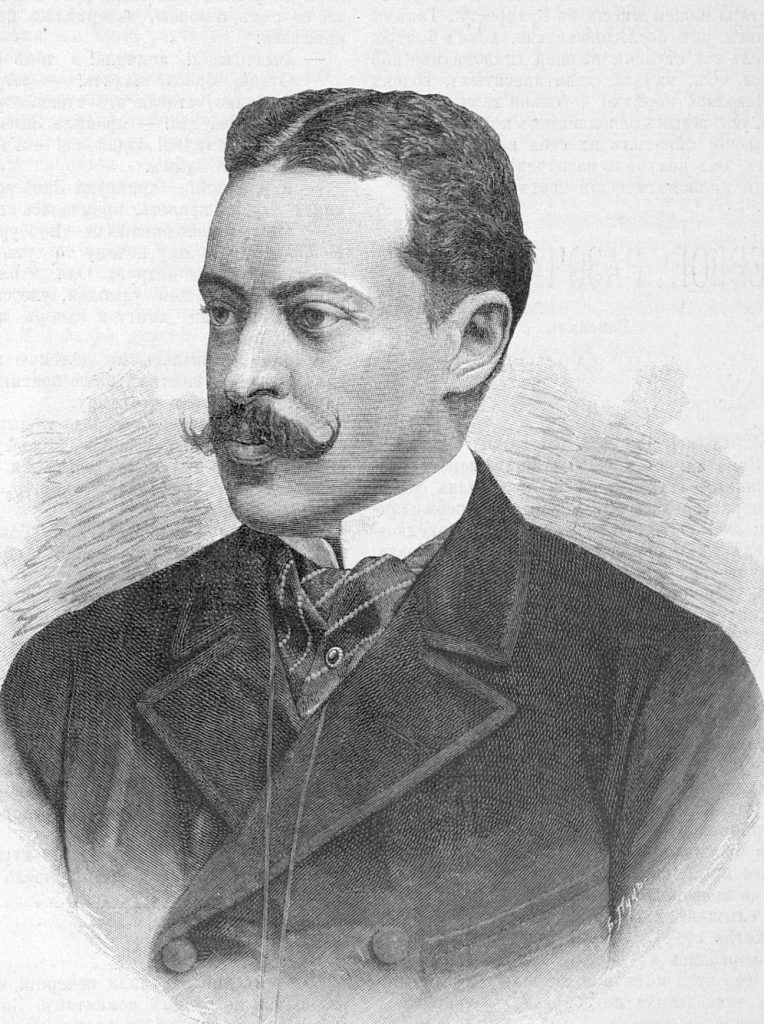
Alexander Isvolski. “[Nicholas II] wrote to his mother on 18 March [1909] that ‘last week … I held a Council of Ministers in connection with that wretched Austro-Serbian question [the Bosnia crisis of 1908-1909]. This affair, which had been going on for six months, has suddenly been complicated by Germany telling us we could help to solve the difficulty by agreeing to the famous annexation while, if we refused, the consequences might be very serious and hard to foretell. Once the matter had been put as definitely and unequivocally as that, there was nothing for it but to swallow one’s pride, give in and agree. The Ministers were unanimous about it. If this concession on our part can save Serbia from being crushed by Austria, it is, I firmly believe, well worth it. Our decision was the more inevitable as we were informed from all sides that Germany was absolutely ready to mobilise … But our public does not realise this and it is hard to make them understand how ominous things looked a few days ago, now they will go on abusing and reviling poor Isvolsky [Russia’s minister of foreign affairs] even more than before.’ The next day Nicholas wrote a postscript to his letter: ‘Nobody except the bad people want war now, and I think we have been very close to it this time. As soon as the danger is over people immediately begin shouting about humiliation, insults etc. For the word ‘annexation’ our patriots were prepared to sacrifice Serbia, whom we could not help at all in the case of an Austrian attack. It is quite true that the form and method of Germany’s action – I mean towards us – has simply been brutal and we won’t forget it. I think they were again trying to separate us from France and England – but once again they have undoubtedly failed. Such methods tend to bring about the opposite result. ” (D. Lieven, Nicholas II. Emperor of All the Russias [Londen 1993], p. 193-194)
![Der Kaiser in Tangiers (1905).
[Wilhelm II] undertook the Tangiers mission against his will. It was Holstein\'s idea, backed by Bülow. They wanted to be rid of Théophile Delcassé, the virulently anti-German French Foreign Minister who had been responsible for the Entente Cordiale ... The Wilhelmstrasse aimed to put a spoke into the developing Franch-British alliance ... [The \'Hamburg\'] left port on 23 March [1905],](https://www.uwstamboomonline.nl/passie/sites/fotoalbum/2147/50426.jpg)
Der Kaiser in Tangiers (1905). [Wilhelm II] undertook the Tangiers mission against his will. It was Holstein’s idea, backed by Bülow. They wanted to be rid of Théophile Delcassé, the virulently anti-German French Foreign Minister who had been responsible for the Entente Cordiale … The Wilhelmstrasse aimed to put a spoke into the developing Franch-British alliance … [The ‘Hamburg’] left port on 23 March [1905], “its political purpose somewhat shrouded mystery”. … In Tangiers William showed no inclination to land at all, and thought he had done enough when he pressed Red Eagle into the hand of his envoy [Von Kühlmann] … Kühlmann, however, had a telegram from Bülow which indicated that the story of the visit had already been released to the press … William was on dry land for around two hours. … Delcassé did indeed fall from grace … [On 4 Aug. 1905, when Bülow threatened to resign because of “Björkö, William wrote to him:] “Do not forget that you staked me personally against my wish, in Tangiers on the success of your Moroccan policy. … I went on shore to please you, because the cause of the fatherland demanded it, mounted a strange horse, in spite of my poor horsemanship, owing to my crippled left arm, and the horse was within an ace of costing me my life that you had staked. I rode through mobs of Spanisch anarchists because you wanted me to and your policy was to profit by it.” (G. MacDonogh, The Last Kaiser [Londen 2001], p. 283-289)

Joseph Chamberlain. “At a lunch in Potsdam on 23 Oct. [1901] [Wilhelm II] made an attack on Joseph Chamberlain. He had previously expressed his opinion to Wallcourt Waters [British military attaché] that Chamberlain should spend a night in the veldt [in S. Africa]. This time the suggestion was more draconian: Chamberlain should be taken to South Africa, marched across the continent and then shot … Waters objected: ” … many of our countrymen would like to see Mr. Chamberlain prime minister of England. They positively adore him.” “Ach was”, said William, “They couldn’t.” Two days later Chamberlain responded in kind, with an anti-German speech in which he excused the brutal behaviour of British troops in South Africa by pointing to the precedent established by the Germans when dealing with snipers during the Franco-Prussian War.” (G. MacDonogh, The Last Kaiser [Londen 2001], p. 265

Marchand in Fashoda (1898). ” ‘The problem is’, Delcassé [the French minister of Foreign Affairs] wrote in his diary, how to ocmbine the demands of national honour with the necessity of avoiding a naval war, which we are absolutely incapable of carrying through, even with Russian help.’ It seems unlikely on the evidence now available, that the French government ever seriously considered the possibility of using force to resolve the situation at Fashoda, and there is no doubt that in 1898 the French navy would have been no match for the British … Delcassé judged that in a conflict with the British it would be at the bottom of the sea in a forthnight. … On 5 November, having telegraphed his instructions to Cairo, Delcassé instructed de Courcel in London to inform the British government that ‘in view of the precarious situation and state of health of Marchand and his companions [in Fashoda] the government had decided to leave Fashoda.'” (D. Bates, The Fashoda Incident of 1898. Encounter on the Nile. [Oxford 1984], p. 158)

“Het Iran-contra-schandaal was [president George Herbert Walker] Bush in juni [1992] gaan achtervolgen, toen Caspar Weinberger werd aangeklaagd wegens vijf misdrijven, waaronder tweemaal meineed. Een aanklacht werd verworpen, maar op 30 okt. 1992 sprak een federale onderzoeksjury een andere aanklacht uit tegen Weinberger. Deze verwees naar een nota van 7 januari 1986, die aantoonde dat George Bush wel degelijk het gesprek had bijgewoond en de wapens-voor-gijzelaars-overeenkomst had gesteund waartegen Weinberger en Shultz zich hadden verzet. Vijf jaar lang had Bush ontkend dat hij op de hoogte was van het plan en keer op keer had gezegd: “Ik stond erbuiten.” Nu was er bewijs dat hij vijf jaar lang had gelogen.” (Kitty Kelly, De Familie Bush [Amsterdam 2004], p. 560-561
 Lord Louis Mountbatten of Burma. “The exact circumstances of the ‘plot’ will probably never be made public, but it was alleged that Lord Mountbatten and Cecil King, the former Chairman of the Daily Mirror had canvassed opinion on the support a military take-over might receive. One meeting, which took place early in May 1968 at Lord Mountbatten’s London home, was attended by Hugh Cudlipp and Sir Solly Zuckerman, Chief Scientific Adviser to the government. Mountbatten reported that the Queen had become concerned over the very large number of letters she had received protesting about the Wilson government [Labour government 1964-1970]. According to Mountbatten, no other monarch had ever been sent so much mail on one subject. He asked, in the broadest terms, what action should be taken. Zuckerman wanted no part of it. By the time Furnival Jones [Director General of MI5] reported to the Prime Minister, the meeting had been interpreted as the first stage in a military coup, with Mountbatten and Cecil King the principal organizers. Wilson was appalled at the prospect of such a ‘plot’ and instructed both MI5 and the Cabinet Secretary, Sir Burke Trend, to investigate further. No doubt this action would have been enough to ensure the collapse of the ‘plot’, if indeed one did actually exist. Certainly no military personnel were discovered to be directly involved, although Mountbatten, having been Chief of the Defence Staff, had the very best connections. (Nigel West, MI5 1945-1972, A matter of trust [Coronet Books 1983], p. 221-222 |

Sir Roger Hollis, directeur generaal van MI5 1956-1965. “Verder was er Konstantin Volkov, een hoge officier van de NKVD, die [in 1945] het Britse consulaat in Istanbul benaderde met het aanbod om tegen betaling de namen te onthullen van Sovjet spionnen in Groot-Brittannië. Hij gaf een medewerker van de ambassade een lijst van de ministeries waar de spionnen zouden werken. … Toen in 1951 de zaak tegen [Kim] Philby werd voorbereid nam MI5 aan dat [de] laatste spion naar wie Volkov verwees [‘Ik weet bijvoorbeeld dat een van deze agenten de functie vervult van hoofd van een afdeling van de Britse contraspionage’] Philby was, want die vervulde in 1945 inderdaad de functie van hoofd van een afdeling van MI6 – de afdeling contraspionage die verantwoordelijk was voor de Sovjet contraspionage. [De vertaling van de lijst van Volkov deugde echter niet, zo concludeerde Peter Wright, die in 1965 deelnam aan een onderzoek naar Sovjet infiltratie in de Britse geheime diensten. De juiste vertaling zou veeleer moeten luiden:] ‘Ik weet bij voorbeeld dat een van onze agenten de functie vervult van hoofd [d.w.z. waarnemend hoofd is] van een sectie van het Britse directoraat voor contraspionage.’ En met dat laatste was dan niet MI6 maar MI5 bedoeld.] Wat dat betekende was glashelder. … [Als deze conclusie juist was], kon dit niet slaan op Philby en evenmin op Blunt, want die waren nooit ergens waarnemend hoofd van geweest. Er was maar één man die in 1944-1945 waarnemend hoofd was geweest van een sectie van het Britse directoraat voor contraspionage. Dat was Roger Hollis. De tweede beschuldiging was die van Goezenko over de spion Elli bij MI5. … De kern van Goezenko’s verhaal was heel simpel. Hij zei dat hij wist dat er een spion was bij ‘vijf van MI’. Dat had hij gehoord van Ljoebimov, een vriend die in 1942 samen met hem in de centrale codeerruimte van de GROe in Moskou had gewerkt. … Er was iets Russisch aan Elli, zei Goezenko, iets in zijn achtergrond, ofwel omdat hij in Rusland was geweest, ofwel omdat hij de taal kende. Elli was een belangrijke spion omdat hij de dossiers over Russen die in Londen bij MI5 kon weghalen. Ljoebimov had hem stukken laten zien van de telegrammen van de spion met de codenaam Elli. Als Elli’s telegrammen binnenkwamen was er volgens Goezenko altijd een vrouw in de codeerruimte aanwezig die de ontcijferde berichten als eerste las en ze zo nodig direct naar Stalin bracht. …” (Peter Wright. Spycatcher [Amsterdam 1987], p. 250, 295-296)

Cecil King (1901-1987. “In 1968 waren de emoties binnen MI5 al eens hoog opgelopen. Men had toen geprobeerd [de Britse premier Harold] Wilson in moeilijkheden te brengen via Cecil King, de grote baas van de Daily Mirror. King, die al jarenlang een agent van [MI5] was, liet weten dat hij alles zou publiceren wat MI5 naar hem wilde doorspelen. Dit was een onderdeel van Cecil Kings ‘coup’, die volgens hem de Labourregering zeker ten val zou brengen en zou vervangen door een coalitie geleid door Lord [Louis] Mountbatten. Ik [Peter Wright] zei in 1968 tegen F.J.[M.Furnival Jones, directeur-generaal van MI5] dat de hartstochten hoog oplaaiden , maar hij reageerde kalm. ‘Tegen iedereen die geheim materiaal wil doorspelen kun je zeggen dat ik niets kan doen om hem te redden.’ Hij wist dat deze boodschap te bestemder plaatse zou worden opgevangen.” (Peter Wright, Spycatcher [Amsterdam 1987], p. 391-392)

“Although it was extremely risky to [John F.] Kennedy’s image, during this period [May 1962] Marilyn [Monroe] moved into the beach house [of JFK’s brother-in-law Peter Lawford and his sister Patricia Kennedy] at Santa Monica] … There were times that Jack would be there having sex with Marilyn, separated from the Lawfords by only a dividing wall. … Peter also acted as the official recorder of these events. … Jack liked to get into the tub, then have Marilyn climb on top of him while they had sex in the water. Peter would be asked to take photographs, the president delighting in having his activities recorded. … After the president’s death, as many of the photographs as could be found were destroyed. Since no one knew who had taken all of them or where they might have gone, there was great fear that some might have remained unrecovered. Peter, for one, was not asked to destroy his, apparently because no one realized he had some, and he retained them after his divorce [from Patricia Kennedy].” (Patricia Seaton Lawford, The Peter Lawford Story [New York 1990] p. 178-179) “What happened next has been the subject of countless hours of debate and more nonsense than any other issue related to the Kennedy presidency except his assassination. … So what did happen? An unstable woman was pushed beyond her limits by the unfeeling actions of Jack Kennedy, Bobby Kennedy, and, in a sense, Peter. The situation started when Bobby had a talk with Marilyn concerning her constant calls to the private quarters of the White House. She was told that she was not going to be first lady. She was not even a serious affair for the president. … Right after Bobby talked with her, Marilyn went to the Cal-Neva Lodge, a resort in which Frank Sinatra had had an interest at one period of time and a popular place for entertainment figures to both rest and play. There she proceeded to overdose on proscription drugs. Her stomach had to be pumped and she returned to her home.” (Idem, p. 180-181)
![{Op vrijdag 23 mrt. 1962] vloog Kennedy naar Californië.] Het weekend bracht hij met Dave Powers in Palm Springs door in het luxueuze huis van de Republikeinse zanger Bing Crosby. Ze waren van plan geweest op het landgoed van Frank Sinatra te logeren, maar op aanraden van Bobby Kennedy had hij dat bezoek afgezegd. RFK was sinds eind februari op de hoogte van Hoovers inlichtingen over [Judith]Campbell en de maffia en ook van het feit dat Sinatra, een goede vriend van [Sam] Giancana, haar had omschreven als iemand \'die het in het oosten met John Kennedy hield\'. Sinatra\'s relatie met de Kennedy\'s was gespannen geweest sinds Jackie zich fel tegen diens betrokkenheid bij presidentiële campagne [in 1960] had verzet. Op instigatie van [Peter] Lawford was de zanger als impressario van het inaugurele gala opgetreden, maar Sinatra was volgens [Sinatra\'s dochter Tina] ..., beledigd dat hij Jack in het Witte Huis \'slechts éénmaal te spreken had gekregen\'. De reden was, schreef Tina, dat haar vader \'een bladzijde in de geschiedenis belichaamde die [de Kennedy\'s] liever zouden hebben uitgewist\'. Tijdens de campagne was Sinatra volgens Tina opgetreden als tussenpersoon Joe Kennedy [de vader van de toekomstige president] en [maffiabaas] Giancana: Joe had Giancana nodig gehad om de steun van \'door de maffia geïnfiltreerde vakbonden\' voor de voorverkiezing in West-Virginia te verkrijgen, maar omdat de Ambassadeur het zich niet kon veroorloven de maffiabaas zelf te benaderen, had hij Sinatra gevraagd dat namens hem te doen. (S. Bedell Smith, Stijl en Macht [Utrecht 2005], p. 269-270)](https://www.uwstamboomonline.nl/passie/sites/fotoalbum/2147/49271.jpg)
{Op vrijdag 23 mrt. 1962] vloog Kennedy naar Californië.] Het weekend bracht hij met Dave Powers in Palm Springs door in het luxueuze huis van de Republikeinse zanger Bing Crosby. Ze waren van plan geweest op het landgoed van Frank Sinatra te logeren, maar op aanraden van Bobby Kennedy had hij dat bezoek afgezegd. RFK was sinds eind februari op de hoogte van Hoovers inlichtingen over [Judith]Campbell en de maffia en ook van het feit dat Sinatra, een goede vriend van [Sam] Giancana, haar had omschreven als iemand ‘die het in het oosten met John Kennedy hield’. Sinatra’s relatie met de Kennedy’s was gespannen geweest sinds Jackie zich fel tegen diens betrokkenheid bij presidentiële campagne [in 1960] had verzet. Op instigatie van [Peter] Lawford was de zanger als impressario van het inaugurele gala opgetreden, maar Sinatra was volgens [Sinatra’s dochter Tina] …, beledigd dat hij Jack in het Witte Huis ‘slechts éénmaal te spreken had gekregen’. De reden was, schreef Tina, dat haar vader ‘een bladzijde in de geschiedenis belichaamde die [de Kennedy’s] liever zouden hebben uitgewist’. Tijdens de campagne was Sinatra volgens Tina opgetreden als tussenpersoon Joe Kennedy [de vader van de toekomstige president] en [maffiabaas] Giancana: Joe had Giancana nodig gehad om de steun van ‘door de maffia geïnfiltreerde vakbonden’ voor de voorverkiezing in West-Virginia te verkrijgen, maar omdat de Ambassadeur het zich niet kon veroorloven de maffiabaas zelf te benaderen, had hij Sinatra gevraagd dat namens hem te doen. (S. Bedell Smith, Stijl en Macht [Utrecht 2005], p. 269-270)
![Secretary of Defense Robert McNamara reported to the President on Arpil 20, 1965, from Honolulu, where he had just met General Westmoreland and Ambassador Maxwell Taylor on Vietnam. (Taped conversation between LBJ and RM): Robert MacNamara: I think we can all be in agreement that we\'ve got to do more to win in the South. I think the introduction of US troops that will be involved will be agreed upon by the various parties. ... LBJ: What do they think about all these statements about the Chinese coming in? ... RM: none of us feel that the Chinese are likely to come in, in the near term. They are reasonably optimistic that over the next three to six months, with additional US combat troops in there ... they feel that they can sufficiently stiffen the South Vietnamese and strengthen their forces to show Hanoi that Hanoi cannot win in the South. It won\'t be that the South Vietnamese can win. But it will be clear to Hanoi that Hanoi can\'t win. And this is one of the objectives we\'re driving for. There is general agreement we reached this morning that it would be unwise in the near future ... to bomb Hanoi, Haiphong, or any of that area. ...Despite some ... favorable signs [the Vietcong kill had been two weeks \'very high\'] ... there is ... this very large Vietcong buildup over the last several months and the concentration of Vietcong strength in the center of the country, which would break out at any time and cause serious trouble to us. And they\'re very much afraid of some catastrophic loss at Bienhoa or Danang or one of these areas. And it\'s to protect against that that they now agree that there should be some US combat troops introduced ... I mean, in the next 90 to 120 days. Beyond that, there is some disagreement as to how much eventual US troop involvement would be required in South Vietnam. ... They feel much better [about the stability of the South Vietnamese government of Prime Minister Quat] ... To avoid possible catastrophe at Bienhoa, where we have a huge concentration of equipment and US forces, and also at Danang, I think we would recommend to you ... introduction of a brigade at Bienhoa and several additional battalions at enclaves along the coast. This [is] both to protect us against catastrophe and also to relieve some of the South Vietnamese and ... allow some of our units to participate in counterinsurgency operations. And as a result of all this, to show the North Vietnamese that they can\'t win in the South. ... (M. Beschlosse, Reaching for Glory [New York 2001], p. 282-183)](https://www.uwstamboomonline.nl/passie/sites/fotoalbum/2147/49234.jpg)
Secretary of Defense Robert McNamara reported to the President on Arpil 20, 1965, from Honolulu, where he had just met General Westmoreland and Ambassador Maxwell Taylor on Vietnam. (Taped conversation between LBJ and RM): Robert MacNamara: I think we can all be in agreement that we’ve got to do more to win in the South. I think the introduction of US troops that will be involved will be agreed upon by the various parties. … LBJ: What do they think about all these statements about the Chinese coming in? … RM: none of us feel that the Chinese are likely to come in, in the near term. They are reasonably optimistic that over the next three to six months, with additional US combat troops in there … they feel that they can sufficiently stiffen the South Vietnamese and strengthen their forces to show Hanoi that Hanoi cannot win in the South. It won’t be that the South Vietnamese can win. But it will be clear to Hanoi that Hanoi can’t win. And this is one of the objectives we’re driving for. There is general agreement we reached this morning that it would be unwise in the near future … to bomb Hanoi, Haiphong, or any of that area. …Despite some … favorable signs [the Vietcong kill had been two weeks ‘very high’] … there is … this very large Vietcong buildup over the last several months and the concentration of Vietcong strength in the center of the country, which would break out at any time and cause serious trouble to us. And they’re very much afraid of some catastrophic loss at Bienhoa or Danang or one of these areas. And it’s to protect against that that they now agree that there should be some US combat troops introduced … I mean, in the next 90 to 120 days. Beyond that, there is some disagreement as to how much eventual US troop involvement would be required in South Vietnam. … They feel much better [about the stability of the South Vietnamese government of Prime Minister Quat] … To avoid possible catastrophe at Bienhoa, where we have a huge concentration of equipment and US forces, and also at Danang, I think we would recommend to you … introduction of a brigade at Bienhoa and several additional battalions at enclaves along the coast. This [is] both to protect us against catastrophe and also to relieve some of the South Vietnamese and … allow some of our units to participate in counterinsurgency operations. And as a result of all this, to show the North Vietnamese that they can’t win in the South. … (M. Beschloss, Reaching for Glory [New York 2001], p. 282-183)

Ellen Rometsch: “She was a Washington party girl with a quality that made her natural for Jack Kennedy: she was stunningly attractive … The President [John F. Kennedy who had a sexual relationship with her in 1963] did not know [that she was born a German in 1936 in a village that became part of the DDR after World War II, that as a child she had been a member of a Communist youth group and as young adult she joined another CP group. She fled with her family to the BRD in 1955 and moved to the US in 1961 with her second husband, a sergeant who was assigned to the BRD Ambassy in Washington.] Rometsch, 27 when they met, fulfilled another essential criterion for the president: she was a professional, a prostitute who would take her money, do what was wanted, and keep silent. Kennedy stumbled upon Rometsch in the usual way, through one of his many procurers in Washington, this time Bill Thompson, the railroad executive. Rometsch had become one of Bobby Baker’s girls by early 1963. [Baker was the secretary to the Senate Democrats]. He was also the man who did what the Democratic senators needed done, and discreetly got them what they wanted, including women. … It was arranged … for Thompson to pick Rometsch up at her apartment in northwest Washington and take her to the White House. … When he next went to the White House … “the president told me that she was the most exciting woman that he had been with.” … In all, Baker estimated, Rometsch visited Kennedy at least ten times that spring and summer [of 1963]. In June the Harold Macmillan government was rocked by a sex scandal that led to the resignation of John Profumo, the British minister of war … There were fears, the press breathlessly reported, that Profumo, while cavorting with [call-girl Christine] Keeler and at least four other prostitutes, including a Chinese beauty named Suzy Chang and a bleached-blond Czech named Maria Novotny, was spending his weekends answering the girls’ questions – planted by Ivanov [a Soviet naval attaché] – about British nuclear policy. … Maria Novotny and Suzy Chang worked as high-class prostitutes in New York as well as London, and, as Novotny would tell reporters later, she and Chang had serviced Jack Kennedy before and after the 1960 presidential election. …[On June 29, 1963 the New York Journal-American published a story,] linking “a man who holds a ‘very high’ elective office” in the Kennedy administration to “a Chinese girl” in the Profumo scandal. [It was written by James Horan and Dom Frasca.] On Monday [July 1, 1963], with his brother still in Italy, Bobby Kennedy [secretary of Justice] summoned Horan and Frasca to the Justice Department … Kennedy was forced to ask for the name of the American official. “It was the President of the United States”, Frasca told the attorney general. [The source of their information was a conversation on June 28 between Frasca and a London journalist named Peter Earle.] … On July 3 Hoover [informed] him of yet another allegation about his brother – one involving Ellen Rometsch. Hoover reported … that a sometime bureau informant had spent time with Rometsch and been told that she was having “illicit relations with highly placed governmental officials”. … “Rometsch is alleged … to be from East Germany and to have formerly worked for Walter Ulbricht”, the communist leader of East Germany. … That summer, the FBI’s counterintelligence division opened an investigation into Rometsch as a possible spy. … The Kennedy brothers did not wait for the FBI’s report. On August 21, 1963, Rometsch was abruptly deported to Germany, at the official request of the State Department. (S.M. Hersh, The Dark Side of Camelot [Boston 1997], p. 387 e.v.) In 1987 Suzy Chang only wanted to admit that she had met and dined with Kennedy at the 21 Club in New York during the 1960 campaign. She also said that Stephen Ward was “a good, good, good friend” and that she knew all the people he knew. (A. Summers and Steve Dorrill, Honeytrap (Coronet edition, 1988), p. 266-267.]

Martin Luther King: “Na maanden van verzet was Bobby [Kennedy, minister van Justitie] op 10 oktober [1963] onder de druk van het hoofd van de FBI [J. Edgar Hoover] bezweken en hij verleende toestemming om de telefoon van Martin Luther King jr. af te tappen. Het was Hoover er zogenaamd om te doen om te bewijzen dat de mensenrechtenactivist banden had met communisten, maar hij wilde vooral Kings buitenechtelijke verhoudingen onderzoeken. Gezien het mogelijke gevaar van de zaak-Rometsch [Ellen Rometsch, die seksuele betekkingen met president zou hebben gehad en verdacht werd van spionage] kon Bobby weinig anders doen dan Hoover tegemoetkomen, al wist hij dat het aftappen voor onrechtmatige doeleinden gebruikt zou worden.” (S. Bedell Smith, Stijl en macht: de Kennedy’s en een tijdperk. [Utrecht 2005], p. 417) “In an unpublished version of his presidential memoirs [The Vantage Point], Johnson said, “After I became President, I discovered that [RFK’s] Justice Department had been and still was tapping wires. I had to spell out my orders very specifically so that there would be no wiretapping in the Johnson administation.” (Michael Beschloss, Reaching for Glory [New York 2001], p. 251) “Het was [FBI directeur Hoover’s] obsessie Washington ervan te overtuigen dat de burgerrechtenbeweging werd gedomineerd door communisten – ongeacht of de bewijzen deze beschuldiging staafden. In oktober 1963, nadat hij de bewering van zijn eigen agenten dat die communistische overheersing niet bestond had genegeerd, had hij een massale surveillanceoperatie tegen King op gang gebracht – telefoontaps waarvoor hij Robert Kennedy onder druk toestemming had ontfutseld en verborgen microfoons die nooit formeel door iemand waren goedgekeurd. Eind 1963 hadden de opnamen nog niets opgeleverd om de zwarte leider als een communist te brandmerken, maar een heleboel om twijfel te wekken ten minste ten aanzien van zijn zedelijke gedrag. Dominee King hield van seks en liet zich niet weerhouden door het feit dat hij kerkdienaar was en getrouwd was. … Op zijn reizen door het land zocht King ontspanning in de armen van drie vaste minaressen en soms bij prostituées. Een groot deel van zijn gevolg, met inbegrip van zijn intieme vriend dominee Ralph Abernathy, deed hetzelfde. … In december 1963 … werd het brandpunt van de aandacht verlegd. De kwestie van de mogelijke banden met het communisme zou voortaan slechts de nominale reden voor [de FBI-]surveillance zijn, waarachter een volstrekt ander doel schuilging. Edgars medewerkers zwoeren nu samen om het ‘gewenste resultaat’, het ‘neutraliseren van King als effectief ‘negerleider, te bereiken. … Er moest een ‘contraspionage-operatie’ worden opgezet om King ‘in diskrediet te brengen’, met gebruikmaking van dominees, ’teleurgestelde kennissen’, ‘agressieve’ journalisten, ‘gekleurde’agenten, en zelfs de vrouw en de huishoudster van dr. King, en door ‘een goed-ogende vrouwelijke infiltrante in Kings kantoor te plaatsen’. De minister van Justitie werd onkundig gehouden. Veertien dagen later, toen ze hoorden dat King zou aankomen in het Willard Hotel in Washington, haastten agenten zich om microfoons en bandrecorders te installeren. Op de vijftien spoelen die dit opleverde … stond precies wat de FBI nodig had – de geluiden van een wat aangeschoten groep, onder wie King, zijn collega’s en twee vrouwen van de Naval Yard in Philadelphia. … Edgar belde persoonlijk president Johnsons medewerker Walter Jenkins op om het materiaal te beschrijven en stuurde [Assistant Director] Cartha Deloach vervolgens met een transcriptie naar het Witte Huis. … [In Washington hoorden FBI-agenten] hoe King zijn metgezellen schertsend dubbelzinnige namen gaf en schuine moppen over seks en religie vertelde, waaronder een grove seksuele grap over wijlen president Kennedy en zijn weduwe, Jaqueline. Tot nu toe had Edgar, blijkbaar uit angst dat ce minister van Justitie King zou waarschuwen, de resultaten voor Robert Kennedy achtergehouden. Nu zorgde hij ervoor dat de transcriptie van Kings ‘lasterpraat’ over de overleden president diens broer onder ogen kwam. Robert was ontzet. President Johnson luisterde naar enkele van de oorspronkelijke opnamen. … Maar wat Edgar ook deed of zei over King, niets kon Johnson afhouden van zijn groeiende betrokkendheid bij de burgerrechten.” (A. Summers, Het J. Edgar Hoover dossier. [Weert 1994)], p. 473 e.v.)
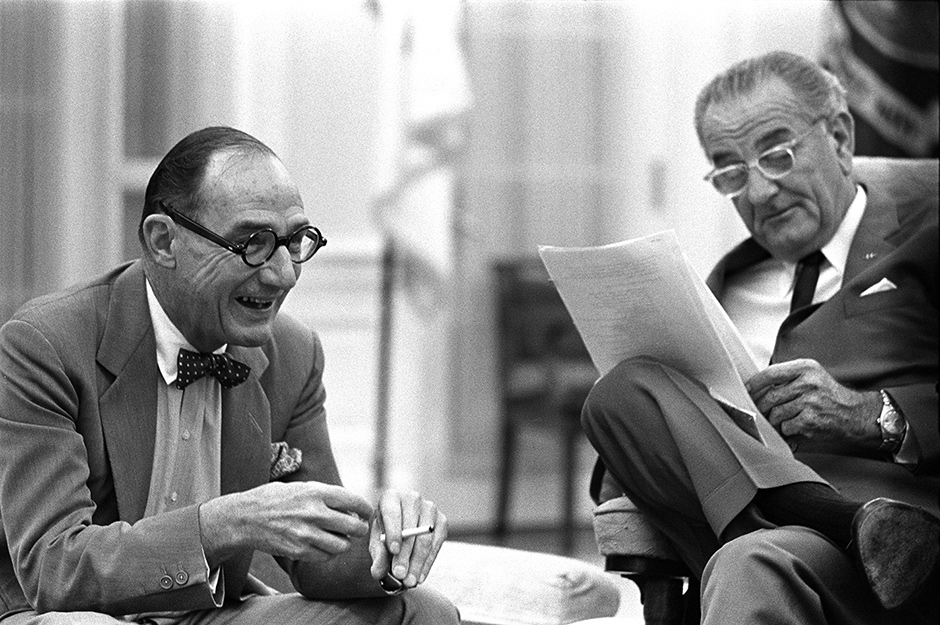
Joe Alsop. Columnist, Washington Post. (March 29, 1965) “Johnson is angry that his erstwhile friend Joseph Alsop, the columnist, has been complaining to friends that LBJ has ordered his telephone line tapped. Johnson is especially piqued because one of the hidden weapons he believes he has against his enemy Robert Kennedy is knowledge that RFK in 1963 ordered the FBI to wiretap Martin Luther King, Jr., and, as Attorney General, otherwise trampled the civil liberties of personal and political adversaries. [On March 29, 1965 LBJ told Attorney General Katzenbach: “I want them [the taps] brought to an irreducible minimum. And only in the gravest cases. I want you to authorize them, and then, by God, I want to know about them. I’m against wiretapping, period. […] I assume that in one of our friend’s [Martin Luther King] cases, from what I have seen, that that must be where the evidence comes from. I mean on [his] Hawaii jaunts and … California, and with some of the women. […] Nobody’s ever told me that’s where it comes from. And I don’t want to know. […] Joe Alsop is having a change of life […]He’s just short of the asylum now. He’s had two or three breakdowns. But he’s going around all over town saying we’ve got his wire tapped. That doesn’t amount to much because most people know he’s crazy. But … I’m his friend, and I saved him from McCarthy when McCarthy had ahold of this other stuff back there on Joe. [In the 1950’s, Senator Joseph McCarthy responded to an Alsop attack by making a thinly veiled reference to Alsop’s secret homosexuality]” (Michael Beschloss, Reaching for Glory [New York 2001], p. 251-252) “Tijdens een reisje naar de Sovjet-Unie in 1957 was hij door de KGB in de val gelokt en in flagranti met een jongeman gefotografeerd. De poging van de Sovjets om hem tot spionage te chanteren was mislukt, maar hij had zijn gedrag aan de CIA en FBI moeten onthullen. J. Edgar Hoover had de details gedeeld met kopstukken van de regering-Eisenhower en tegen 1960 was het geheim naar de politieke en journalistieke gemeenschap doorgesijpeld. “Joe was homoseksueel, en Jack Kennedy wist ervan”, zei Ben Bradlee. (S. Bedell Smith, Stijl en macht. [Utrecht 2005), p. 90)

Walter Jenkins (Special Assistant to President Johnson 1963-1964) “Johnson has long feared that the Goldwater campaign would pin some calumny on him in the last weeks of the [1964 Presidential]campaign. Now his nightmare seems to be coming to pass. Abe Fortas, his personal lawyer, troubleshooter, and confidant, calls to break the news that late on October 7, his closest aide, Walter Jenkins, whom LBJ once called “my vice president in charge of everything”, was arrested in a pay toilet stall in the basement men’s room of the YMCA a few blocks from the White House while performing oral sex on another man. Jenkins had forfeited fifty dollars in collateral and returned to work without telling the President what had happened. But now the news is spreading through Washington. [Jenkins resigned on Oct. 14, 1964 …] Terrified that the Jenkins scandal would damage his national popularity, LBJ had asked his private pollster, Oliver Quayle, to conduct a flash poll on its impact. Quayle reported that Americans did not seem to care. Johnson also enjoyed some luck. Within forty-eight hours of the Jenkins revelation, the press and the nation were distracted by the first Chinese nuclear test, Nikita Khrushchev’s ouster as Soviet leader, and the defeat of the British Conservative government, not to mention the World Series. […] Goldwater did not stress the issue. Privately he told reporters, “What a way to win an election – Communists and cocksuckers!” Johnson felt he had another fire wall against the Jenkins scandal. He confided to [FBI Assistant Director] Deke DeLoach that, from his Air Force Reserve service with Goldwater, Jenkins had learned of Goldwater’s use of prostitutes and a paternity suit by a Houston woman. An opponent with such weaknesses in his own private life was unlikely to encourage a war of all against all.” (Michael Beschloss, Reaching for Glory [New York 2001], p. 55 e.v.)

Eisenhower and ending the Korean War: (taped conversation between Lyndon Johnson and senator Everett Dirksen Feb. 17, 1965): “[Eisenhower] thinks we are in there [Vietnam] a long time. He said we had a long time in Korea … When he came in as President, they had been negotiating in Korea for a year and a half. But we had agreed there that we wouldn’t cross a certain area. And we had agreed there that we would use only a small type of weapon. And he said that they knew that if we didn’t go across a certain area, and if we would only use a small type of weapon, that we never could have any settlement because we’d tied our hands. […] So he said the first thing he did was call up Nehru [Actually this message was transmitted by Secretary of State Dulles during a May 22, 1953 talk with Indian Prime Minister Nehru] because he knew Nehru was a leak. He told Nehru that … if [the North Koreans] didn’t settle … he wasn’t going to be bound by any sanctuaries … and he wasn’t going to be bound by any weapons. He said, “We made a hell of a lot of weapons. We spent a lot of money on them. What the hell we make them for if we don’t ever use them if we have to?” He said he never intended to do anything except let that get back to them … Then they came in wanting to negotiate with him!” (Michael Beschloss, Reaching for Glory [New York 2001], p. 182-183)

Tonkin Gulf Incident: taped conversation between LBJ and Secretary of Defense Robert McNamara, Sept. 18, 1964: “LBJ: Now, Bob. I found over the years that we see and we hear and we imagine a lot of things in the form of attacks and shots […] and people running at us, and I think it would … make us very vulnerable if we conclude that these people [the North Vietnamese] were attacking us and we were merely responding and it develops that that just wasn’t true at all. And I think we ought to check that very, very carefully. And I don’t know why in the hell, some time or other, they can’t be sure that they are being attacked. It looks like to me they would hear a shot or see a shot, or do something before they just get worked up and start pulling a LeMay on us. I think that if we have this kind of response and then it develops that we just started [it] with our own destroyers that people are going to conclude … that we’re just playing cops, trying to get a lot of attention, and trying to show how tough we are, I want to be tough where we … are justified in being tough … But I sure want more caution on the part of these admirals and these destroyer commanders … about whether they are being fired on or not. […] Take the best military man you have, though, and just tell him that i’ve been watching and listening to these stories for thirty years before the Armed Services Committee, and we are always sure we’ve been attacked. Then in a day or two, we are not so damned sure. And then in a day or two more, we’re sure it didn’t happen at all!” (Michael Beschloss, Reaching for Glory. Lyndon Johnson’s White House Tapes 1964-1965 [New York 2001], p. 38-39)

Christiaan Lindemans alias King Kong. “In zijn hoedanigheid van bevelhebber BS[Binnenlandse Strijdkrachten] betrekt Bernhard in september [1944]een hoofdkwartier in Hotel Metropole in het inmiddels bevrijde Brussel. … In oktober 1944 arresteert de Britse contraspionagedienst MI5 Cornelis Verloop, een Nederlandse spion die al jaren voor de Duitsers werkt. In het beruchte ondervragingskamp 020, nabij Ham Common in Engeland, noemt hij de namen van iedereen die hij bij de Nederlandse afdeling van de Abwehr kent, maar hij krijgt weinig respons van zijn ondervragers. Tot hij het woord ‘Arnhem’ [Operatie Market Garden] laat vallen in connectie met verraad door een zekere Christiaan Lindemans, de man die vanwege zijn buitengewone afmetingen in Nederland al jaren de bijnaam King Kong draagt. De Britten willen deze Lindemans uiteraard graag arresteren. Er is echter een klein probleempje: de uit de kluiten gewassen Nederlander bevindt zich vanaf september 1944 in de entourage van Prins Bernhard op diens nieuwe hoofdkwartier in Brussel. De prins is er, net als zijn medewerkers, van overtuigd dat Lindemans een verzetsheld is. … [MI5 geeft hun verbindingsofficier Knight opdracht Lindemans zo snel mogelijk te arresteren. Knight laat om onduidelijke redenen de arrestatie over aan een Nederlandse inlichtingenman Oreste Pinto. Pinto verwacht een enorme vechtpartij, maar King Kong gaat vrijwillig mee. Hij wordt in 020 verhoord.] Lindemans geeft onmiddellijk toe dat hij voor de Duitsers werkt. De Abwehr houdt volgens hem zijn broer en echtgenote gevangen en chanteert hem om het Nederlandse verzet te verraden. Zolang hij nuttige informatie geeft, blijven zijn verwanten leven. Lindemans legt … uit hoe hij als ‘stay behind’-agent in Brussel de bevrijding van de stad door geallieerde legers meemaakt. Hij meldt zich na enkele dagen op het nieuwe hoofdkwartier van Bernhard … [Hij ontmoet daar Kas de Graaf, die hij eerder in de oorlog heeft helpen ontsnappen naar Spanje. De Graaf vertrouwt hem en stelt hem voor aan de prins.] De prins vraagt Lindemans om verbindingen te leggen met het verzet in Nederland. King Kong gaat op het aanbod in en wint in de dagen die volgen het vertrouwen van de prins. Hij krijgt zodanig veel vrijheid, dat hij zelfs toegang heeft tot een kamer waar geheime documenten worden opgeslagen. Daar ziet hij naar zijn zeggen de plannen voor Market Garden. Hij leert ze uit het hoofd en de volgende keer dat hij door het front naar Nederland reist, geeft hij de plannen door aan de Abwehr. De dienst dirigeert de SS naar de drop zone voor de slachting. … hoe verder het onderzoek naar hem vordert, hoe meer het lijkt alsof hij tenminste gedeeltelijk de waarheid spreekt over zijn verraad van Arnhem. Verschillende betrouwbare Nederlandse en Britse getuigen die door MI5 worden gehoord, weten te vertellen dat Lindemans door Bernhard persoonlijk naar Eindhoven is gestuurd minder dan een week voor de bevrijding van deze stad op 18 september 1944. Lindemans moest daar namens de prins in overleg treden met de leider van het lokale verzet, codenaam ‘Peter’. Dat betekent dat Lindemans in de week voor operatie Market Garden (die op 17 september begint) zeker in Hotel Metropole is. [Het Britse Foreign Office geeft na de bevrijding echter een persbericht, waarin gesteld wordt ’that neither from [his] interrogation nor from any documents brought to [His Majesty’s Government’s] notice since the capitulation, has any evidence come to light that Lindemans knew in any way at all about the Arnhem operation. Lindemans did not appear in Dutch Headquarters until after the beginning of the Arnhem operation.’] … [In de zomer van 1945 wordt de Duitse Abwehr-officier Hermann Giskes, in Nederland vooral bekend als een van de mannen achter het Englandspiel, naar kamp 020 overgebracht.] Op de vraag van Stephens [commandant van 020] of Lindemans Market Garden heeft verraden antwoordt Giskes verbaasd ‘natuurlijk’, alsof hij zich niet kan voorstellen dat de geallieerden dat nog niet weten. Giskes kan zich zelfs nog de tekst herinneren die Lindemans aan hem doorgeeft als hij het Abwehr hoofdkwartier bezoekt: ‘Reckon with English attack, direction Eindhoven, timed for Sunday, Airborne troops in large numbers are in readiness to start.’ … Uit de rapporten over Lindemans die in 2002 zijn vrijgegeven, blijk dat hij onmiddellijk voor Market Garden behalve met de prins, ook in contact staat met drie Britse agenten van de SIS. … Deze drie heren willen Lindemans gebruiken om zelf in verbinding te komen met het Nederlandse verzet, geheel buiten Bernhard en de SOE om. Ze geven hem voor het uitvoeren van deze opdracht zelfs een snelle auto met chauffeur. … ‘Het is niet onwaarschijnlijk dat ook deze drie SIS’ers of hun chauffeur een deel van de informatie verstrekken die Lindemans aan de Duitsers geeft. Abwehrhoofd Giskes vertelt tijdens zijn verhoor dat Lindemans het had over gegevens die hij in Brussel van ‘Britse agenten’ heeft gehoord. … Of Lindemans Arnhem daadwerkelijk verraadt valt te betwisten. Uit alle verhoren van de Duitsers blijkt dat Lindemans’ waarschuwing voor een geallieerde aanval vaag is. De plaatsen die hij noemt … – komen niet overeen met de plaats waar de SS-divisie de geallieerden de zwaarste verliezen toebrengt: Arnhem. De Duitse SS-commandant die de Britten bij Arnhem in de pan hakt geeft aan dat hij bij puur toeval met zijn mannen in de buurt was. Toch moet de invloed van de spion niet worden onderschat; hij waarschuwde wel degelijk de Duitsers voor een aanval en geeft ze daarmee gelegenheid onm zich voor te bereiden. … Zodra de naam van de prins [in het onderzoek] valt, wordt de doofpot in gereedheid gebracht en de waarheid naar het tweede plan verschoven. … Voor de dubbelagent wordt de ultieme doofpot in gereedheid gebracht. Hij sterft in 1946 onder bijzonder verdachte omstandigheden in een Nederlands ziekenhuisbed … Frappant is dat hij op het moment van zijn dood onder het persoonlijke toezicht staat van Hans Teengs Gerritsen, een van de beste vrienden van Bernhard uit het spionagewereldje.” (Ph. Dröge, Beroep: meesterspion. Het geheime leven van Prins Bernhard [Amsterdam, 2003], p. 106 e.v.)

Beeldenstorm 1566: “Die van den Herstelden Godsdienst [de hervormden] begonnen eerst Weerloos, daarna Gewapend, buyten Antwerpen te Prediken, dat voort liep op verscheyde plaatzen. Daarop volgde het Beeld-stormen, onder ’t geroep Vive le Geux. Maar tot Dordrecht werd door Heer Arend [van der Myle] Heeren Kornelisz, Burgermeester, en anderen, met overgroote moeyten, alle Handdadigheyd belet.” (M. Balen, Beschryvinge van Dordrecht [Dordrecht 1677], deel II, p. 635)

Inga Arvad. “Just before the end of the year [1941] [John F. Kennedy] initiated a torrid affair with a married Danish journalist, Inga Marie Arvad, who was estranged from her husband, a Hungarian movie director … Arvad, a former beauty queen, had interviewed Hitler and briefly socialized with him and other leading Nazis in 1936, while covering the Olympics for a Danish newspaper … [Washington Times-Herald editor Frank Waldrop hired her [in 1941] to write a fluffy human interest column that focused on new arrivals to wartime Washington. [Naval officer] Jack Kennedy was among those she interviewed… The FBI, alerted to Arvad’s meeting with Hitler by a jealous fellow reporter on the Times-Herald, marked her as a potential Nazi spy and began an investigation into her background … No evidence linking Arvad to any wrongdoing was found … [In an interview with Seymour Hersh in 1997 Cartha DeLoach, deputy director of the FBI, said] “The investigation on Inga Arvad never conclusively proved that she was a German espionage agent… She had an amorous relationship with John F. Kennedy. And basically that’s what the files contained. She was never indicted, never brought into court, never convicted.” (S. M. Hersh, The Dark Side of Camelot, Boston 1997, p. 82-86)

Stalin en Chroestjov (1938) “Chroestjov, de leider van Moskou, gaf feitelijk opdracht tot de executie van 55.471 functionarissen, waarmee hij zijn quotum van 50.000 ruim overschreed. Op 10 juli 1937 schreef Chroestsjov aan Stalin met het verzoek om 2000 ex-koelakken te mogen executeren om aan zijn quotum te kunnen voldoen. De NKVD [geheime politie, voorloper van de KGB]-archieven bevatten vele documenten met voorstellen voor arrestaties van Chroestsjovs hand. Tegen de lente van 1938 had hij toezicht gehouden op de arrestatie van 35 van de 38 provinciale en stedelijke functionarissen, waarmee de waan enigszins wordt geïllustreerd. Omdat hij in Moskou zetelde, bracht hij de dodenlijsten direct naar Stalin en Molotov. ‘Zoveel kunnen het er niet zijn!’ riep Stalin uit. ‘In werkelijkheid zijn het er nog meer.’ antwoordde Chroestsjov volgens Molotov. ‘Je kunt je niet voorstellen hoeveel het er zijn.’ De stad Stalinabad had een quotum van 6277, maar executeerde in werkelijkheid 13.259 mensen.” “Chroestsjov was in de jaren dertig een van de fanatiekste, stalinistische terroristen, maar zijn handigheid om belastende documenten te vernietigen en zijn memoires hebben zijn werkelijke gedrag in nevelen gehuld.” [Simon Sebag Montefiore, Stalin. Het hof van de rode tsaar, (Utrecht 2004, p. 241-242]

Gretl Slezak. “Unter ‘Frau Slezak’ ist die damals bekannte Sängerin in Hitlers Geschenkliste zu finden. … Es war bekannt, dass Gretl Slezak eine jüdische Grossmutter hatte, zu der sie sich auch bekannte. Hitler ignorierte, dass sie eine ‘Vierteljüdin’ war, … , und lud sie oft in die Reichskanzlei ein. … Auch Gretl Slezak gelang es nicht, Hitler aus seiner ‘Enthaltsamkeit’ zu locken, und seine Beziehung zu ihr blieb ebenso platonisch-freundschaftlich wie zu allen anderen Frauen.” [A. Joachimsthaler, Hitlers Liste, München 2003, p. 489 e.v.]

Alger Hiss. “In a KGB message deciphered by the Venona project it is noted that ‘1. Ales has been working with the Neighbors [= the GRU] continuously since 1935.’ [Volgens Whittaker Chambers begon Hiss documenten te stelen in 1935.] ‘2. For some years past he has been the leader of a small group of the Neighbors’ probationers [= agents], for the most part consisting of his relations.’ [nl. zijn vrouw Priscilla, die vele van de gestolen documenten overtypte en zijn broer Donald, die eveneens op het State Department werkte.] ‘3. The group and Ales himself work on obtaining military information only. Materials on the Bank [= State Department] allegedly interest the Neighbors very little and he does not produce them regularly.’ ‘6. After the Jalta Conference, when he had gone on to Moscow, a Soviet personage in a very responsible position (Ales gave to understand that it was Comrade Vishinski [deputy foreign minister of the USSR] allegedly got in touch with Ales and at the behest of the Military Neighbors passed on to him their gratitude and so on.” Er waren slechts vier diplomaten, die na de Conferentie van Jalta via Moskou (na een korte stop) naar Washington terugkeerden: minister van BZ Stettinius, H. Freeman Matthews, director of the office of European Affairs, Wilder Foote, Stettinius’ press aide en Hiss. [Haynes en Klehr, Venona (1999), p. 171-172.] “… in 1993, the State Department declassified documents relating to a security investigation in 1946 that disclosed Hiss had procured top secret reports he was not authorised to see – on atomic energy, China policy, and other matters relating to military intelligence. Two weeks later [na het onderzoek] Hiss notified John Foster Dulles he was available, after all, to head the Carnegie Endowment.” [Tannenhaus, Whittaker Chambers. A Biography.(1998), p. 519]In 1995, the CIA and the NSA for the first time made public the existence of the World War II Venona project, which, beginning in 1943, had decrypted or partially decrypted thousands of telegrams sent from 1940 to 1948 to the primary Soviet foreign intelligence agency”for most of that period, the NKVD”by its U.S. operatives. Although known to the FBI, VENONA had been kept secret even from President Truman. One cable, Venona #1822, mentioned a Soviet spy codenamed “ALES” who worked with a group of “Neighbors”—members of another Soviet intelligence organization, such as the military’s GRU. FBI Special Agent Robert J. Lamphere,[108] who supervised the FBI’s spy chasing squad, concluded that the codename “ALES” was “probably Alger Hiss”.[109][110] In 1997, Allen Weinstein, in the second edition of his 1978 book Perjury: The Hiss-Chambers Case, calls the Venona evidence “persuasive but not conclusive”.[14] The bipartisan Moynihan Commission on Government Secrecy, chaired by Democratic Senator Daniel Patrick Moynihan, however, stated in its findings that year: “The complicity of Alger Hiss of the State Department seems settled. As does that of Harry Dexter White of the Treasury Department.”[111] In his 1998 book Secrecy: The American Experience, Moynihan wrote, “Belief in the guilt or innocence of Alger Hiss became a defining issue in American intellectual life. Parts of the American government had conclusive evidence of his guilt, but they never told.”[112] In their numerous books, Harvey Klehr, professor of political science at Emory University, and John Earl Haynes, historian of twentieth-century politics at the Library of Congress, have mounted an energetic defense of Lamphere’s conclusion that ALES indeed referred to Alger Hiss.[113] National Security Agency analysts have also gone on record asserting that ALES could only have been Alger Hiss.[114] The Venona transcript # 1822, sent March 30, 1945, from the Soviets’ Washington station chief to Moscow,[110] appears to indicate that ALES attended the February 1945, Yalta conference and then went to Moscow. Hiss did attend Yalta and then traveled to Moscow with Secretary of State Stettinius.[115] Some, however, question whether Venona #1822 constitutes definitive proof that ALES was Hiss. Hiss’s lawyer, John Lowenthal argued: ALES was said to be the leader of a small group of espionage agents but, apart from using his wife as a typist and Chambers as courier, Hiss was alleged by the prosecution to have acted alone.[116] The CIA, however, concluded the “small group” comprised Alger, his wife Priscilla, and brother Donald. ALES was a GRU (military intelligence) agent who obtained military intelligence and only rarely provided State Department material. In contrast, during his trial, Alger Hiss, an employee of the State Department, was accused having obtained only non-military information, and the papers he was accused of having passed to the Soviets on a regular basis were non-military, State Department documents. Even had Hiss been a spy as alleged, after 1938 he would have been unlikely to have continued espionage activities as ALES did, since in 1938 Whittaker Chambers had broken with the Communist Party and gone into hiding, threatening to denounce his Communist Party colleagues unless they followed suit. Had Hiss been ALES, his cover would thus have been in extreme jeopardy and it would have been too risky for any Soviet agency to continue using him.[117] Lowenthal suggests that ALES was not at the Yalta conference at all and that the cable instead was directed to Soviet deputy foreign minister Andrey Vyshinsky.[118] According to Lowenthal, in paragraph six of Venona #1822, the GRU asks Vyshinsky to get in touch with ALES to convey thanks from the GRU for a job well done” which would have been unnecessary if ALES had actually gone to Moscow, because the GRU could have thanked him there in person.[107] Eduard Mark of the Center for Air Force History hotly disputed this analysis.[119] In 2005, NSA released the original Russian of the Venona texts. At a symposium held at the Center for Cryptologic History that year, intelligence historian John R. Schindler concluded that the Russian text of Venona #1822 made clear that ALES was indeed at Yalta: “the identification of ALES as Alger Hiss, made by the U.S. Government more than a half-century ago, seems exceptionally solid, based on the evidence now available; message 1822 is only one piece of that evidence, yet a compelling one.”[120] Rebutting Lowenthal’s other points, John Earl Haynes and Harvey Klehr argued that: None of the evidence presented at the Hiss trial precludes the possibility that Hiss could have been an espionage agent after 1938 or that he had only passed State Department documents after 1938. Chambers’s charges were not seriously investigated until 1945 when Elizabeth Bentley defected, so the Soviets could in theory have considered it an acceptable risk for him continue his espionage work even after Chambers’s 1938 defection. Vyshinsky was not in the U.S. between Yalta and the time of the Venona message, and the message is from the Washington KGB station reporting on a talk with ALES in the U.S., rendering Lowenthal’s analysis impossible.[121] An earlier Venona document, #1579, had actually mentioned “HISS” by name. This partially decrypted cable consists of fragments of a 1943 message from the GRU chief in New York to headquarters in Moscow and reads: “from the State Department by name of HISS” (with “HISS” “spelled out in the Latin alphabet”, according to a footnote by the cryptanalysts). “HISS” could refer either to Alger or Donald Hiss, both State Department officials at that time. Lowenthal argued that had Alger Hiss really been a spy, the GRU would not have mentioned his real name[107] in a coded transmission, since this was contrary to their usual practice.[113] At an April 2007 symposium, authors Kai Bird and Svetlana Chervonnaya postulated that, based on the movements of officials present at Yalta, Wilder Foote, a U.S. diplomat, not Hiss, was the best match for ALES.[122] They note Foote was in Mexico City when a Soviet cable placed ALES there, whereas Hiss had left several days earlier for Washington (see above). In response, Haynes and Klehr point out that Foote doesn’t fit other aspects of the description of ALES (Foote was publishing newspapers in Vermont at the time when “ALES” was said to have been working for Soviet military intelligence) and suggest that the cable came from someone who managed KGB assets (rather than GRU assets like ALES) and may have been mistaken when he stated that ALES was still in Mexico City.[123][124](Wikipedia s.v. Alger Hiss)

Enigma en Coventry (1940)”De Duitse strijdkrachten codeerden hun berichten in de Tweede Wereldoorlog met de Enigma-codeermachine. Dit was een van oorsprong Nederlandse uitvinding, waarvan de codes onbreekbaar werden geacht. Een groep Britten [ondergebracht in het landgoed Bletchley Park, ongeveer 75 km ten noorden van Londen]… slaagde er niettemin na veel inspanning in de codes te breken. Hierdoor kregen de geallieerden vitale strategische en tactische informatie in handen, waarmee de strijd tegen net nazi-regime bekort kon worden.” “Een nieuw Enigmasysteem, door [de Britten] omgedoopt tot ‘Bruin’, dook [in de herfst van 1940] op als communicatieverbinding tussen een Duitse experimentele onderzoeksinstelling, die werkte aan radiografische navigatiesystemen, en een basis van de Luftwaffe in Frankrijk die de systemen gebruikte om Duitse bombardementen op Engeland te sturen. … Ondertussen bleef de Rode sleutel aanwijzingen opleveren voor mogelijke Duitse doelwitten en het aantal vliegtuigen dat betrokken was bij de luchtaanvallen, niet in de laatste plaats door de hulp van de Duitsers die zo vriendelijk waren schuilnamen te gebruiken die begonnen met dezelfde letters als de Britse steden die ze moesten voorstellen, zoals ‘Bild’ voor Birmingham en ‘Liebe’ voor Liverpool. Hoewel dit een duidelijke fout was van de Duitsers, betekende het niet onmiddellijk doorhebben van een van deze schuilnamen dat de codebrekers van Bletchley Park betrokken zouden raken bij de controverse of Churchill [premier van 1940-1945] al dan niet het vernietigende bombardement op Coventry midden november [1940] had laten doorgaan om de Duitsers in de waan te laten dat de Enigma niet gekraakt was. De eerste aanwijzingen voor een ongewoon grote luchtaanval stonden in een gecodeerd bericht van de Bruine code, waarin stond dat de nieuwe navigatiesystemen gebruikt zouden worden in een operatie die de Duitsers de codenaam ‘Mondschein Sonata’ … hadden gegeven. omdat hij samenviel met volle maan. Het bericht gaf verder geen informatie behalve een lijst van vier mogelijke doelwitten, allemaal in Londen en de Home Counties, waaruit de inlichtingendienst van de luchtmacht concludeerde dat het doelwit weer Londen zou zijn. Informatie die was verkregen van een gevangengenomen ‘Luftwaffe’-piloot waarschuwde voor een grote luchtaanval die zou plaatsvinden als het volle maan was: het ondervragingsrapport vermeldde dat de aanval de codenaam ‘Mondschein Sonata’ droeg en gericht was op Coventry en Birmingham. Het ministerie van luchtmacht legde deze informatie naast zich neer en stelde meer geloof in haar eigen analyse van het Duitse bericht. Zij ging ook voorbij aan de radiografische navigatiesystemen die gericht waren op de West-Midlands. Men naam aan dat ze onderdeel waren van oefeningen die de Duitsers al een tijd lang hielden om nieuwe apparatuur uit te testen. Pas later realiseerde iedereen zich dat het gebruik van het tot dan toe onbekende codewoord ‘Korn’ … in het oorspronkelijke bericht, in feite de schuilnaam voor Coventry was, dat de Duitsers met een K spelden. Achteraf kunnen we vaststellen dat het negeren van Coventry als een mogelijk doelwit door het ministerie van Luchtmacht eerder een bewijs is van de toentertijd slechte coördinatie binnen Whitehall van de informatie die men ontving, dan een doelbewuste poging het geheim van de codebrekers te beschermen.” [M. Smith, Station X. Het Enigma-raadsel ontrafeld (Tirion, Baarn 2001)]

Guenter Lewy, The Armenian Massacres in Ottoman Turkey (The University of Utah Press, Salt Lake City 2005), p. 256-257: “We do not know how many Armenians perished [in 1915-1916] as a result of starvation and disease and how many were killed by Kurds, seeking booty and women, or by fanatic Muslims, who regarded the Armenians as infidels and traitors. For all these occurences the incompetent Ottoman regime bears some indirect responsibility. But there is a difference between ineptness, even ineptness that has tragic and far-reaching consequences, and the premeditated murder of a people. … [The Young Turk] government [in power since 1908] also badly mishandled its wounded souldiers, refugees, and prisoners of war, but one would hesitate to consider these acts of neglect and callousness a crime of equal magnitude as deliberate killing. Even the fact that some fanatic Young Turk officials welcomed the death of large numbers of Armenians is not the same as intentionally seeking and causing such deaths. It is impossible to ignore the horrors to which the Armenians were subjected, but it is important to see these terrible events in their proper historical context. The order for the deportation of the Armenian community was issued at a time of great insecurity, not to say panic, which made any calm calculation of possible consequences difficult and unlikely. Any full discussion of the events of 1915-16 also cannot ignore the impact of the loss of Van [on May 17 1915 Russian-Armenian units, followed a little later by Russian troops, entered the city of Van in Eastern Turkey (near the Russian border)] and the displacement of large numbers of Muslims in eastern Anatolia, who were forced to flee for their lives in the face of the advancing Russian armies and their Armenian helpers. This dislocation increased hostility toward the Armenians among the Muslim population of the empire and added to the tensions created by charges of Armenian treason. The fear that the Armenian population constituted a fifth column may have been exaggerated, but it did have some basis in fact. While the Armenians were victims, not all of them were innocent victims; and the disaster that overtook them therefore was not entirely unprovoked. Most importantly, while the Ottoman government bears responsibility for the deportations that got badly out of hand, the blame for the massacres that took place must be put primarily on those who did the actual killing. [Practically all of the known massacres were carried out in eastern and central areas of Anatolia inhabited by Kurds or in places of resettlement populated by Circassians … There were no massacres in Cilicia or in Syria south of Aleppo or in Palestine. Most of the references to the killers by contemporary witnesses involve Kurds, Circassians, brigands, irregulars, and the gendarmes accompanying the convoys. Gendarmes are also implicated in the murders of Armenians arrested before the beginning of the deportations.” (idem, p. 221)] Lewy neemt aan dat het totale aantal Armeniërs in het Ottomaanse Rijk voor het uitbreken van de Eerste Wereldoorlog ongeveer 1.750.000 personen bedroeg. Het aantal overlevenden (kort na het einde van de oorlog) raamt hij op 1.108.000. Dit houdt in dat ongeveer 642.000 Armeniërs zijn omgekomen, ofwel 37 % van de in 1914 onder Turkse heerschappij levende Armeense bevolking. [Lewy, o.c., p. 234-241] Van die overlevenden emigreerden er ca. 200.000 naar de Franse en Britse mandaatgebieden in het Midden Oosten, bijna 100.000 naar de V.S. en meer dan 30.000 naar Frankrijk. [Idem, p. 239]

Schweinfurt 1943 “Speer heeft later gezegd dat hij ondanks de gruwelen van de bommenoorlog voor de bevolking al spoedig geen aanleiding meer had om al te zeer te vrezen voor de gevolgen [van de geallieerde bombardementen] voor de bewapeningsindustrie op de korte termijn … Veel meer verontrustte Speer in ieder geval de gedachte dat de Amerikaanse generale staven, die sinds kort bij de strijd betrokken warten, de luchtoorlog een nieuwe wending zouden geven door de aanvallen te richten op de weinige maar onontbeerlijke economische zenuwcentra, of, zoals hij in een aanschouwelijk beeld formuleerde, door het brongebied van de bewapening in plaats van de delta te treffen: de verwoesting van maar één van de vier of vijf voor de oorlog belangrijke productiesectoren zou niet te overziene consequenties hebben. Zijn zorg richtte zich naast de chemische industrie, de staalindustrie en de belangrijkste verkeersknooppunten, vooral op Schweinfurt waar bijna de helft van de Duitse kogellagerindustrie was geconcentreerd. Zijn herhaalde eisen om de fabrieken grondiger te beschermen hadden geen efect gesorteerd. Vooral Goering was door deze eisen gekwetst en had met zijn gebruikelijke arrongantie verzekerd dat zijn jagers de vijandelijke toestellen wel uit de lucht zouden vegen. Toen echter de achtste Amerikaanse Bommenwerpersvloot op 17 augustus 1943 Schweinfurt bombardeerde, stootte ze niet op noemenswaardige tegenstand, en de kogellagerindustrie daalde in één keer met bijna 40 %. Pas na de oorlog ontdekte Speer dat de geallieerde luchtmachtleiding de kans van slagen van een snelle tweede aanval weliswaar had onderkend, maar deze ondanks Harris'[Arthur “Bomber” Harris, commander-in-chief van RAF Bomber Command 1942-1945] protest niet had doorgezet. Wanneer men dat wel had gedaan en ook de overige kogellagerfabrieken had getroffen, zou volgens Speer de wapenproduktie ‘na vier maanden volledig tot stilstand zijn gekomen’ en was de oorlog voorbij geweest. Pas midden oktober verschenen de ‘vliegende forten’ weer boven Schweinfurt. Maar intussen had men ook hier de luchtafweer versterkt, zodat het boven de stad tot een van de meest dramatische luchtgevechten van de hele oorlog kwam. Aan de Duitse zijde werd deze slag gevoerd met een uiterste krachtsinspanning. De Amerikaanse formaties leden zulke zware verliezen dat Schweinfurt voor langere tijd van bombardementen verschoond bleef. Maar in plaats van zich op andere voor de oorlog belangrijke industrieën te richten, sloten de Amerikanen zich gedurende enige maanden aan bij de Britse stategie van de luchtoorlog tegen de burgerbevolking. Het duurde tot februari 1944 voor een nieuwe aanval op Schweinfurt volgde, waarbij de kogellagerfabrieken aldaar tezamen met die in Erkner, Bad Cannstadt, en Steyr met twee bombardementen in vier dagen grotendeels werden verwoest. Daarna ging het Combined Command opnieuw het toevalsprincipe hanteren, en begin april hielden de aanvallen op de intussen deels verplaatste kogellagerindustrie helemaal op. De kans op een voortijdige beëindiging van de oorlog was defintief verkeken.” (J. Fest, Speer, Architect van Hitler [Amsterdam 2004], p. 232-234)

“Mao Zedong, die tientallen jaren lang de absolute macht over de levens van een kwart van de wereldbevolking heeft uitgeoefend, is verantwoordelijk geweest voor ruim zeventig miljoen doden in vredestijd, meer dan welke andere leider in de twintigste eeuw dan ook.” (Jung Chang en Jon Halliday, Mao. Het onbekende verhaal [Amsterdam 2005], p. 17)

Gavrilo Princip vermoordde op 28 juni 1914 in de Franz-Joseph straat in Serajevo (Bosnië) aartshertog Franz Ferdinand en diens vrouw Sophie. Samen met zijn kompaan Cabrinovic besloot hij in het begin van 1914 een terroristische aanslag te plegen. ” … two things had crystallized at the beginning of 1914: the choice of Franz Ferdinand as the target and the emergence of a trusted core of plotters from whom the actual assassins would be selected.” Zij recruteerden Princips kamergenoot Trifko Grabez als de derde samenzweerder. “The problem now facing the desperadoes was how to get hold of the necessary instruments of murder and how to be trained to use them … The trio turned initially to yet another of the Bosnian emigrés kicking his heels in the Belgrade coffee houses, one Milan Ciganovic … and, after a few days delay, Ciganovic duly obliged. He had spoken on their behalf, he told them, to an unnamed ‘gospodin’ (or gentleman) and six bombs … as well as four revolvers would be duly provided for the murder plot. They would also be given use of the Serbian underground travel route by which good anti-Habsburg patriots were smuggled in and out of Bosnia across a frontier closely guarded by the Austrian army and police. … The ‘gospodin’ who had been consulted was Major Tankosic, the Serbian army officer who had rejected Princip for his élite band of young guerillas [who were fighting the Turkish army] two years before. And the man whom Tankosic had had to approach in turn was none other than Dragutin Dimitrijevic [die betrokken was geweest bij de moord op de Servische koning Alexander Obrenovic in 1903], now a staff colonel and head of the Serbian military intelligence department. Both men were leading figures in the Serbian secret society ‘Union or Death’, commonly known as the ‘Black Hand’, which had been formed in 1911 out of impatience with the feebleness of the existing Greater Serbia movement. … Revolutionary activity to create a Greater Serbia by any means ‘in all lands inhabited by the Serbs’ was the organization’s prime aim. … After nearly two months of training and planning, [the three conspirators] were ready.” Op 28 mei verlieten zij de Servische hoofdstad aan boord van een stoomboot, die hen over de Sava naar het stadje Sabac bracht. In Sabac gingen zij van boord en vervolgden hun reis te voet, in de richting van de Bosnische grens. [G. Brook-Shepherd, Victims at Sarajevo (1984), p. 216-220]

De spion Julius Rosenberg en zijn vrouw Ethel. “A high KGB message of July 26, 1944 deciphered by the Venona project in 1950, allowed the identification of Julius Rosenberg as the man behind the cover name Antenna [zijn andere codenaam was Liberal] … The New York KGB reported that Antenna had been to Washington to explore recruitment of a new source [Max Elitcher] …, an electrical engineering graduate of the College of the City of New York … Both Elitcher and his wife were Communists … It noted that Mrs. Elitcher worked for the War Department and that Elitcher headed a section of the US Bureau of Standards working on a fire control system for heavy naval guns. The FBI confronted Elitcher in 1950, and he broke. He admitted he had been a Communist and that Julius Rosenberg in the summer of 1944 had visited him in Washington and asked him to spy for the Soviet Union … Rosenberg had repeated his appeal six or eight times between 1944 and 1948. [Haynes & Klehr, Venona, p. 296-297]

De atoomspion David Greenglass, broer van Ethel Greenglass, de vrouw van spion Julius Rosenberg. “[He]was a skilled machinist in an army ordnance unit [and] was unexpectedly transferred to work on a secret project. By August [1944] he was in Los Alamos and assigned to work in a facility that made models of the high-technology bomb parts being tested by various scientific teams; specifically he worked on models of the implosion detonators being developed for the plutonium bomb. A September 1944 cable from New York KGB states: “Liberal [codenaam voor Julius Rosenberg] recommended the wife of his wife’s brother, Ruth Greenglass … She is 21 years old, a [US citizen and a Young Communist]… [Her husband]is a mechanical engineer and is now working at the Enormous [KGB-codenaam voor het Amerikaanse atoombomproject] plant in Santa Fe, New Mexico.” A KGB message dated [14-11-1944]reported that Ruth had agreed to assist in “drawing in” David, and that Julius would brief her before she left for New Mexico. On [16 dec. 1944] New York KGB reported that David had agreed to become a Soviet source [and in January 1945 they reported] that David had given an initial report on his implosion detonator work.” In 1950 werd David Greenglass door de FBI gearresteerd. Hij bekende gespioneerd te hebben en verklaarde, dat ook zijn vrouw en zijn zwager, Julius Rosenberg, daarbij betrokken waren geweest. [J.E. Haynes & H. Klehr, Venona, decoding Soviet Espionage in America (Yale University, New Haven 1999), p. 308-310.] Hij werd veroordeeld tot een gevangenisstraf en werd in 1960 vrijgelaten.
![Hoeveel wist Hitler van de Holocaust?
Een aanwijzing, dat hij meer wist dan alleen de grote lijnen, geeft het geheime NKVD-dossier over Hitler, gebaseerd op verhoren van zijn adjudant Günsche en zijn secretaris Linge, uitgegeven in het Nederlands onder de titel Het Boek Hitler (Utrecht 2006), p. 172: [In maart 1943]sprak [Hitler] over het verzwaren van de represailles in de Russische gebieden die nog door de Duitsers bezet waren. Hij gaf Himmler opdracht meer afgesloten vrachtwagens met mobiele gaskamers te gebruiken, opdat er geen munitie, die de troepen dringend nodig hadden, aan het doodschieten van Russen verspild werd. [...] Hitler was destijds persoonlijk geinteresseerd in de ontwikkeling van gaskamers. Zulke ontwikkelingsprojecten, die Himmler hem voorlegde, werden grondig door hem bestudeerd. Hitler gaf opdracht de constructeur van de gaskamers, een ingenieur uit Eisenach, uitgebreide ondersteuning te geven en de beste technische krachten ter beschikking te stellen. Gaskamers werden op persoonlijk bevel van Hitler voor het eerst in Charkov ingezet.](https://www.uwstamboomonline.nl/passie/sites/fotoalbum/2147/19180.jpg) Hoeveel wist Hitler van de Holocaust? Een aanwijzing, dat hij meer wist dan alleen de grote lijnen, geeft het geheime NKVD-dossier over Hitler, gebaseerd op verhoren van zijn adjudant Günsche en zijn secretaris Linge, uitgegeven in het Nederlands onder de titel Het Boek Hitler (Utrecht 2006), p. 172: [In maart 1943]sprak [Hitler] over het verzwaren van de represailles in de Russische gebieden die nog door de Duitsers bezet waren. Hij gaf Himmler opdracht meer afgesloten vrachtwagens met mobiele gaskamers te gebruiken, opdat er geen munitie, die de troepen dringend nodig hadden, aan het doodschieten van Russen verspild werd. […] Hitler was destijds persoonlijk geinteresseerd in de ontwikkeling van gaskamers. Zulke ontwikkelingsprojecten, die Himmler hem voorlegde, werden grondig door hem bestudeerd. Hitler gaf opdracht de constructeur van de gaskamers, een ingenieur uit Eisenach, uitgebreide ondersteuning te geven en de beste technische krachten ter beschikking te stellen. Gaskamers werden op persoonlijk bevel van Hitler voor het eerst in Charkov ingezet. |

Adolf Hitler met de bruilofsgasten van het huwelijk van SS-Oberfuehrer Hermann Fegelein (1906-1945) en Gretl Braun (1915-1987), de zus van zijn maitresse Eva Braun, op 3 juni 1944 (Berghof) (Boven uiterst links Reichsfuehrer-SS Heinrich Himmler, die met Martin Bormann getuige was.) Hitler nam niet deel aan het bruilofsfeest in Bormanns villa. Fegelein was maar heel kort de zwager van de Fuehrer. Op 28 april 1945 trouwde Hitler met Eva Braun en enkele uren later werd Fegelein wegens desertie in de tuin van het Ministerie van Buitenlandse Zaken doodgeschoten. Hitler bleek wanneer het om relaties ging niet zo onverbiddelijk te zijn als anders. Toen hij op 27 april 1945 werd ingelicht over het verraad van Fegelein, gaf bij bevel hem als straf in te delen bij Kampfgruppe Mohnke, een ongeveer 4000 man tellende eenheid, aan welke de verdediging van de regeringswijk in Berlijn was opgedragen. Niet meer dan inzet aan het front dus. En dat terwijl Hitler kort tevoren opdracht had gegeven iedere deserteur op te hangen. Zijn adjudant Günsche was verblufd en besloot de Fuehrer er op te wijzen, dat Fegelein zo een kans kreeg om er alsnog vandoor te gaan. Hij trof Hitler aan met een snikkende Eva Braun. Günsche had de indruk dat hij Fegelein vanwege Eva wilde ontzien. Met tegenzin gaf de dictator toe en beval zijn “zwager” aan een krijgsraad over te dragen. In de vroege uren van de 29e april werd Fegelein ter dood veroordeeld en door een medewerker van de SD standrechtelijk geëxecuteerd. Enkele uren daarvoor was Hitler met Eva Braun in de echt verbonden. [Het Boek Hitler (Utrecht 2006), p. 369-371 en 374-375.]

de brug van Remagen de Ludendorff-brug bij Remagen viel op 7 maart 1945 onbeschadigd in handen van de Amerikanen. Alle pogingen van de Duitsers om de brug te vernietigen mislukten. Op 17 maart 1945 bezweek de brug – inmiddels beschadigd door bomaanvallen – onder het gewicht van enorme geallieerde transporten. Aangenomen mag worden, dat de verovering van de brug de opmars van de Anglo-Amerikanen met enkele weken heeft versneld. Alle andere bruggen over de Rijn waren door de Duitsers opgeblazen. Toen generaal Alfred Jodl Hitler meldde, dat de vernietiging van de Remagen-brug was mislukt, omdat de elektrische ontsteking had gefaald, sprong hij uit zijn stoel op en brulde: “De brug van Remagen is opzettelijk aan de Amerikanen overgeleverd! Dat is niets minder dan sabotage en verraad!”. Veldmaarschalk Keitel kreeg van de Fuehrer opdracht een onderzoek in te stellen. Het resultaat daarvan was voor Hitler volkomen onbevredigend. Hij stuurde generaal-majoor Huebner naar het westfront om een nieuw onderzoek in te stellen. Huebner rapporteerde, dat de officieren van de genie en het luchtafweergeschut, die de brug moesten verdedigen, bij het naderen van de Amerikanen waren gevlucht. Zij hadden geen pogingen meer ondernomen de brug op te blazen. Sommigen waren zelfs overgelopen. De overige tien werden door Huebner ter dood veroordeeld en werden ter plekke geëxecuteerd.[Het Boek Hitler (Utrecht 2006), p. 296 en 469]
![HITLER EN EVA BRAUN
Citaat uit Het Boek Hitler (Utrecht 2005):
Hitlers relatie met Eva Braun was zonder twijfel abnormaal. Op de Berghof [Hitlers huis op de Obersalzberg]liep Eva vaak met tranen in haar ogen en een gekwelde blik rond. \'s Avonds trok zij zich vroeg terug op haar kamer, terwijl Hitler tot diep in de nacht onbelangrijke gesprekken voerde met zijn medewerkers. Het kamermeisje trof Eva dan vaak huilend aan. Als Hitler er niet was, leefde ze helemaal op en maakte zelfs dansjes. Volgens de mensen in Hitlers omgeving had hij haar in een gouden kooitje opgesloten en en was ze als Hitlers bedgenote veroordeeld tot een leven vol kwellingen. [p. 59]
Pas op 28 april 1945, toen het Derde Rijk rond hem ineenstortte, besloot Hitler met haar te trouwen. Het huwelijk werd voltrokken in Berlijn in de bunker onder de Rijkskanselarij. Twee dagen later pleegden ze zelfmoord in Hitlers kantoor. Nadat Hitler en Eva het kantoor waren binnengegaan, wachtte zijn secretaris Linge enige tijd en ging toen met Bormann het vertrek binnen. Zij troffen daar het volgende aan: Hitler zat dood op een bank en rechts van hem zat Eva Braun, ook dood. In Hitlers rechterslaap zat een gapende wond zo groot als een pfennigstuk en er liepen twee straaltjes bloed over zijn wang. Op het tapijt was een plas bloed ongeveer even groot als een bord. Naast zijn voeten lagen twee Walther-pistolen, waarvan het kleinste nog steeds geladen was en op scherp stond. Eva zat met opgetrokken benen op de bank. Haar lippen waren strak op elkaar geklemd. Zij had zich vergiftigd met cyaankali. (Overtuigende bewijzen, dat Hitler eveneens vergif had ingenomen - wat de Russen daarover later ook mogen beweerd hebben - zijn nooit aangetroffen.) De lijken werden naar buiten gedragen, met 200 liter benzine overgoten en in brand gestoken. In 1995 gaf Lew Besymenski, die in 1968 en 1982 zeer succesvolle boeken over de dood van de Duitse dictator publiceerde, toe dat alles wat hij daarin over de doodsoorzaak beweerd had, opzettelijke leugens waren. Zijn teksten waren, zo vertelde hij, hem door informanten van de KGB gedicteerd. [Het boek Hitler, p. 384-386, 402 en 409-410.]](https://www.uwstamboomonline.nl/passie/sites/fotoalbum/2147/18997.jpg)
HITLER EN EVA BRAUN Citaat uit Het Boek Hitler (Utrecht 2005): Hitlers relatie met Eva Braun was zonder twijfel abnormaal. Op de Berghof [Hitlers huis op de Obersalzberg]liep Eva vaak met tranen in haar ogen en een gekwelde blik rond. ’s Avonds trok zij zich vroeg terug op haar kamer, terwijl Hitler tot diep in de nacht onbelangrijke gesprekken voerde met zijn medewerkers. Het kamermeisje trof Eva dan vaak huilend aan. Als Hitler er niet was, leefde ze helemaal op en maakte zelfs dansjes. Volgens de mensen in Hitlers omgeving had hij haar in een gouden kooitje opgesloten en en was ze als Hitlers bedgenote veroordeeld tot een leven vol kwellingen. [p. 59] Pas op 28 april 1945, toen het Derde Rijk rond hem ineenstortte, besloot Hitler met haar te trouwen. Het huwelijk werd voltrokken in Berlijn in de bunker onder de Rijkskanselarij. Twee dagen later pleegden ze zelfmoord in Hitlers kantoor. Nadat Hitler en Eva het kantoor waren binnengegaan, wachtte zijn secretaris Linge enige tijd en ging toen met Bormann het vertrek binnen. Zij troffen daar het volgende aan: Hitler zat dood op een bank en rechts van hem zat Eva Braun, ook dood. In Hitlers rechterslaap zat een gapende wond zo groot als een pfennigstuk en er liepen twee straaltjes bloed over zijn wang. Op het tapijt was een plas bloed ongeveer even groot als een bord. Naast zijn voeten lagen twee Walther-pistolen, waarvan het kleinste nog steeds geladen was en op scherp stond. Eva zat met opgetrokken benen op de bank. Haar lippen waren strak op elkaar geklemd. Zij had zich vergiftigd met cyaankali. (Overtuigende bewijzen, dat Hitler eveneens vergif had ingenomen – wat de Russen daarover later ook mogen beweerd hebben – zijn nooit aangetroffen.) De lijken werden naar buiten gedragen, met 200 liter benzine overgoten en in brand gestoken. In 1995 gaf Lew Besymenski, die in 1968 en 1982 zeer succesvolle boeken over de dood van de Duitse dictator publiceerde, toe dat alles wat hij daarin over de doodsoorzaak beweerd had, opzettelijke leugens waren. Zijn teksten waren, zo vertelde hij, hem door informanten van de KGB gedicteerd. [Het boek Hitler, p. 384-386, 402 en 409-410.]